
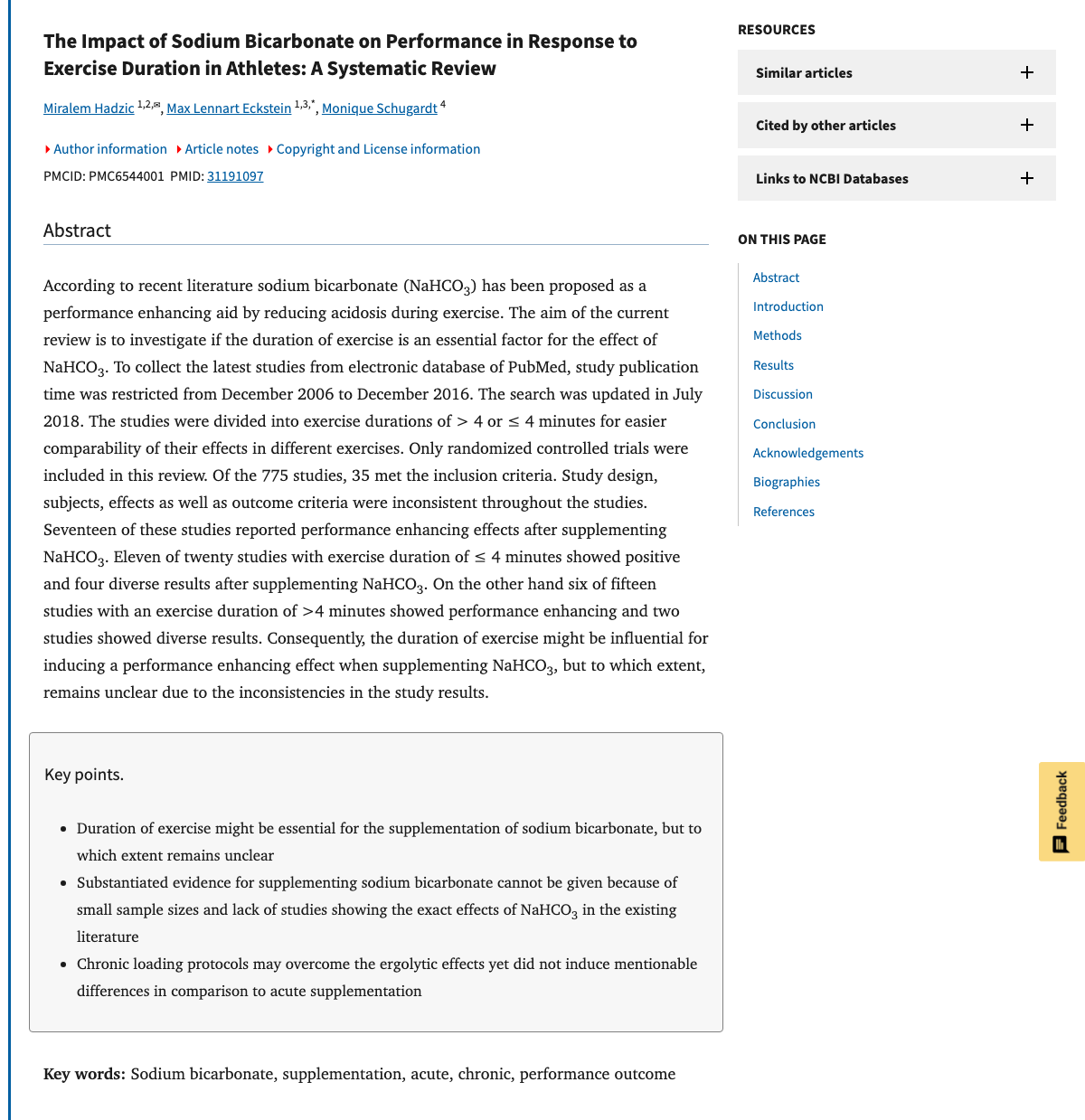
Key Takeaway
Sodium bicarbonate is most effective for exercise lasting 1-7 minutes, with diminishing benefits for very short (<1 min) or prolonged (>7 min) efforts.
Summary
This systematic review examined how exercise duration influences the ergogenic effects of sodium bicarbonate supplementation. The authors categorized studies by exercise duration to determine the optimal time domain where bicarbonate loading provides the greatest performance benefits.
The analysis revealed a clear pattern: sodium bicarbonate is most effective for high-intensity exercise lasting approximately 1-7 minutes. For very short efforts (under 1 minute), there is insufficient time for significant acidosis to develop, limiting the benefit of enhanced buffering capacity. For prolonged efforts (over 7 minutes), other factors like substrate availability and oxygen delivery become more limiting than acid-base status.
This duration-specific guidance helps athletes and coaches identify which events are most likely to benefit from sodium bicarbonate supplementation, optimizing its use for middle-distance running, swimming, rowing, and similar high-intensity endurance events.
Methods
- Systematic literature search following PRISMA guidelines
- Included studies examining sodium bicarbonate in athletic populations
- Categorized studies by exercise duration
- Qualitative synthesis of findings across duration categories
- Assessed study quality and methodological rigor
- Analyzed dose-response relationships where data available
Key Results
- Exercise 1-7 minutes: Most consistent performance improvements
- Exercise <1 minute: Limited or no significant effects
- Exercise >7 minutes: Inconsistent results, smaller effect sizes
- Optimal dose confirmed at 0.2-0.3 g/kg body weight
- Timing of 60-180 minutes pre-exercise most effective
- Benefits observed across multiple exercise modalities
Limitations
- Heterogeneity in study designs and exercise protocols
- Variable definitions of exercise duration categories
- Most studies in trained male athletes
- Limited data on female athletes specifically
- Individual response variability not fully addressed
- GI tolerance issues may confound some negative findings