
Key Takeaway
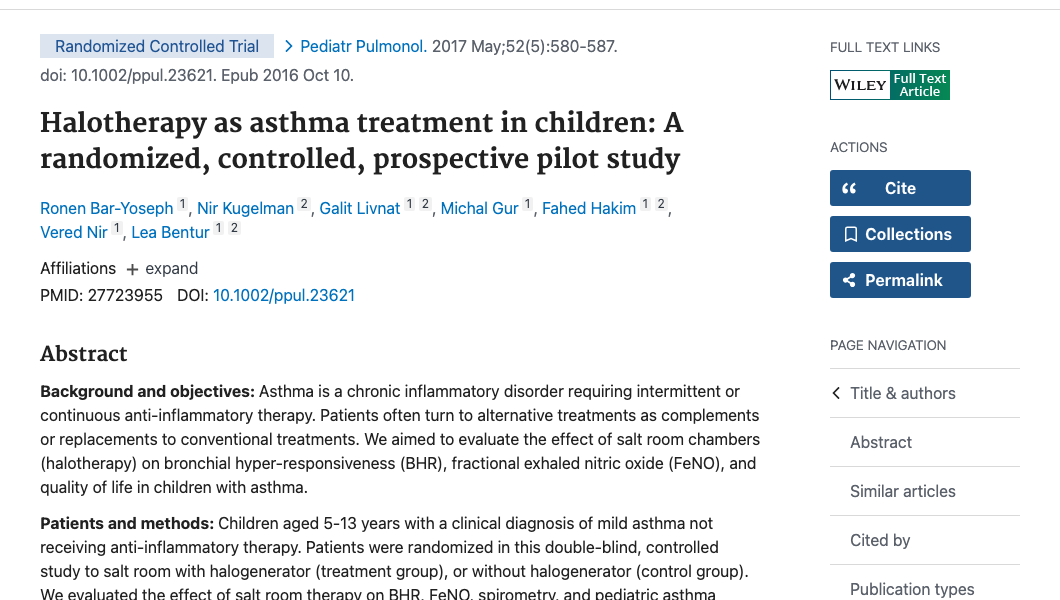
Halotherapy showed modest improvements in bronchial responsiveness and asthma control in children with mild asthma when used as complementary therapy.
Summary
This study evaluated halotherapy's effects on children with mild persistent asthma.
Study design:
- Children with mild asthma
- Halotherapy sessions (salt room exposure)
- Standard care continued for all participants
- Measured bronchial responsiveness and symptoms
Key findings:
- Modest improvement in bronchial hyperresponsiveness
- Symptom scores improved in halotherapy group
- No adverse events reported
- Benefits complemented standard medications
Asthma measures:
- Reduced bronchial sensitivity
- Improved peak flow readings
- Fewer daytime symptoms
- Less rescue inhaler use
Symptom improvements:
- Cough reduction
- Better nighttime sleeping
- Improved activity tolerance
- Parents reported quality of life benefits
Safety:
- Well tolerated by children
- No serious side effects
- Compatible with asthma medications
- Parents found sessions enjoyable
Limitations:
- Small study size
- Difficulty with blinding
- Short-term follow-up
- Placebo effect possible
Clinical significance:
Suggests halotherapy may be a safe complementary approach for mild childhood asthma, though should not replace standard medical management.