
Key Takeaway
Only one RCT met inclusion criteria for halotherapy in COPD, making it impossible to conduct a meta-analysis or recommend halotherapy as a COPD treatment.
Summary
This systematic review searched for evidence supporting halotherapy as a treatment for chronic obstructive pulmonary disease (COPD). Of 151 articles retrieved from multiple databases, only one randomized controlled trial met the inclusion criteria.
The single qualifying RCT showed some improvements in quality of life measures and 6-minute walk distance in COPD patients receiving halotherapy. However, the extremely limited evidence base -- just one trial -- precluded any meta-analysis or firm conclusions about efficacy.
The authors concluded that recommendations for or against halotherapy in COPD cannot be made based on existing evidence, and highlighted a critical need for well-designed, large-scale randomized controlled trials to determine whether halotherapy offers meaningful clinical benefits for COPD patients.
Methods
Systematic search of PubMed, EMBASE, CINAHL, and Cochrane databases for studies evaluating halotherapy in COPD. Applied strict inclusion criteria requiring controlled study designs. Of 151 identified articles, only one RCT met the criteria for inclusion.
Key Results
- 151 articles identified, only 1 RCT met inclusion criteria
- The single RCT showed improvements in quality of life scores
- Some improvement in 6-minute walk distance
- Meta-analysis could not be performed due to insufficient studies
- No evidence to support or refute halotherapy for COPD
Figures
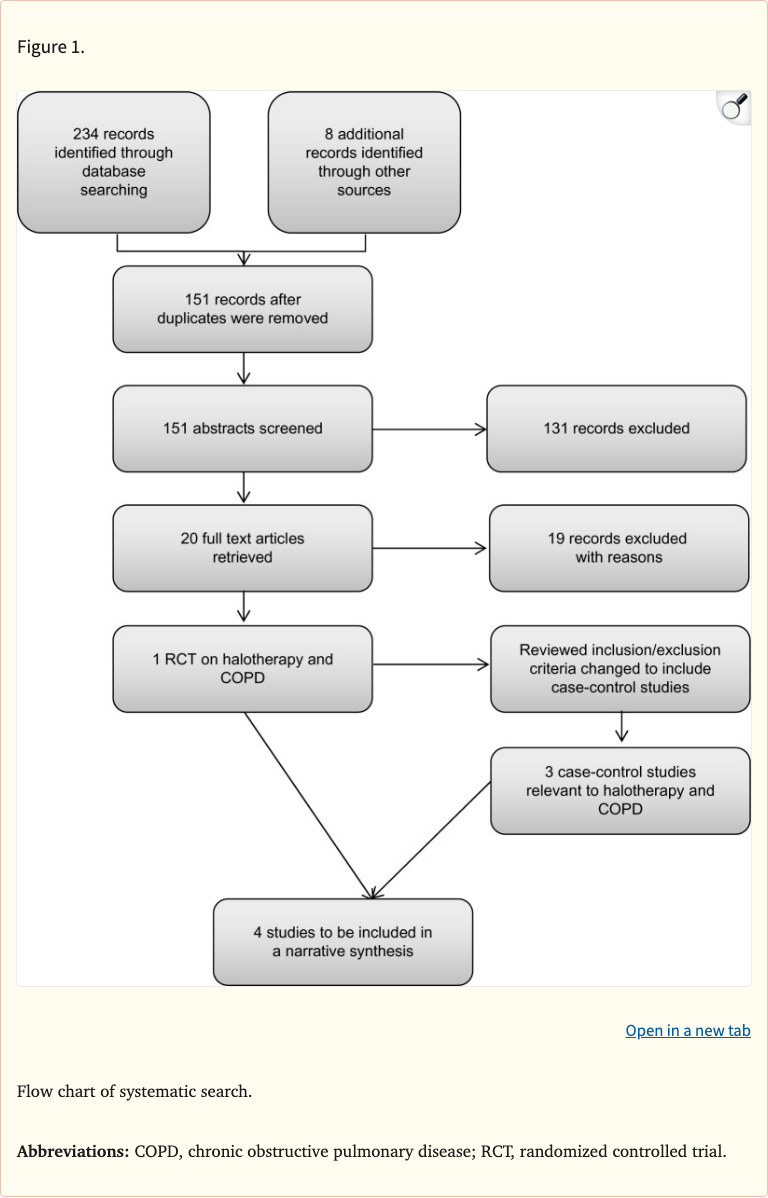 Figure 1
Limitations
- Only one eligible study found, preventing meta-analysis
- The single RCT had a small sample size
- Heterogeneity in halotherapy protocols across excluded studies
- Many studies were observational or lacked proper controls
- Limited follow-up duration in available evidence