
Key Takeaway
Comprehensive review explaining how red/NIR light penetrates the skull to enhance mitochondrial function and potentially benefit various brain conditions.
Summary
This influential review by Michael Hamblin, a leading photobiomodulation researcher, explains the mechanisms and evidence for transcranial light therapy.
The paper details how red and near-infrared light is absorbed by cytochrome c oxidase in the mitochondrial electron transport chain, enhancing ATP production and reducing oxidative stress. Sufficient light does penetrate the skull to affect brain tissue.
While acknowledging the early-stage nature of much of the research, Hamblin presents evidence for potential benefits in traumatic brain injury, stroke, depression, and neurodegenerative diseases.
Methods
- Comprehensive literature review
- Analysis of photobiomodulation mechanisms
- Review of clinical and preclinical studies
- Discussion of optimal parameters
Key Results
- Red/NIR light penetrates skull (1-3% transmission)
- Primary target is cytochrome c oxidase (CCO)
- Enhances mitochondrial function and ATP production
- Reduces oxidative stress and inflammation
- Early evidence for various brain conditions
Figures
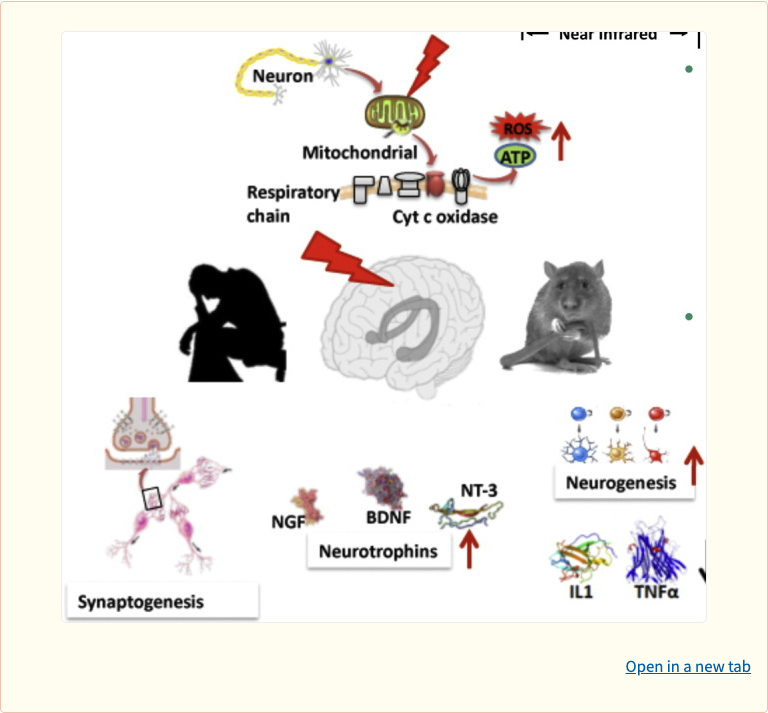 Figure 1
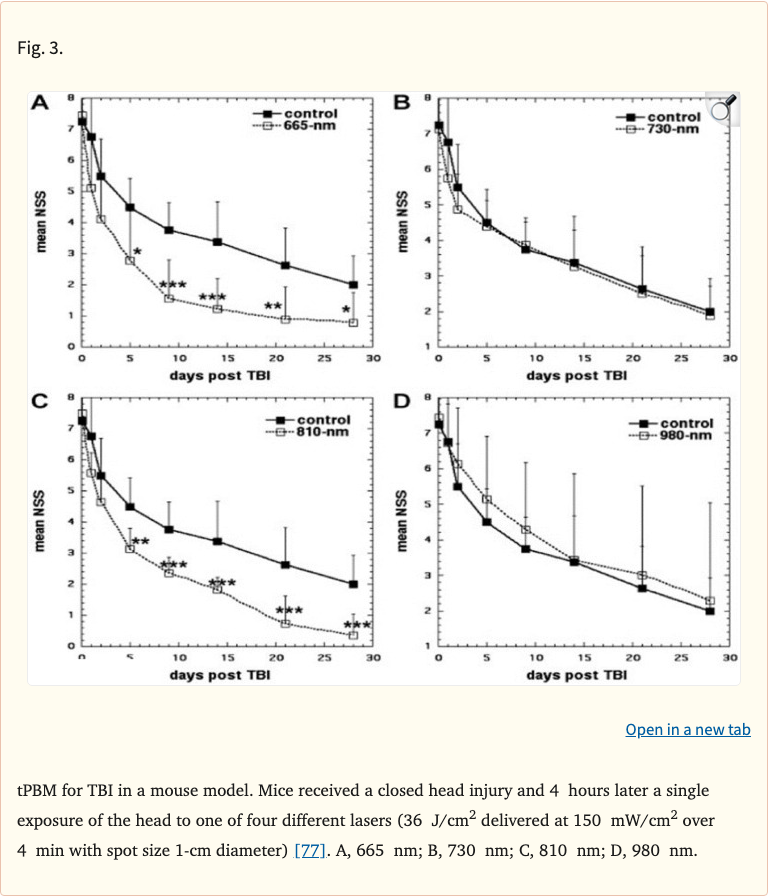 Figure 2
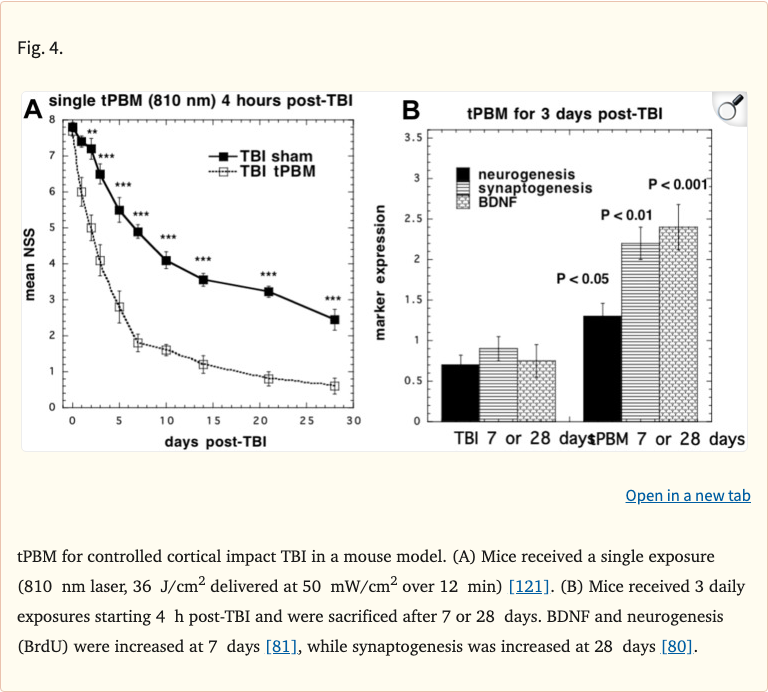 Figure 3
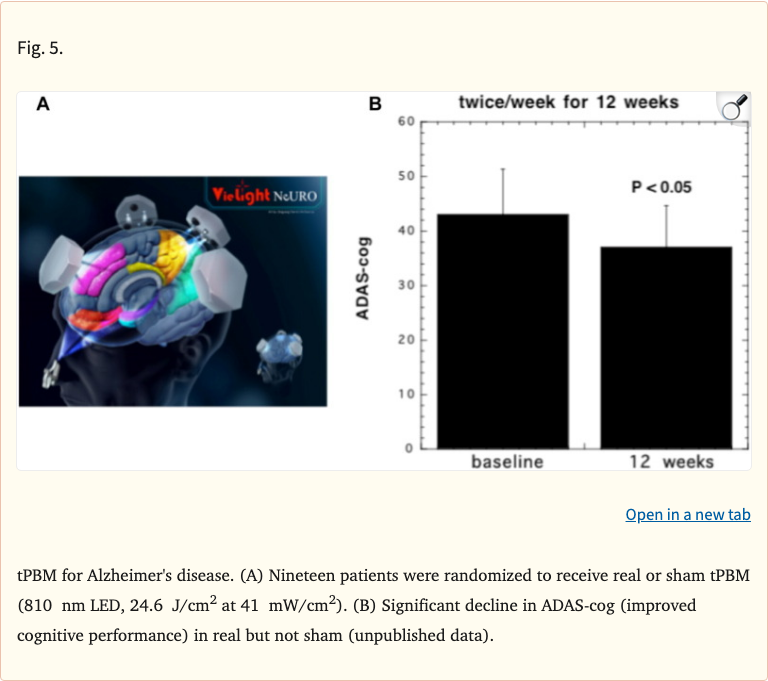 Figure 4
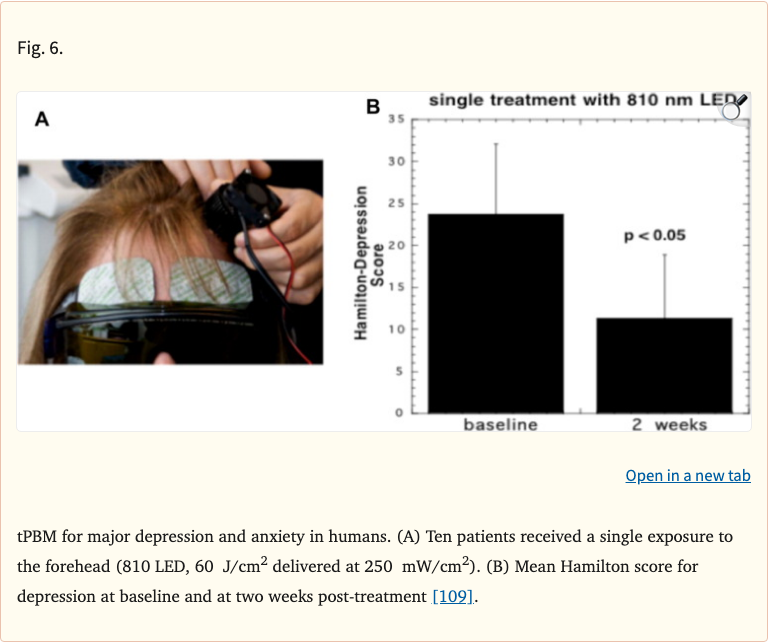 Figure 5
Limitations
- Much evidence from animal studies
- Human trials often small
- Optimal dosing parameters uncertain
- Mechanisms still being elucidated