
Key Takeaway
Photobiomodulation demonstrates neuroprotective, anti-inflammatory, and mitochondrial-restoring effects in the aging brain, improving working memory, cognitive inhibition, and general cognition in both animal models and humans
Summary
This systematic review analyzed 37 studies investigating photobiomodulation (PBM) effects on cognitive aging, spanning both preclinical animal models and clinical human trials. The review provides a comprehensive look at PBM's mechanisms and outcomes across the aging spectrum.
In healthy older adults, PBM improved working memory, cognitive inhibition, and lexical/semantic access. In patients with Alzheimer's disease and mild cognitive impairment, general cognition improved. At the cellular level, PBM demonstrated neuroprotective, anti-inflammatory, immunomodulatory, and hemodynamic effects, with evidence of restored mitochondrial function through improved enzyme activity and ATP production.
Methods
- Systematic review of PubMed, Scopus, and PsycInfo databases
- 37 studies included (both animal and human)
- Evaluated preclinical models and clinical trials
- Assessed cognitive, behavioral, and neurobiological outcomes
Key Results
- Animal studies: improved spatial memory, episodic-like memory, and social memory in aged animals
- Improved locomotor activity in Parkinson's disease models
- Healthy older adults: improved working memory, cognitive inhibition, and lexical/semantic access
- Dementia patients: improved general cognition in Alzheimer's and MCI
- Neurobiological: restored mitochondrial function, improved ATP production
- Most studies used wavelengths of 800, 810, or 1064nm
Figures
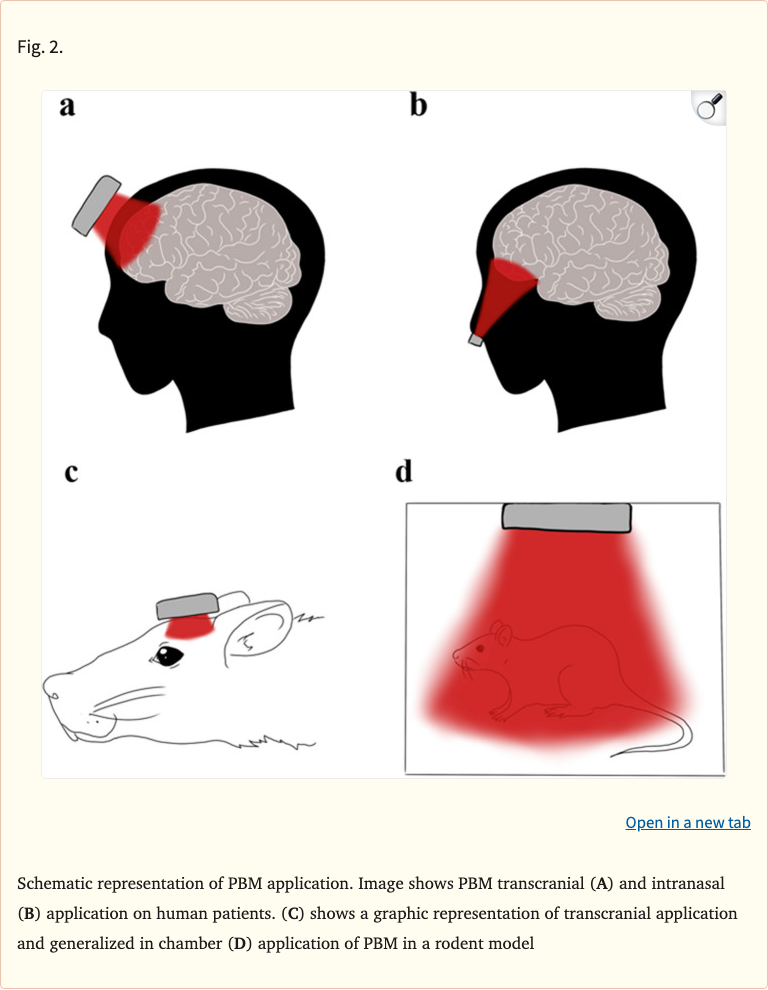 Figure 1
Limitations
- Considerable variation in treatment protocols (intensity, duration, wavelength)
- Anxiety outcomes were inconsistent across studies
- Mixed results for recognition memory in animal models
- Need for standardized treatment protocols
- Many human studies had small sample sizes