
Key Takeaway
Systematic review found moderate evidence that Feldenkrais Method improves balance, mobility, and body awareness across multiple populations.
Summary
This systematic review evaluated 20 studies examining the Feldenkrais Method, a movement education approach that uses gentle movements to improve body awareness and function.
The strongest evidence was found for balance improvements in older adults and populations with neurological conditions. Moderate evidence supported benefits for mobility, pain reduction, and body image/awareness.
While methodological quality varied, the review suggests Feldenkrais may be particularly valuable for populations where traditional exercise is challenging or contraindicated.
Methods
- Systematic search of databases through 2014
- 20 studies included (6 RCTs, others quasi-experimental)
- Populations: elderly, neurological, chronic pain, healthy adults
- Outcomes: balance, mobility, pain, quality of life
Key Results
- Moderate evidence for improved balance (4 positive RCTs)
- Positive effects on mobility and gait parameters
- Some evidence for reduced pain and improved body awareness
- Effects in MS, stroke, and Parkinson's populations
Figures
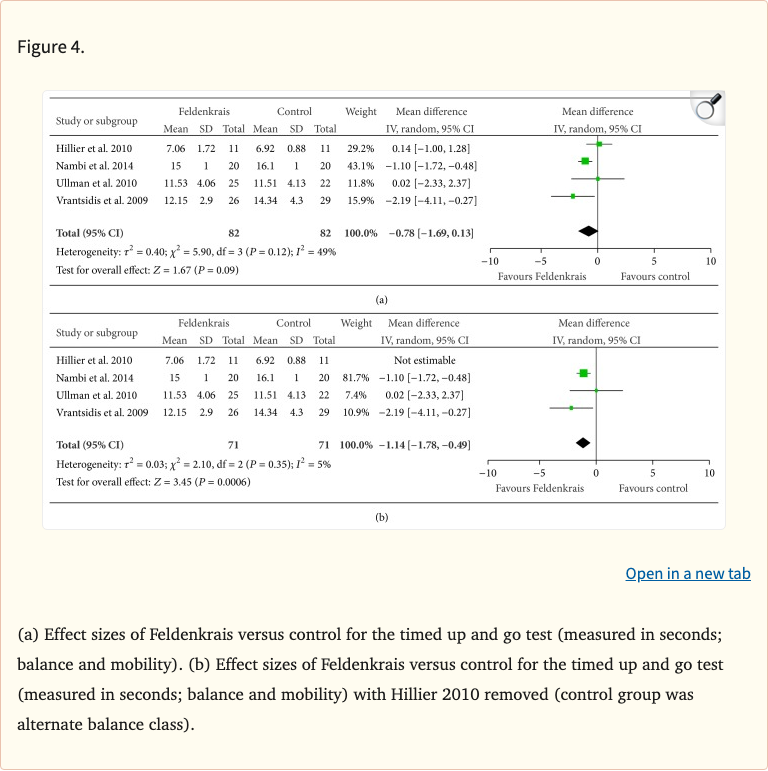 Figure 1
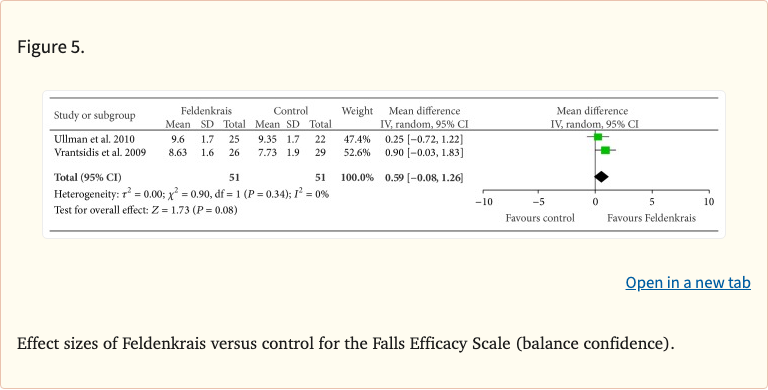 Figure 2
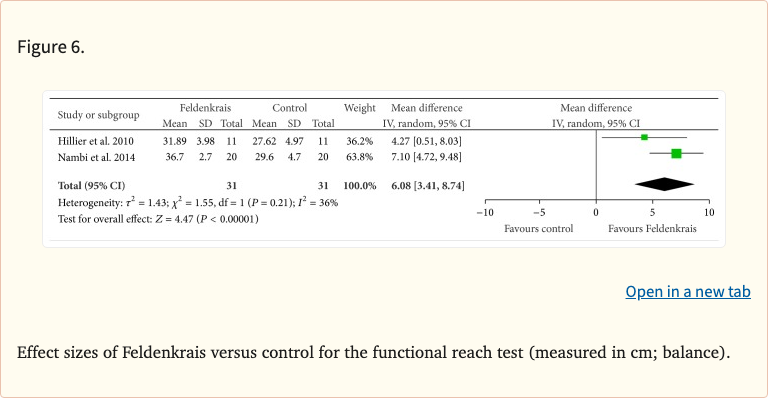 Figure 3
 Figure 4
Limitations
- Small sample sizes in most studies
- Heterogeneous outcome measures
- Difficulty blinding participants
- Variable intervention protocols and durations