Key Takeaway
Meta-analysis of 46 studies shows respiratory muscle training improves endurance exercise performance, with combined inspiratory and expiratory training proving more effective than inspiratory-only protocols.
Summary
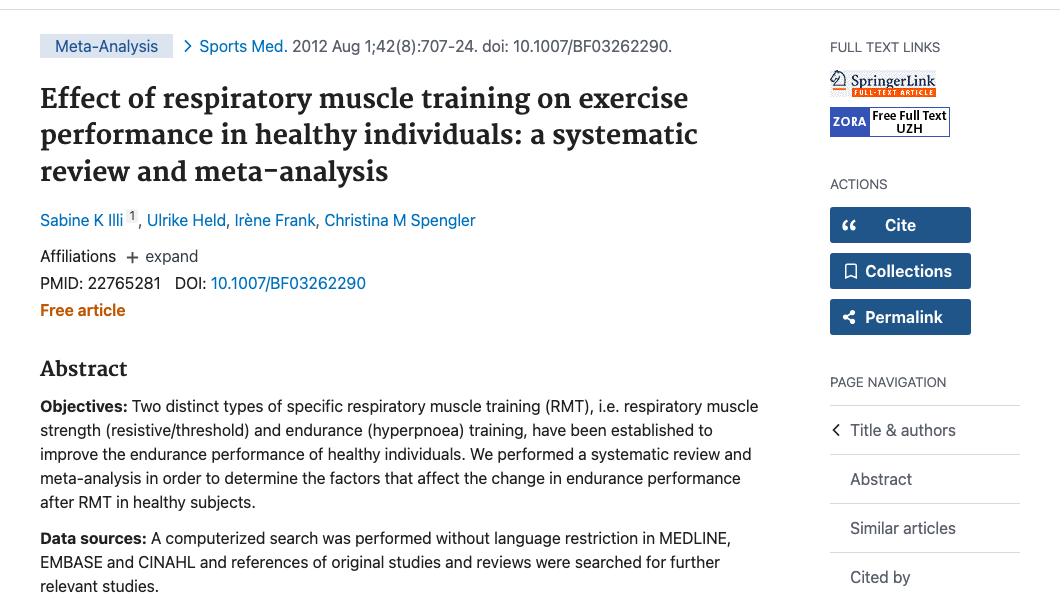
This landmark meta-analysis systematically reviewed 46 original studies examining the effects of respiratory muscle training (RMT) on exercise performance in healthy individuals. The authors searched multiple databases and included studies that used either inspiratory muscle training (IMT), expiratory muscle training (EMT), or combined training approaches. The analysis employed meta-regression to identify factors influencing RMT effectiveness.
The results demonstrated that RMT significantly improves endurance exercise performance in healthy subjects. The magnitude of benefit was influenced by baseline fitness level, with less fit individuals showing greater improvements -- approximately 6% per 10 mL/kg/min decrease in VO2max. Notably, combined inspiratory and expiratory muscle training was 12.8% more effective than inspiratory-only training, suggesting that comprehensive respiratory muscle conditioning offers advantages over targeting the diaphragm alone.
The clinical significance of these findings extends across athletic populations. While elite athletes with already-high respiratory muscle fitness showed smaller absolute gains, recreational exercisers and moderately trained individuals stood to benefit substantially. The dose-response relationship with fitness level helps explain why some earlier individual studies showed conflicting results -- the effect size depends heavily on the baseline respiratory fitness of participants.
This meta-analysis provides strong evidence supporting respiratory muscle training as a legitimate ergogenic strategy, establishing it as more than just a clinical rehabilitation tool. The finding that combined IMT+EMT outperforms IMT alone has practical implications for device selection and training protocols in athletic populations.