
Key Takeaway
Wim Hof Method practitioners could voluntarily activate their sympathetic nervous system and suppress inflammatory response to endotoxin - previously thought impossible.
Summary
This landmark study demonstrated that humans can voluntarily influence their autonomic nervous system and innate immune response through the Wim Hof Method. This was previously thought to be impossible.
Trained subjects showed significant increases in epinephrine, reduced inflammatory cytokine production, and fewer flu-like symptoms when exposed to bacterial endotoxin compared to untrained controls. The study provided the first scientific evidence for voluntary influence over the immune system.
Methods
- 24 healthy male volunteers
- 12 trained in Wim Hof Method (10 days)
- 12 untrained controls
- All received intravenous endotoxin (E. coli)
- Measured inflammatory cytokines, epinephrine, symptoms
Key Results
- Trained group: 200% higher epinephrine levels during breathing
- Pro-inflammatory cytokines 50% lower in trained group
- Anti-inflammatory IL-10 200% higher in trained group
- Fewer flu-like symptoms in trained group
- First proof of voluntary immune system influence
Figures
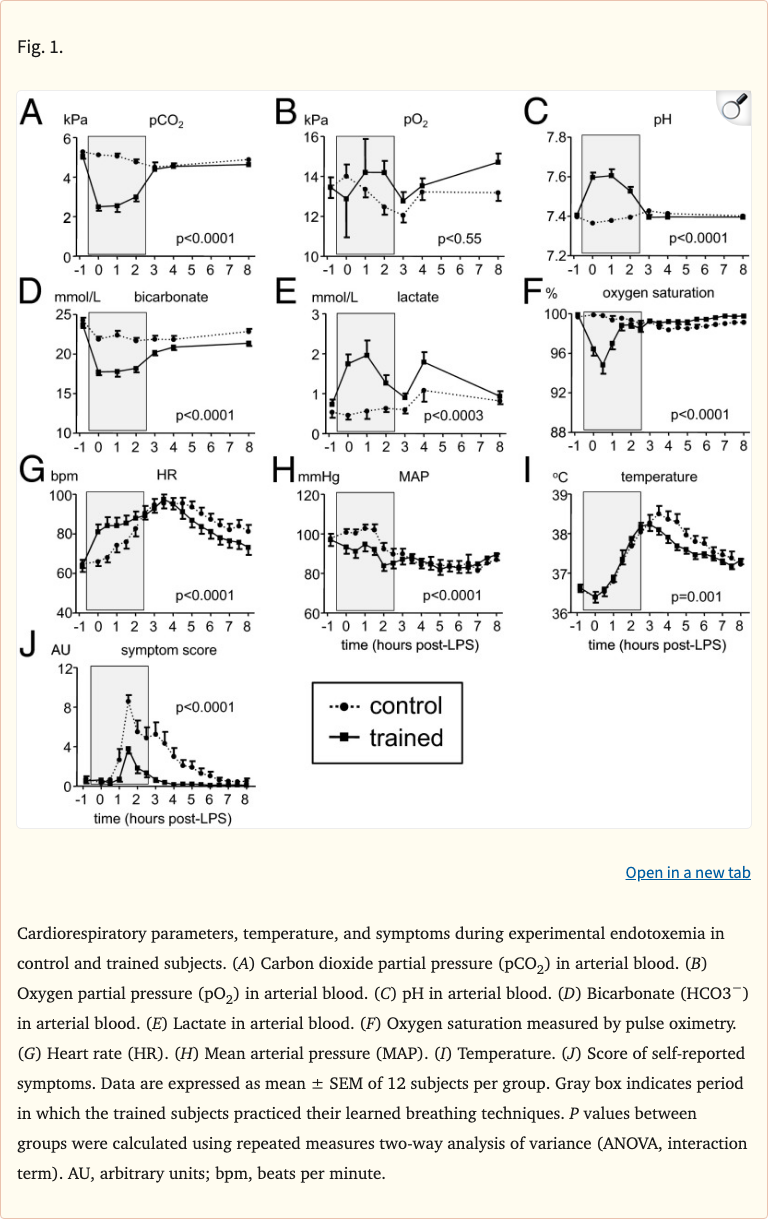 Figure 1
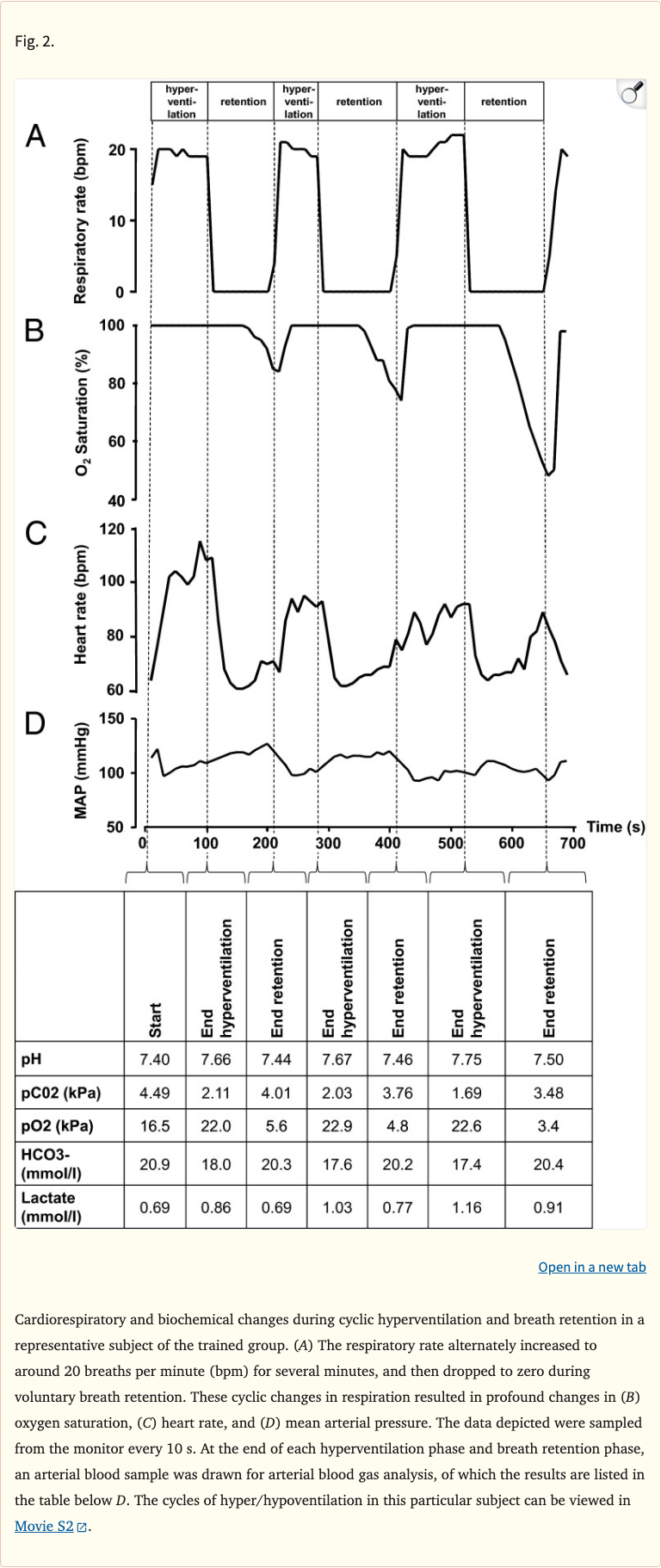 Figure 2
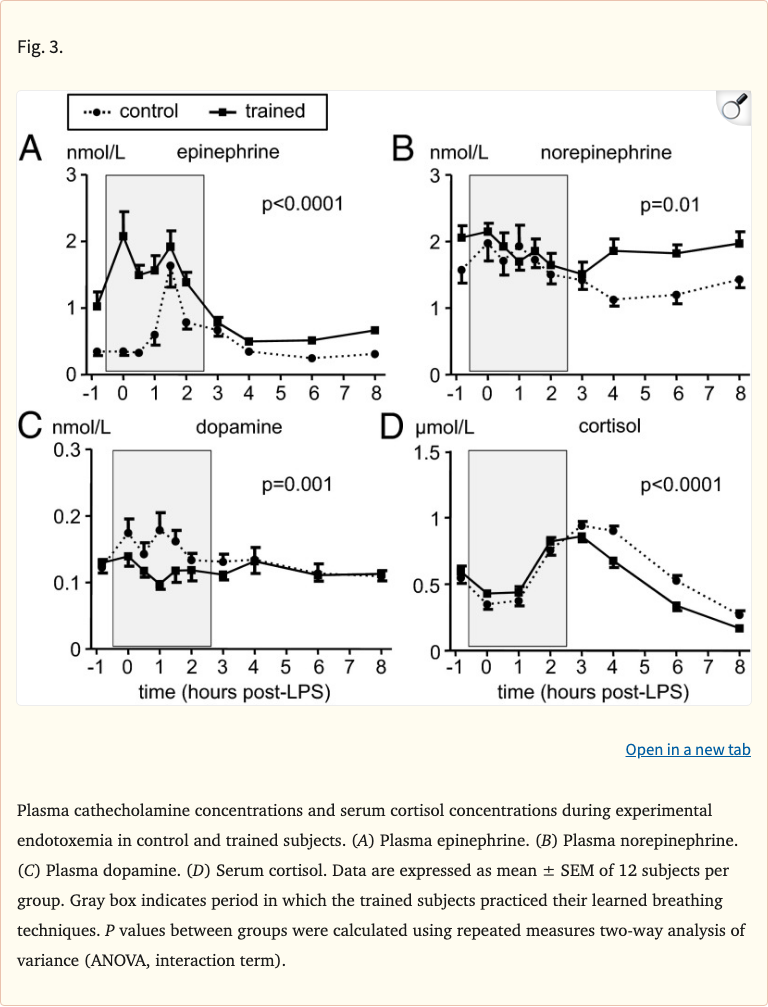 Figure 3
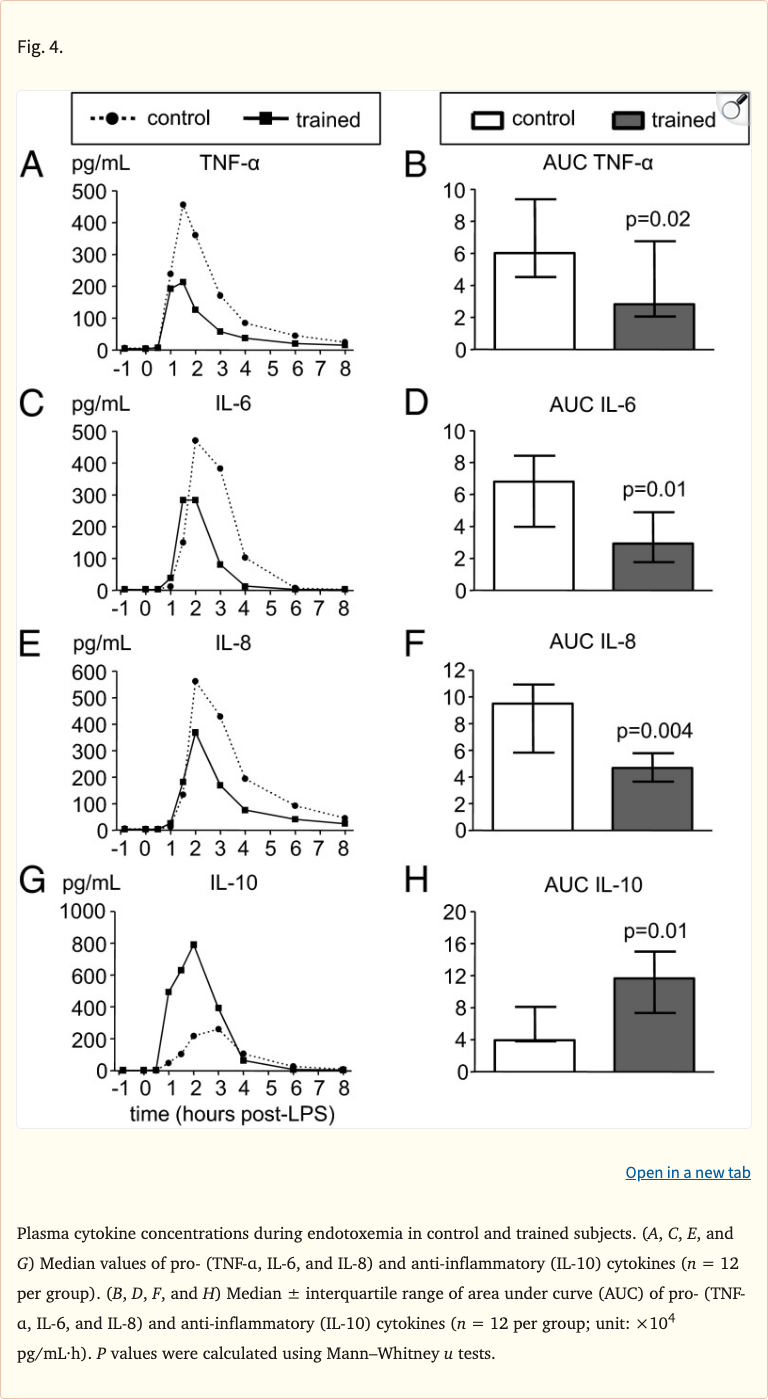 Figure 4
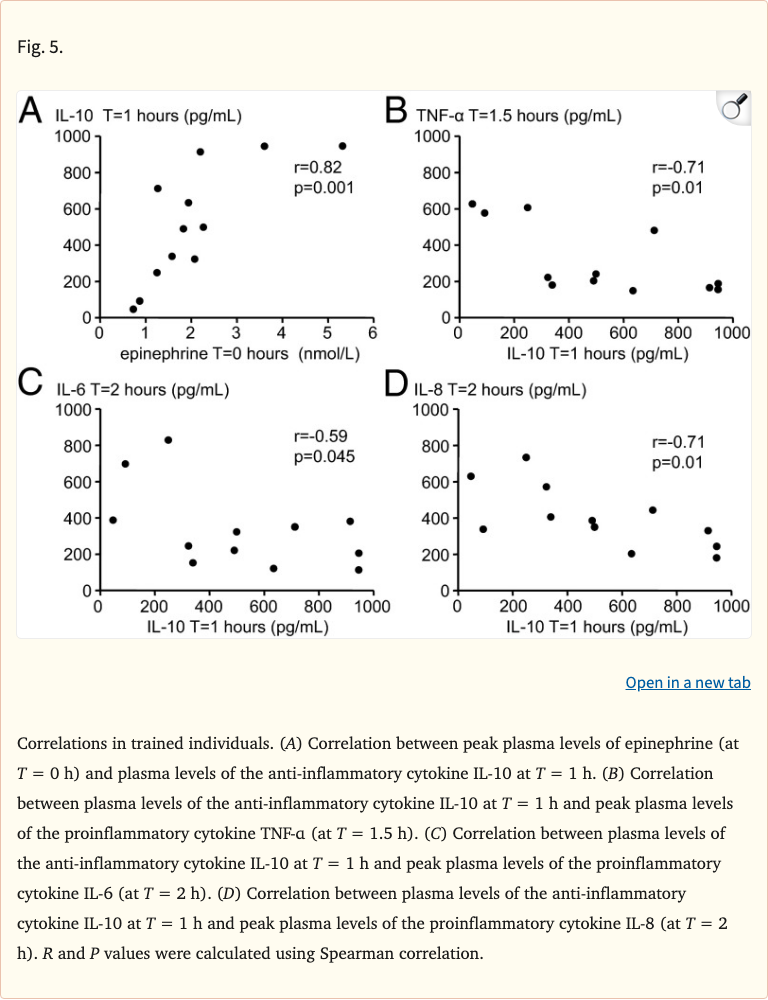 Figure 5
Limitations
- Small sample size (24 subjects)
- Only male participants
- Short-term measurement only
- Endotoxin model may not reflect real infections
- Cannot separate breathing vs. cold vs. meditation effects