
Key Takeaway
fMRI study revealed Wim Hof Method practitioners activate specific brain regions (periaqueductal gray, insula) enabling voluntary control of body temperature during cold exposure.
Summary
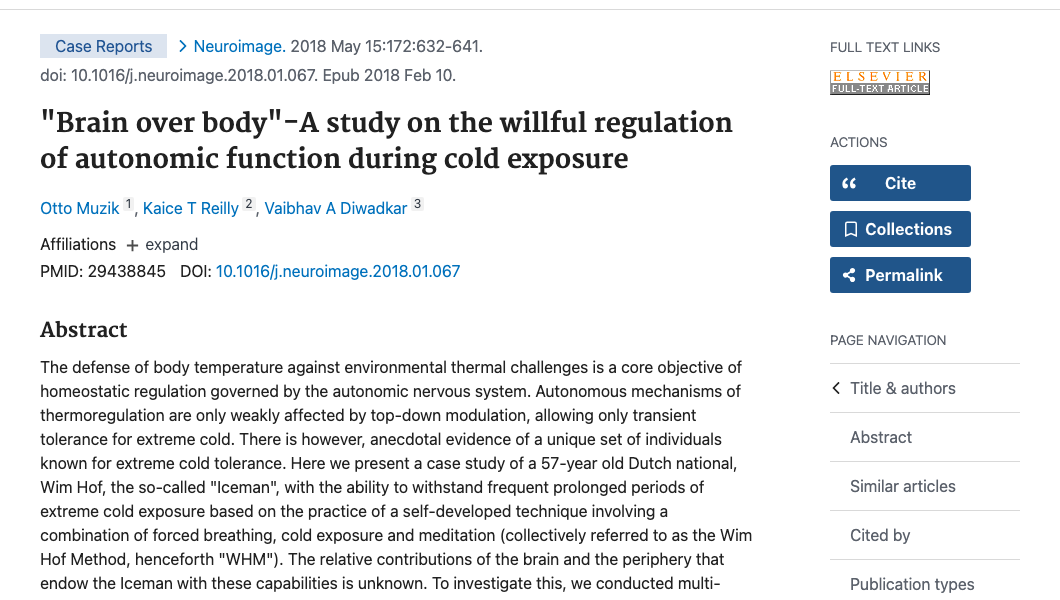
This neuroimaging study examined brain activity in Wim Hof and trained practitioners during cold exposure, seeking to understand the neural mechanisms underlying voluntary thermoregulation.
Using fMRI and PET imaging, researchers found that practitioners activated the periaqueductal gray matter (involved in pain modulation), anterior insula (interoception), and areas associated with self-regulation. This activation pattern, combined with breathing techniques, enabled maintenance of core body temperature despite extreme cold.
The findings suggest the Wim Hof Method produces trainable changes in brain-body communication that override normal autonomic responses to cold stress.
Methods
- fMRI and PET imaging during cold exposure
- Wim Hof + trained practitioners vs untrained controls
- Whole-body cold suit with controlled temperature
- Brain activation mapping during cold stress
Key Results
- Activation of periaqueductal gray (pain/temperature modulation)
- Insula activation (interoception and body awareness)
- Maintained core temperature in trained subjects
- Distinct breathing-related brain activation patterns
Limitations
- Small sample of trained practitioners
- Cross-sectional design (pre-training not measured)
- Cannot isolate breathing vs meditation components
- Exceptional subjects may not generalize