
Key Takeaway
Repeated cold exposure over several weeks leads to sustained increases in norepinephrine without the initial stress response, indicating beneficial adaptation.
Summary
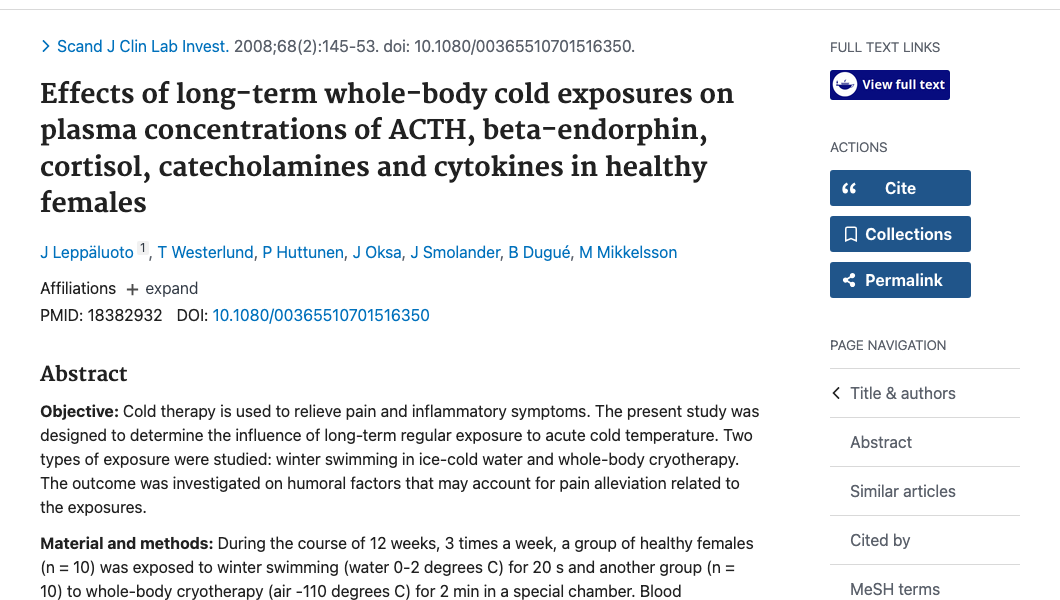
This study investigated how the body adapts to repeated cold exposure over time by examining hormonal and cytokine responses to whole-body cold air exposure.
The key finding was that repeated cold exposures led to sustained elevation of norepinephrine while cortisol responses habituated. This pattern suggests the body adapts to cold stress in a way that preserves the beneficial catecholamine response while reducing the stress hormone response.
This adaptation pattern helps explain why regular cold exposure practitioners report sustained benefits without ongoing stress.
Methods
- Participants underwent repeated whole-body cold air exposures
- Blood samples collected before and after exposures across multiple sessions
- Measured catecholamines (norepinephrine, epinephrine), cortisol, ACTH, and inflammatory cytokines
Key Results
- Norepinephrine remained elevated with repeated exposures
- Cortisol response diminished over time (habituation)
- Inflammatory markers showed favorable changes
- Adaptation occurred within first few weeks of regular exposure
Limitations
- Cold air exposure differs from cold water immersion
- Individual variation in adaptation rates
- Optimal exposure protocols not established