
Key Takeaway
CWI significantly reduced stress at 12 hours post-exposure (SMD -1.00) and improved sleep quality and quality of life, though it triggered an acute inflammatory response immediately after immersion.
Summary
This systematic review and meta-analysis evaluated the psychological, cognitive, and physiological effects of cold-water immersion (CWI) in healthy adults. Researchers searched electronic databases for randomized trials involving adults undergoing CWI exposure via cold shower, ice bath, or plunge with water temperatures at or below 15°C for at least 30 seconds.
Eleven studies comprising 3,177 total participants were included. CWI interventions used baths (10 studies) or showers (1 study) at temperatures ranging from 7°C to 15°C with durations from 30 seconds to 2 hours. The meta-analysis revealed time-dependent effects across multiple health outcomes, with notable benefits for stress reduction, sleep quality, and quality of life.
The review suggests CWI has practical applications for stress management and wellbeing support, though the evidence base is limited by few RCTs, small sample sizes, and a lack of population diversity. The authors call for future high-quality RCTs to examine long-term effects and optimal protocols.
Methods
Systematic review and meta-analysis of 11 randomized trials. Random effects models calculated standardized mean differences (SMD) between pre- and post-CWI outcomes. Risk of bias was assessed using the PEDro scale (mean score 6.4; 7 moderate quality, 4 high quality). Outcomes included sleep, stress, fatigue, energy, immunity, inflammation, mental wellbeing, depression, anxiety, mood, concentration, and alertness.
Key Results
- Significant stress reduction at 12 hours post-CWI (SMD: -1.00, 95% CI: -1.40 to -0.61, p < 0.01), but not at other time points
- Acute inflammatory response immediately post-CWI (SMD: 1.03, p < 0.01) and at 1 hour (SMD: 1.26, p < 0.01)
- No significant effects on immune function immediately or at 1 hour post-CWI
- Narrative synthesis found a 29% reduction in sickness absence among cold shower participants
- Improvements in sleep quality and quality of life, but not mood
Figures
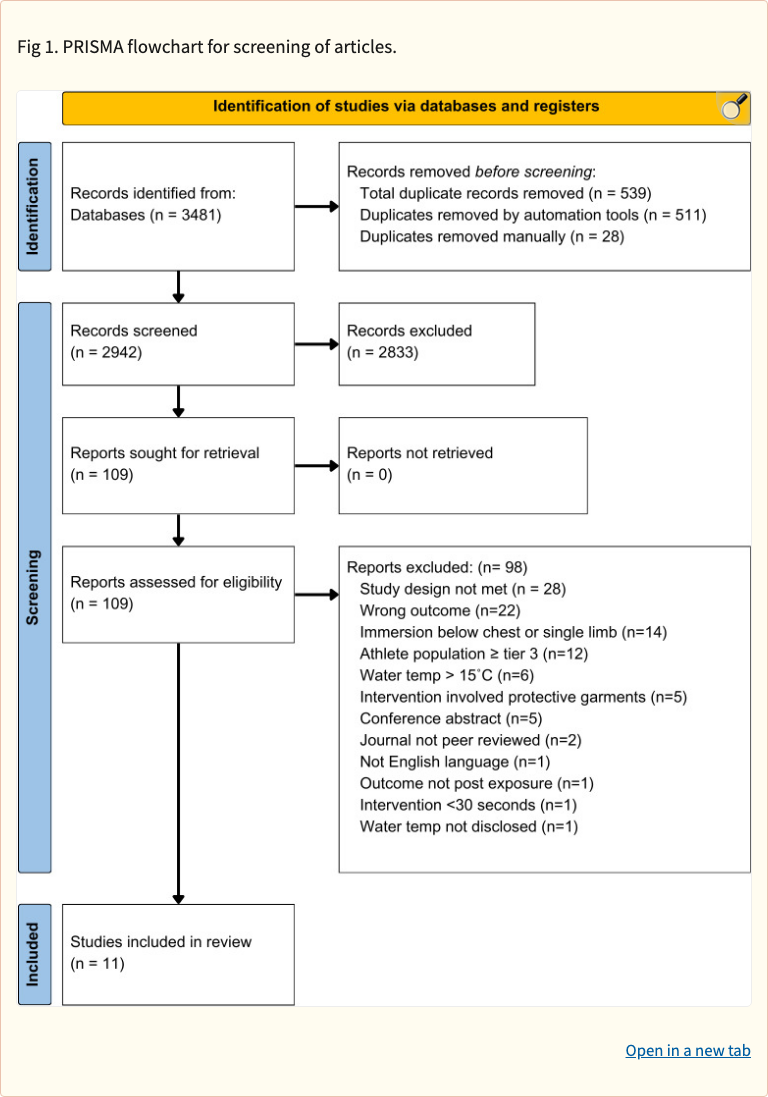 Figure 1
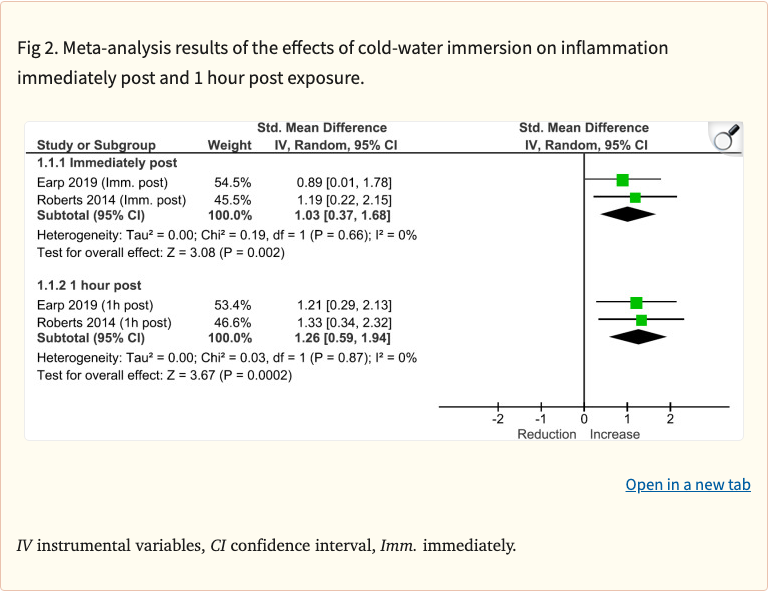 Figure 2
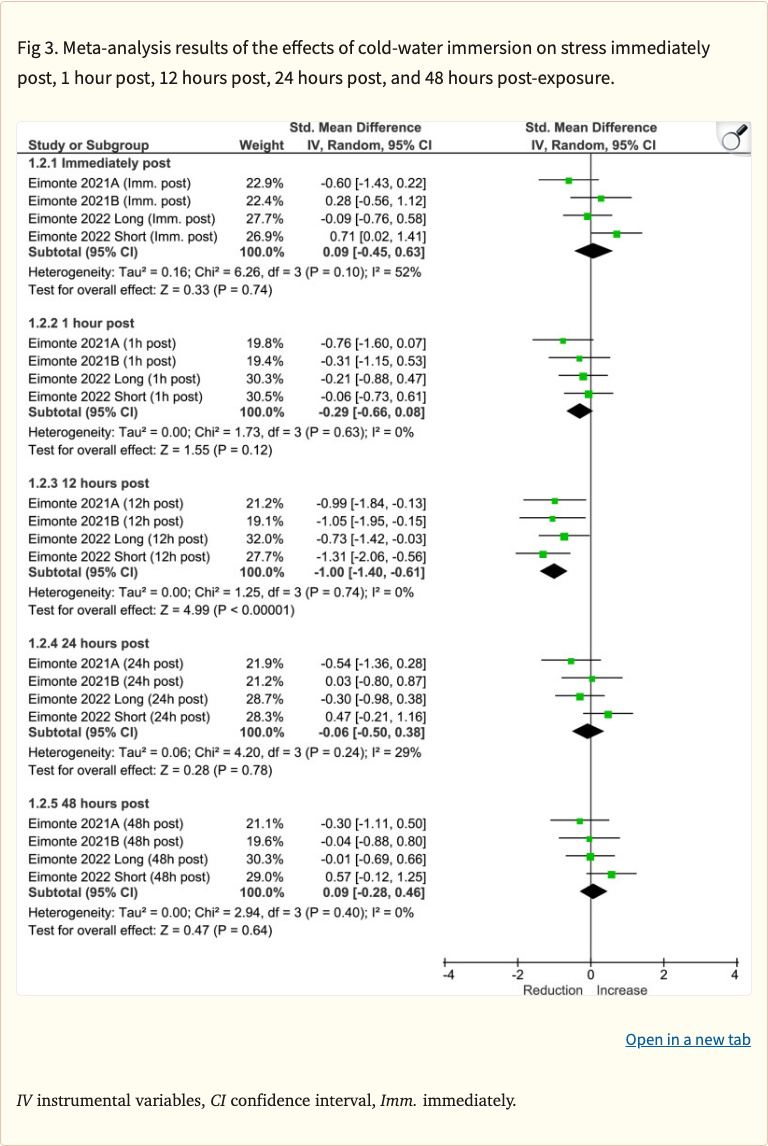 Figure 3
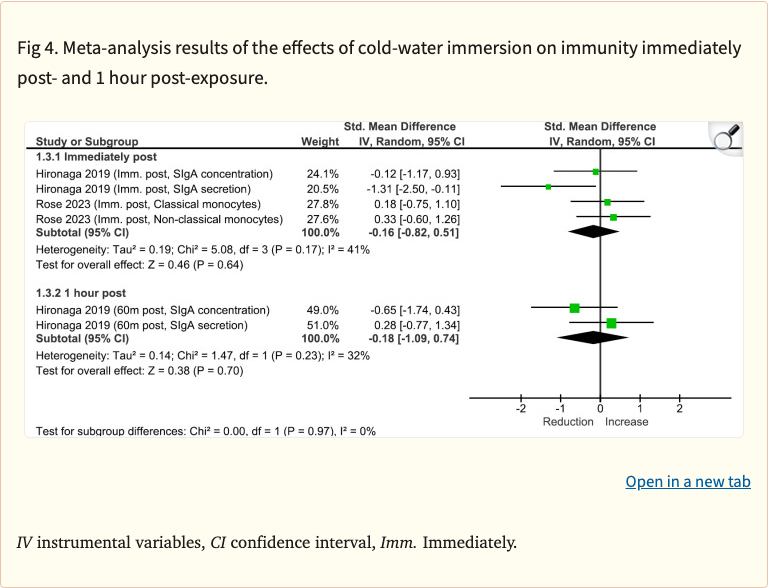 Figure 4
Limitations
Limited number of RCTs available for inclusion. Small sample sizes in individual studies. Lack of diversity in study populations. Heterogeneity in CWI protocols (temperature, duration, frequency) across studies. Most studies used ice baths rather than showers, limiting generalizability to everyday cold shower practices.