
Key Takeaway
Contrast water therapy was most effective for reducing creatine kinase (muscle damage marker) across 57 RCTs, while cryotherapy ranked best for DOMS pain relief and jump recovery.
Summary
This network meta-analysis of 57 RCTs (1,220 participants) compared four water-based recovery methods for exercise-induced muscle damage: cold water immersion (5-15°C), contrast water therapy (alternating >38°C and <15°C), hot/thermoneutral water immersion (28-39°C), and whole-body cryotherapy (<-30°C).
Contrast water therapy ranked highest for reducing creatine kinase levels (SUCRA 79.9%), a key biochemical marker of muscle damage. However, cryotherapy ranked best for DOMS pain relief (SUCRA 88.3%) and jump performance recovery (SUCRA 83.7%).
This suggests contrast therapy and cryotherapy work through different mechanisms: contrast therapy may be superior for actual tissue-level recovery (reducing muscle damage markers), while cryotherapy excels at reducing perceived pain and restoring neuromuscular function. The authors recommend cold water immersion and cryotherapy for practical use, though contrast therapy's biochemical advantages shouldn't be overlooked.
Methods
- Network meta-analysis of 57 RCTs (1,220 healthy participants)
- 4 interventions: CWI, contrast water therapy, hot/thermoneutral, cryotherapy
- 3 outcomes: creatine kinase (CK), DOMS, jump ability
- SUCRA rankings used to compare interventions
Key Results
- CK (muscle damage): contrast water therapy ranked 1st (SUCRA 79.9%)
- DOMS (pain): cryotherapy ranked 1st (SUCRA 88.3%)
- Jump ability: cryotherapy ranked 1st (SUCRA 83.7%)
- Cold water immersion and cryotherapy recommended for practical use
Figures
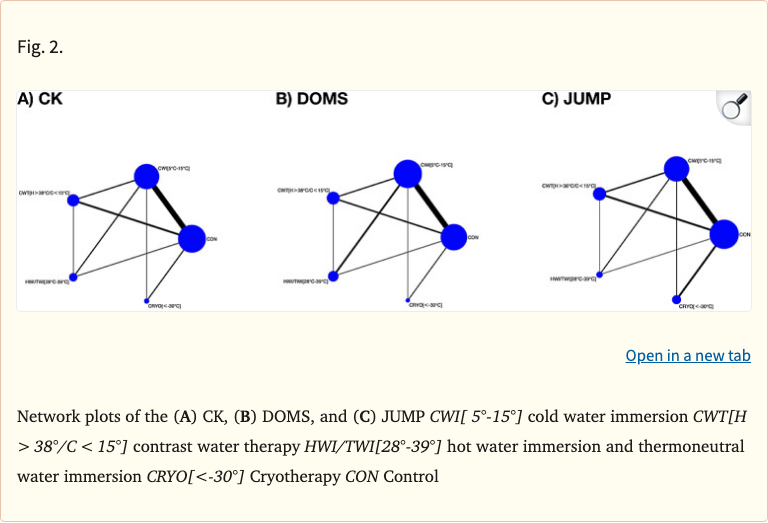 Figure 1
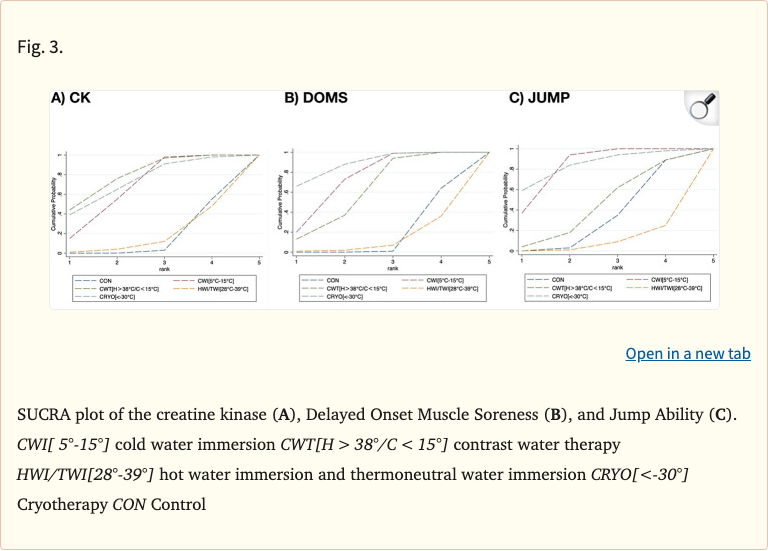 Figure 2
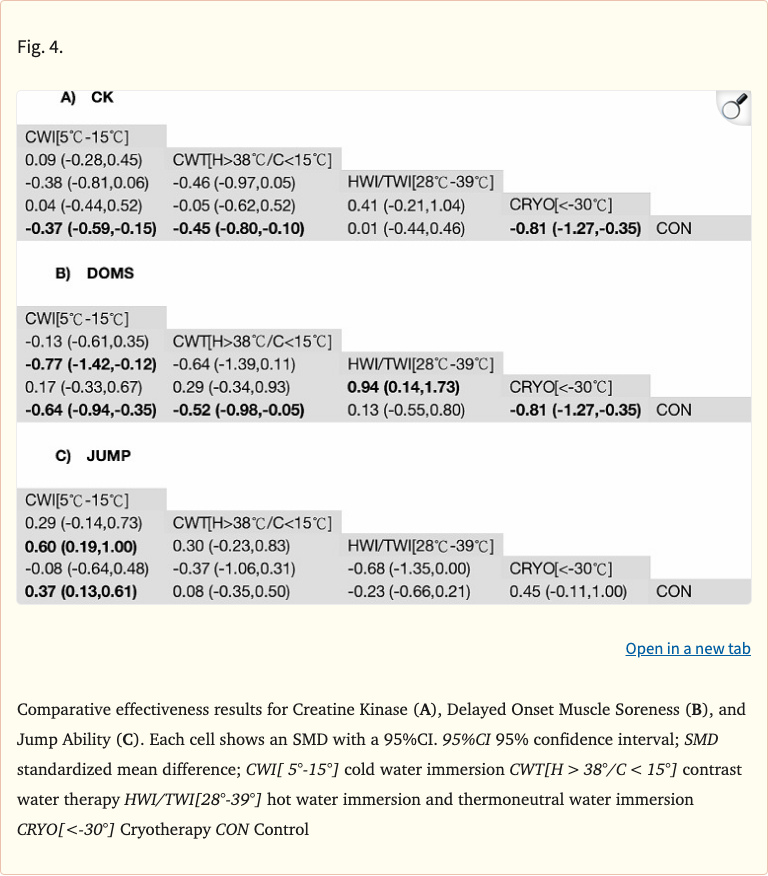 Figure 3
 Figure 4
Limitations
- Heterogeneous protocols (temperatures, durations, timing)
- Only healthy participants — may not generalize to clinical populations
- Limited studies for some intervention-outcome combinations