
Key Takeaway
Altitude training significantly increases VO2max (SMD 0.67) and hemoglobin levels (SMD 0.50), with the live-high/train-low protocol at ~2,500 m for ~3 weeks showing the best results.
Summary
This systematic review and meta-analysis evaluated 17 studies on the effects of altitude training on athletes' aerobic capacity, focusing on two primary outcomes: maximum oxygen uptake (VO2max) and hemoglobin levels. The authors searched five major databases for studies published from 1979 to September 2020.
The pooled analysis found that altitude training produced statistically significant improvements in both VO2max (SMD = 0.67, 95% CI 0.35–1.00, P < 0.001) and hemoglobin concentration (SMD = 0.50, 95% CI 0.11–0.90, P = 0.013) compared to sea-level training controls. Sensitivity analysis confirmed the stability of these findings, and bias testing revealed no significant publication bias.
Subgroup analyses identified the "live high, train low" (Hi-Lo) paradigm as the most effective altitude training method for improving aerobic capacity. The optimal protocol parameters were approximately 3 weeks of exposure at an altitude of around 2,500 meters. These findings provide evidence-based guidance for coaches and athletes seeking to optimize altitude training protocols.
Methods
Systematic search of Web of Science, SpringerLink, Science Direct, EBSCO, and PubMed for studies from 1979–2020 on altitude training and aerobic capacity. 17 publications were included in the meta-analysis. Data on hemoglobin levels and VO2max before and after altitude training were extracted. Review Manager 5.3 was used for bias evaluation and effect size calculation. Subgroup analyses compared different altitude training methods (Hi-Hi, Hi-Lo, Lo-Hi) and training parameters.
Key Results
Altitude training significantly increased VO2max (SMD = 0.67, 95% CI 0.35–1.00, P < 0.001) and hemoglobin levels (SMD = 0.50, 95% CI 0.11–0.90, P = 0.013) compared to controls. The live-high/train-low (Hi-Lo) method was superior to other training regimes. Optimal parameters were ~3 weeks at ~2,500 m altitude. Sensitivity analysis confirmed result stability with no significant publication bias detected.
Figures
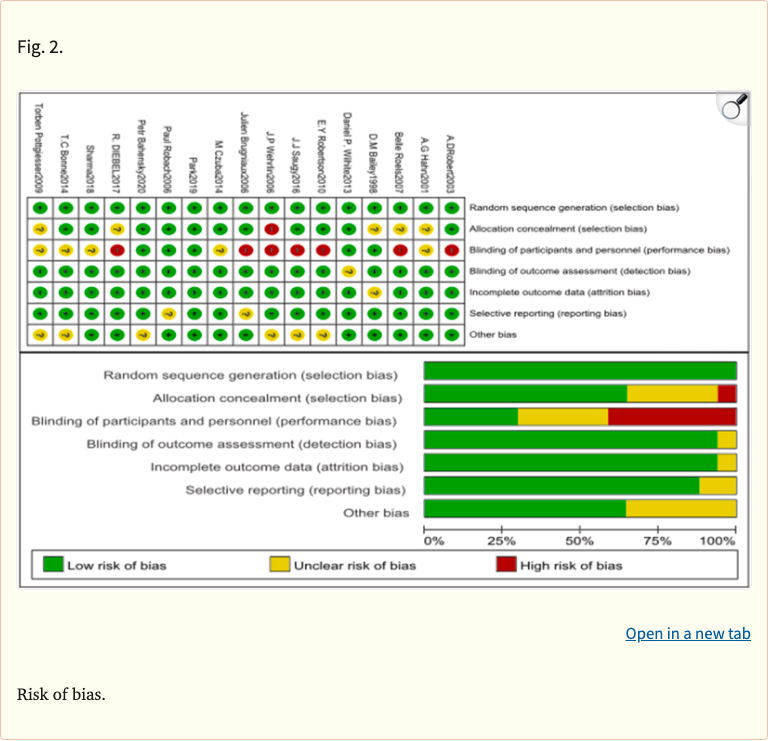 Figure 1
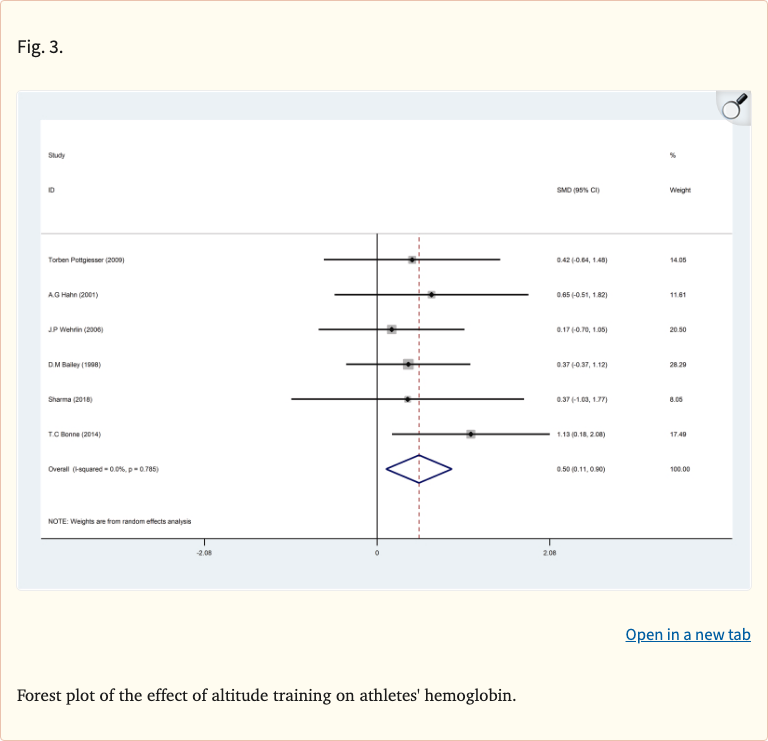 Figure 2
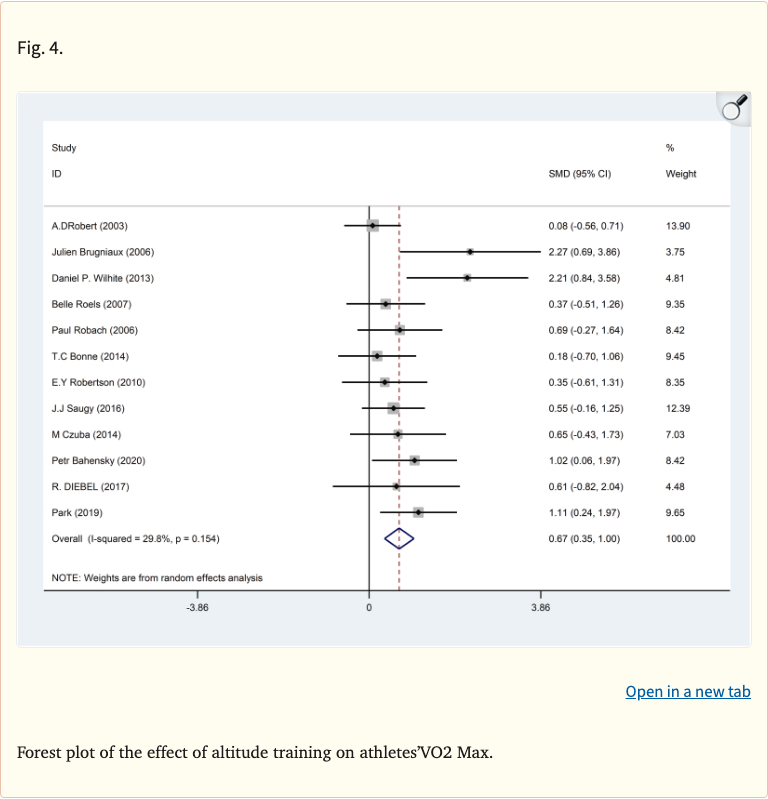 Figure 3
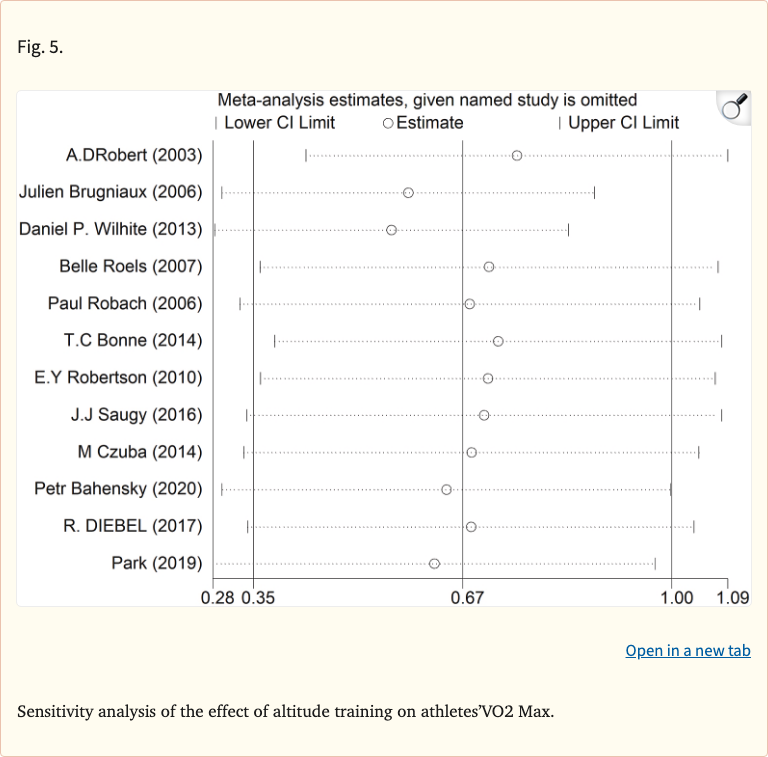 Figure 4
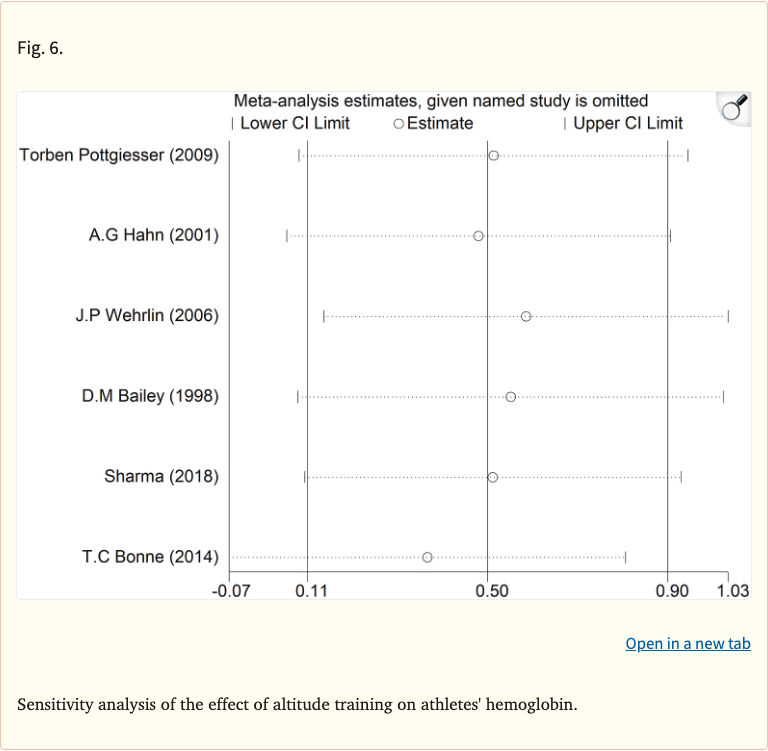 Figure 5
Limitations
Limited by the number and quality of available studies. The included studies had heterogeneous designs, athlete populations, and sport disciplines. The search only covered literature through September 2020. Some included studies had small sample sizes. Individual variation in altitude training response was not fully addressed.