
Key Takeaway
Network meta-analysis of 56 studies found that long-duration high-intensity interval training in hypoxia (SMD 0.78) and repeated sprint training in hypoxia (SMD 0.30) are the most effective live-low/train-high protocols for improving sea-level performance.
Summary
This network meta-analysis evaluated various "live low, train high" (LLTH) hypoxic training protocols for their effects on both aerobic and anaerobic performance in athletes. The study searched five major databases through June 2023 and categorized LLTH into seven distinct modes based on training modality, intensity, and work interval duration: intermittent hypoxic exposure, continuous hypoxic training, repeated sprint training in hypoxia (RSH), interval sprint training in hypoxia (ISH), short-duration high-intensity interval training (s-IHT), long-duration high-intensity interval training (l-IHT), and continuous and interval training under hypoxia.
From 2,072 identified titles, 56 studies were included. For aerobic performance (53 studies), only l-IHT (SMD 0.78, 95% CrI 0.52-1.05) and RSH (SMD 0.30, 95% CrI 0.10-0.50) significantly improved performance compared to normoxic training. For anaerobic performance (29 studies), active intermittent hypoxic training was effective, with l-IHT showing the largest effect (SMD 0.97) and RSH also significant (SMD 0.32).
The key practical finding is that sufficient duration and work intensity during hypoxic training intervals are critical for improving performance, regardless of whether the goal is aerobic or anaerobic improvement. Passive intermittent hypoxic exposure and continuous low-intensity hypoxic training appeared insufficient to produce beneficial performance adaptations at sea level.
Methods
Systematic search of PubMed, Web of Science, Embase, EBSCO, and Cochrane through June 2023. Bayesian network meta-analysis was used to compare seven LLTH modes categorized by training modality and work interval characteristics. 56 studies were included for aerobic outcomes (53 studies) and anaerobic outcomes (29 studies). Standardized mean differences with 95% credible intervals were calculated. Interventions were ranked using surface under the cumulative ranking curve (SUCRA) scores.
Key Results
For aerobic performance: only l-IHT (SMD 0.78, 95% CrI 0.52–1.05) and RSH (SMD 0.30, 95% CrI 0.10–0.50) significantly improved performance vs. normoxic training. For anaerobic performance: l-IHT showed the largest effect (SMD 0.97, 95% CrI 0.12–1.81), followed by RSH (SMD 0.32, 95% CrI 0.05–0.59). Passive hypoxic exposure and continuous low-intensity hypoxic training did not produce significant performance improvements.
Figures
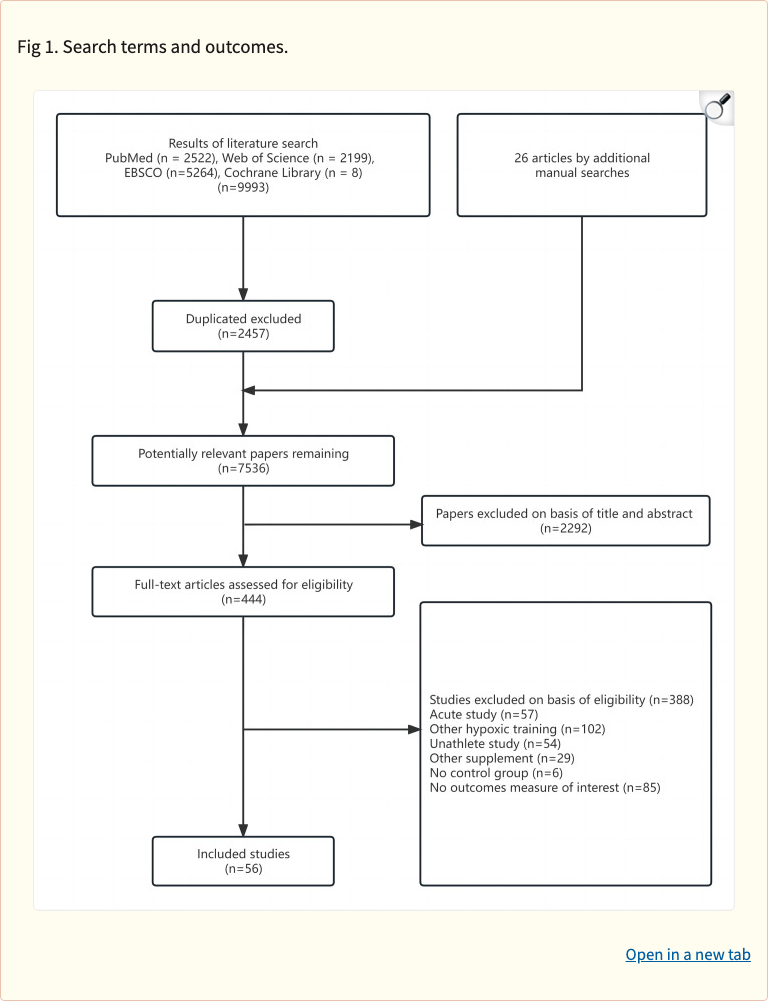 Figure 1
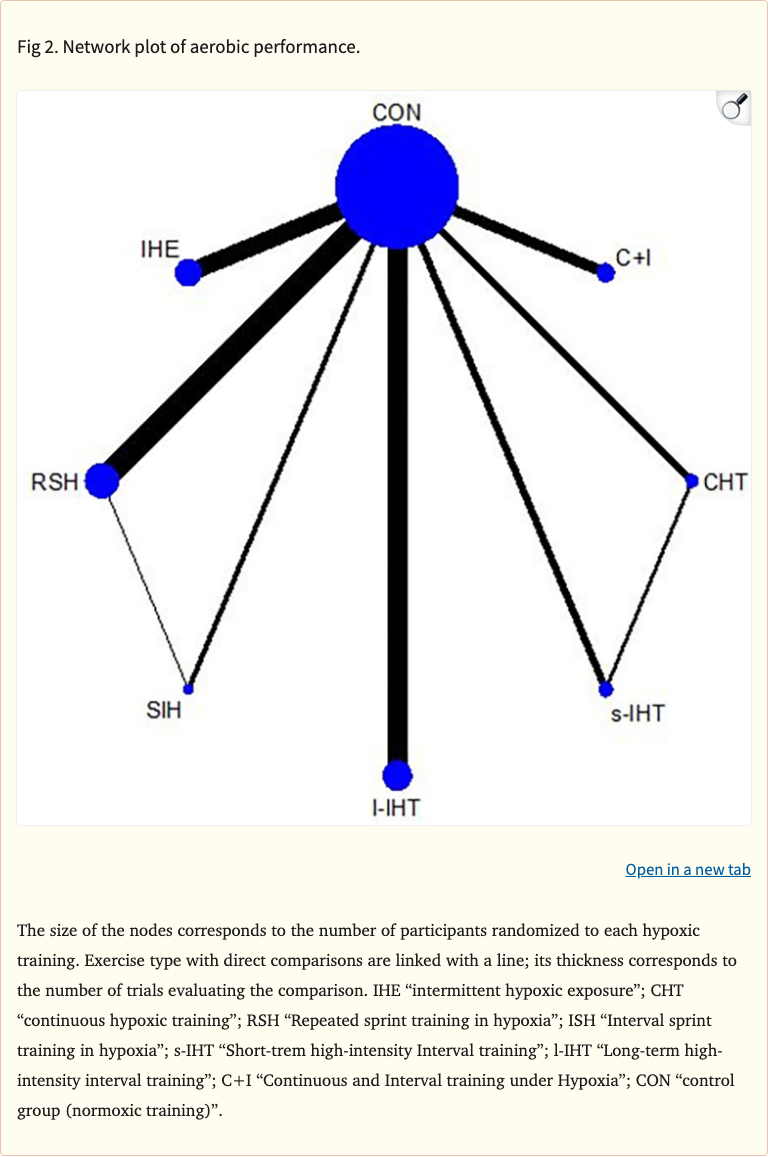 Figure 2
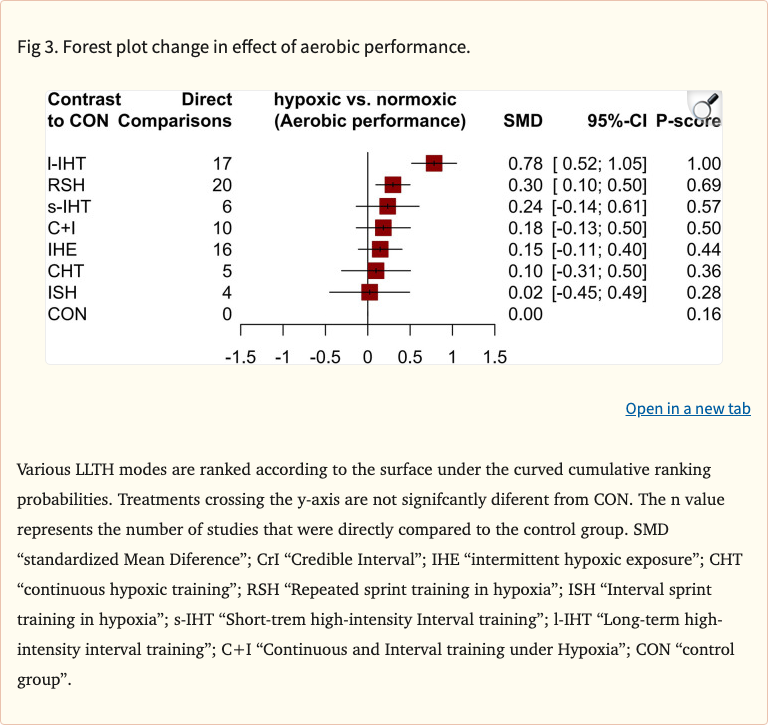 Figure 3
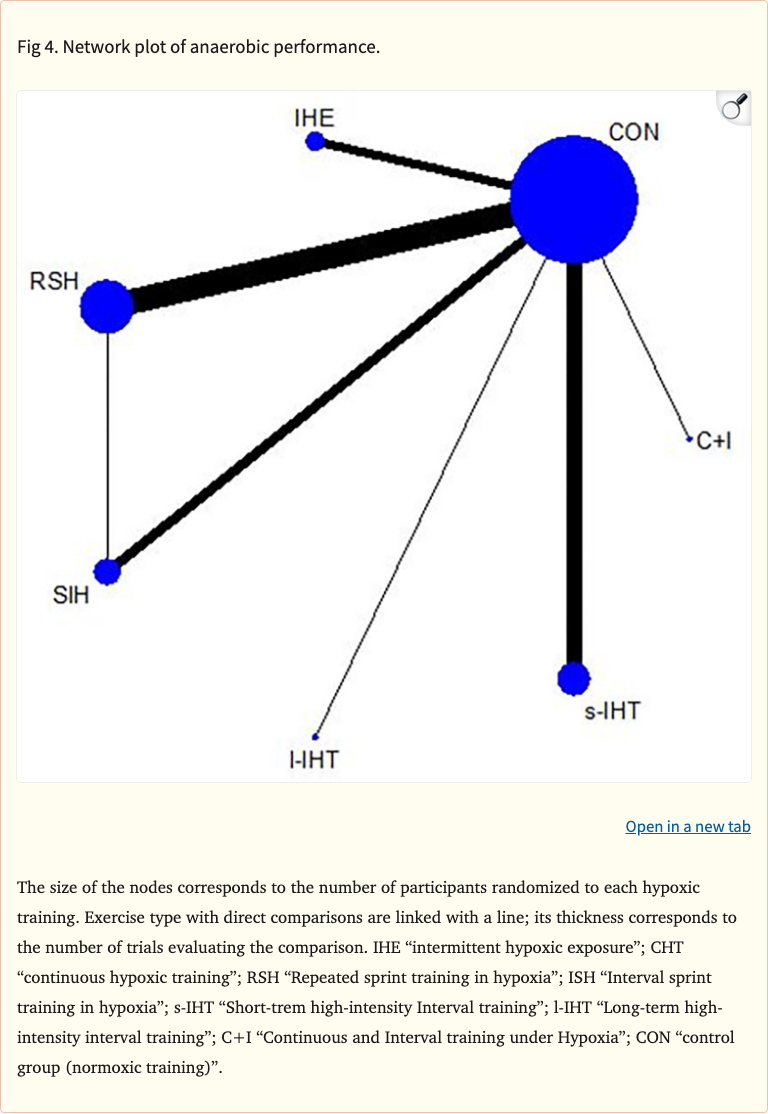 Figure 4
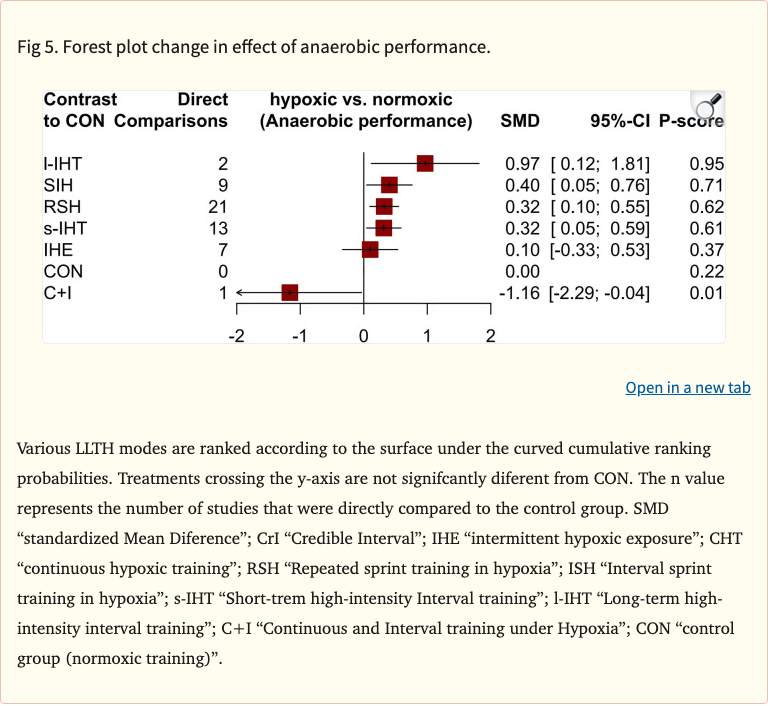 Figure 5
Limitations
Only one study contributed to the l-IHT anaerobic performance finding, undermining the credibility of that specific result. Heterogeneity existed across studies in terms of athlete level, sport type, and specific protocols. The categorization of LLTH modes, while systematic, required judgment calls on boundary cases. The analysis focused on short-term performance outcomes and did not assess long-term training adaptations.