
Key Takeaway
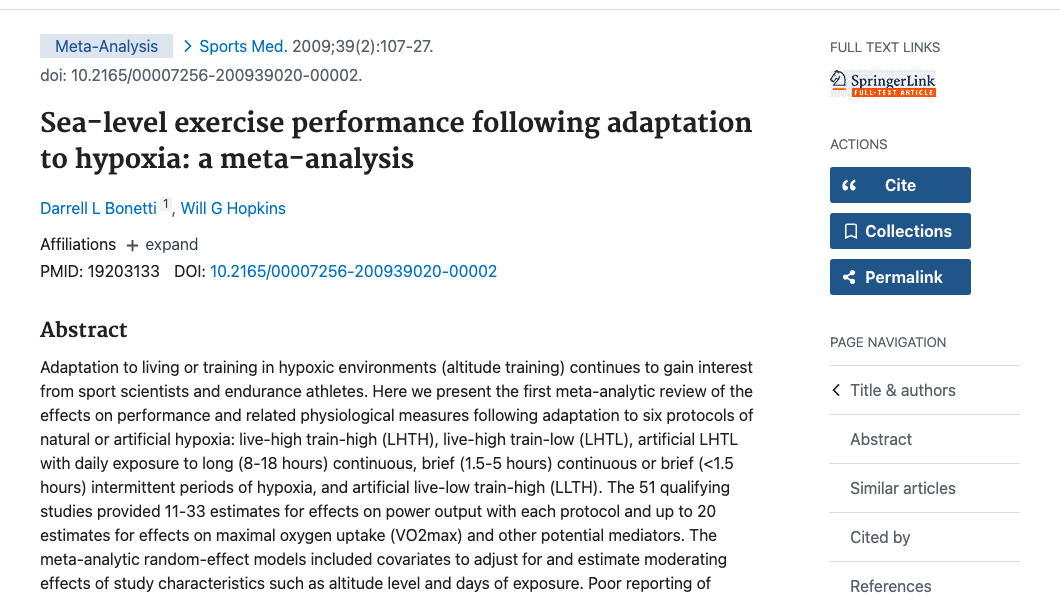
Meta-analysis of 51 studies confirms altitude training produces 1-4% performance improvements in elite athletes, with Live High Train Low (LHTL) showing most consistent benefits
Summary
Comprehensive meta-analysis examining the effects of various altitude training protocols on sea-level performance. Analyzed natural altitude, altitude tents, and intermittent hypoxic training across multiple sports.
Methods
- 51 studies included in analysis
- Focused on controlled trials with performance outcomes
- Compared LHTL, LHTH, and intermittent hypoxic training
- Analyzed effects on time trials and maximal performance
Key Results
- LHTL: 4.0% improvement (95% CI: 2.6-5.5%)
- Natural LHTL most effective
- Altitude tents: 1.6% improvement
- LHTH: 1.5% improvement (limited by training intensity reduction)
- Intermittent hypoxia: 1.4% improvement
- Benefits greater in sub-elite vs elite athletes
- Optimal dose: 2,000-2,500m for 3-4 weeks
Limitations
- Heterogeneous study designs
- Variable altitude protocols
- Publication bias possible
- Most studies on endurance athletes
- Limited data on team sport athletes