
Key Takeaway
Silymarin significantly reduces liver enzymes (ALT, AST), improves lipid profiles, insulin resistance, and hepatic steatosis in NAFLD patients across 26 RCTs with 2,375 participants.
Summary
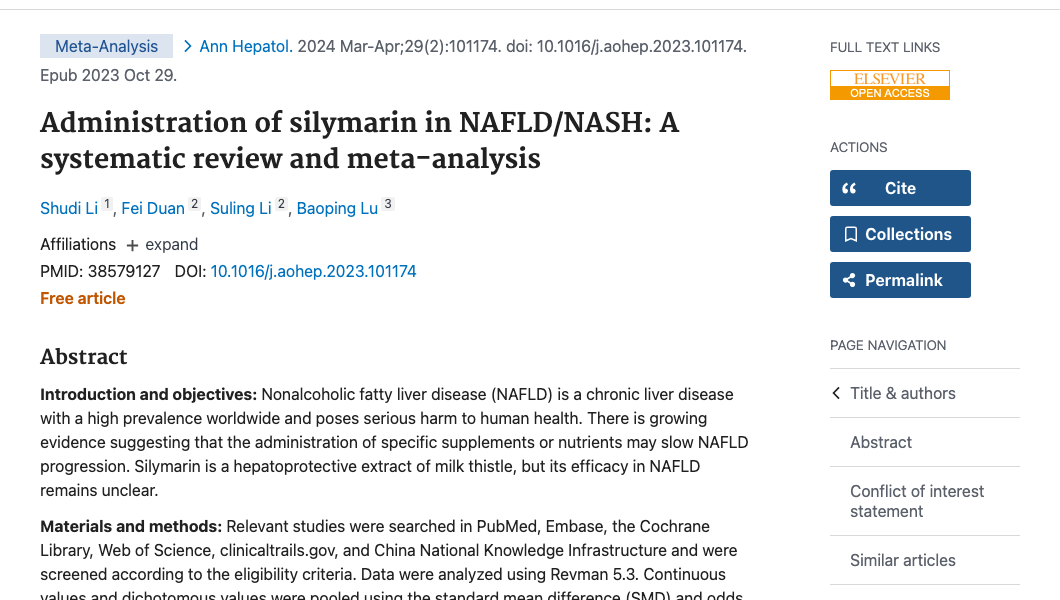
This systematic review and meta-analysis pooled data from 26 randomized controlled trials involving 2,375 patients with nonalcoholic fatty liver disease (NAFLD) to evaluate silymarin supplementation.
Silymarin demonstrated broad metabolic benefits: reduced total cholesterol, triglycerides, and LDL-C while increasing HDL-C. It also decreased fasting insulin levels and improved insulin resistance as measured by HOMA-IR. For liver-specific markers, ALT dropped by approximately 12 U/L and AST by approximately 11 U/L compared to controls.
On liver biopsy, silymarin improved hepatic steatosis with an odds ratio of 3.25, along with reductions in fatty liver index and fatty liver score. The authors concluded that silymarin can regulate energy metabolism, attenuate liver damage, and improve liver histology in NAFLD patients, though they acknowledged further research is needed to confirm these effects.
Methods
Systematic review and meta-analysis following standard methodology. Searched multiple databases for randomized controlled trials evaluating silymarin in NAFLD/NASH patients. 26 RCTs with 2,375 total participants were included. Outcomes assessed included liver enzymes (ALT, AST), lipid profiles, insulin resistance markers, and histological changes on liver biopsy.
Key Results
- ALT reduced by ~12 U/L vs. controls
- AST reduced by ~11 U/L vs. controls
- Significant reductions in total cholesterol, triglycerides, and LDL-C
- HDL-C increased
- Fasting insulin and HOMA-IR improved
- Hepatic steatosis improved on biopsy (OR 3.25)
- Fatty liver index and fatty liver score both reduced
Limitations
- Heterogeneity across included trials in dosing, duration, and patient populations
- Variable definitions of NAFLD/NASH across studies
- Most trials were relatively short-term
- Authors acknowledged further research needed to confirm findings
- Publication bias possible given positive result trend