
Key Takeaway
Treadmill desks improved cardiovascular markers, glucose, and body composition, while standing desks showed few physiological changes but maintained work performance.
Summary
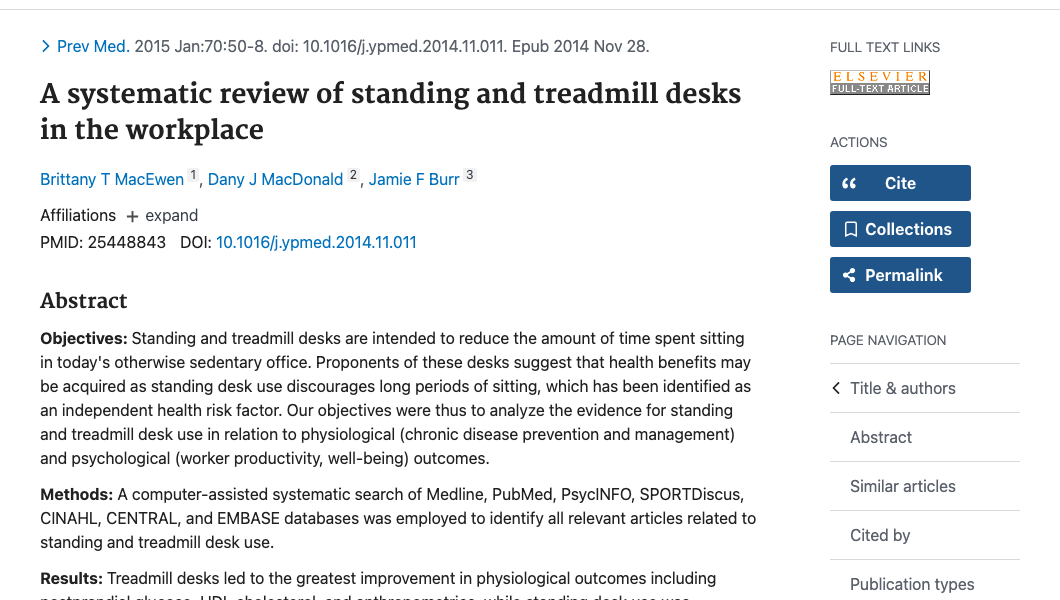
This systematic review from the University of Prince Edward Island evaluated the existing evidence on both standing and treadmill desk use in workplace settings. The authors searched Medline, PubMed, PsycINFO, and other databases to identify studies examining health outcomes and work performance associated with these alternative workstations.
For treadmill desks, the evidence showed improvements in multiple cardiometabolic risk factors including postprandial glucose regulation, HDL cholesterol, and anthropometric measures (body weight and body fat). Standing desks, by contrast, were associated with fewer measurable physiological changes and produced mixed results for psychological well-being.
Importantly, neither desk type appeared to impair work performance, though the authors noted substantial evidence gaps regarding long-term outcomes. The review concluded that treadmill desks showed more promise for physiological health improvements, while standing desks primarily served to break up prolonged sitting with limited direct health benefits beyond reduced sedentary time.
Methods
- Systematic review of multiple electronic databases (Medline, PubMed, PsycINFO, and others)
- Included studies examining standing desks and/or treadmill desks in office settings
- Assessed both health outcomes and work performance
- Evaluated physiological, psychological, and productivity measures
- Narrative synthesis of findings by desk type
Key Results
- Treadmill desks improved postprandial glucose, HDL cholesterol, and body composition
- Treadmill desks showed superior physiological benefits compared to standing desks
- Standing desks associated with few measurable physiological changes
- Standing desks showed mixed results for psychological well-being
- Neither desk type negatively impacted work performance
- Both desk types reduced sedentary time at work
Limitations
- Substantial evidence gaps in the literature at time of review
- Heterogeneous study protocols and outcome measures
- Limited long-term follow-up data available
- Potential self-selection bias in many included studies
- Small sample sizes in most primary studies