Key Takeaway
Review paper proposing that grounding reduces inflammation by allowing free electrons from the earth to neutralize reactive oxygen species in the body.
Summary
This comprehensive review by James Oschman and colleagues presents the theoretical framework for how grounding affects inflammation. The hypothesis is that the earth's surface electrons can enter the body and act as antioxidants, neutralizing free radicals that drive inflammatory processes.
The paper reviews evidence from thermal imaging showing reduced inflammation after grounding, blood viscosity changes, and case reports of wound healing. It proposes grounding as a potential intervention for chronic inflammatory conditions.
While theoretically compelling, the evidence reviewed is largely preliminary and mechanistic rather than from large clinical trials.
Methods
- Review of grounding research and mechanisms
- Analysis of thermal imaging studies
- Integration of electron transfer theory
- Review of case reports and pilot studies
Key Results
- Theoretical framework for electron transfer
- Evidence of reduced inflammation markers
- Improved blood flow and viscosity
- Case reports of accelerated healing
Figures
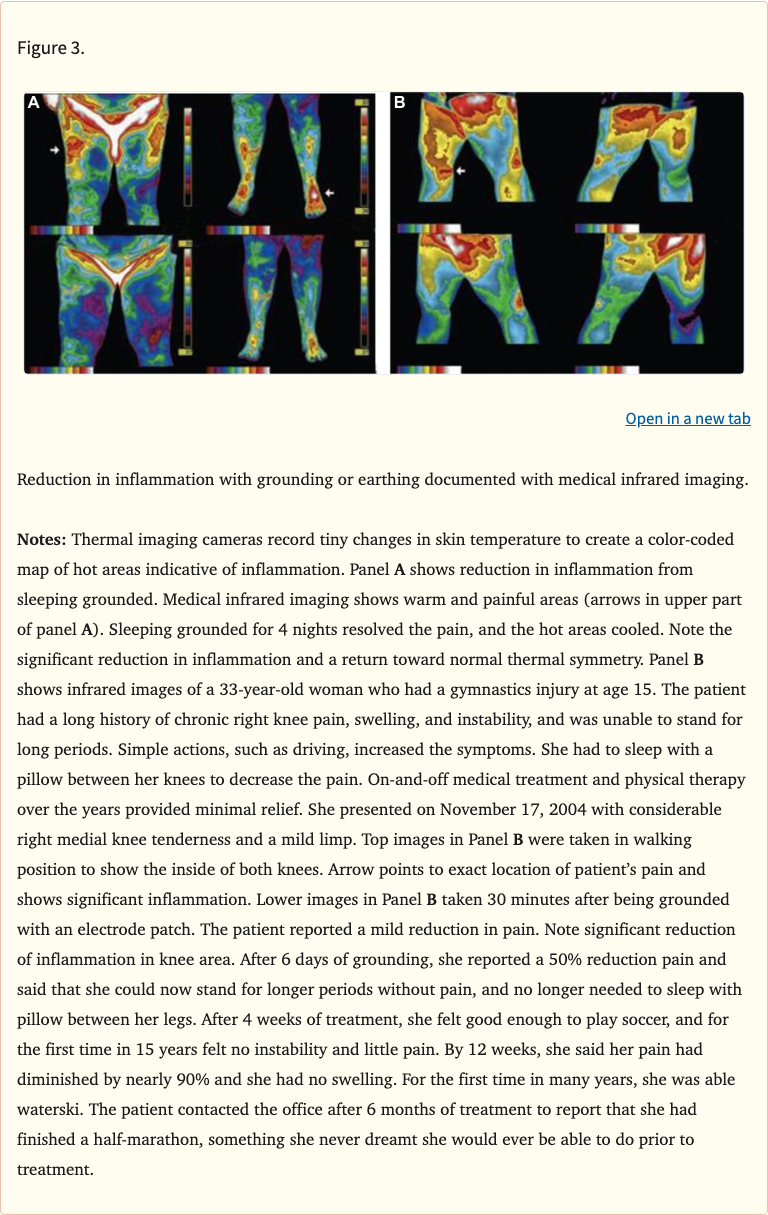 Figure 1
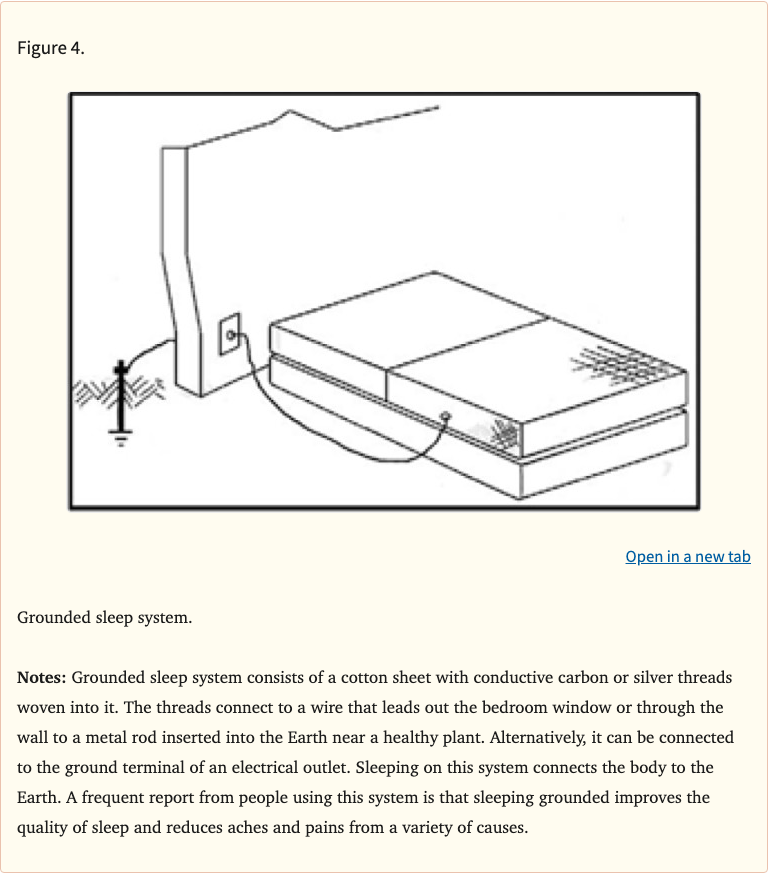 Figure 2
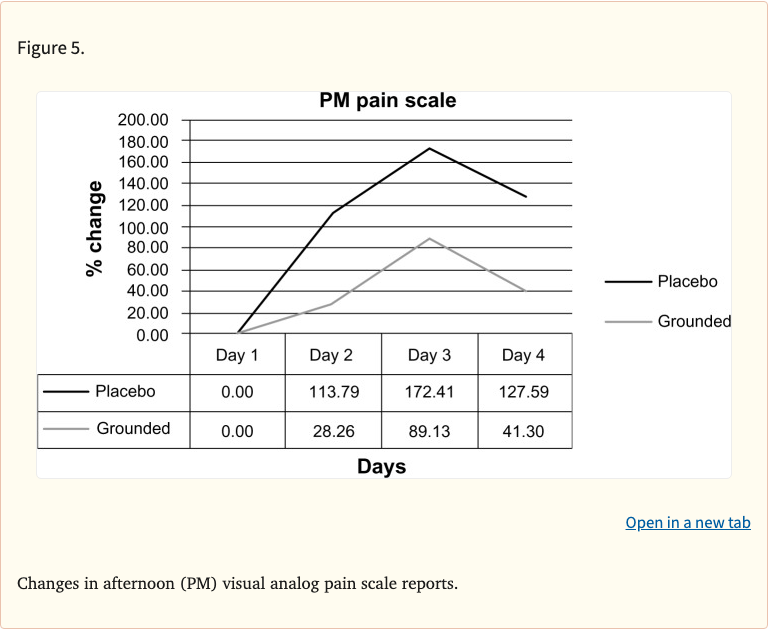 Figure 3
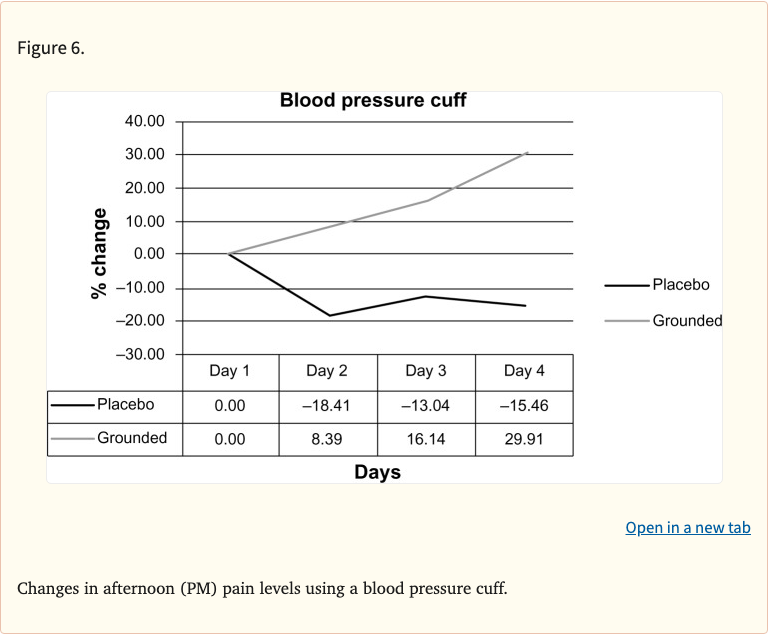 Figure 4
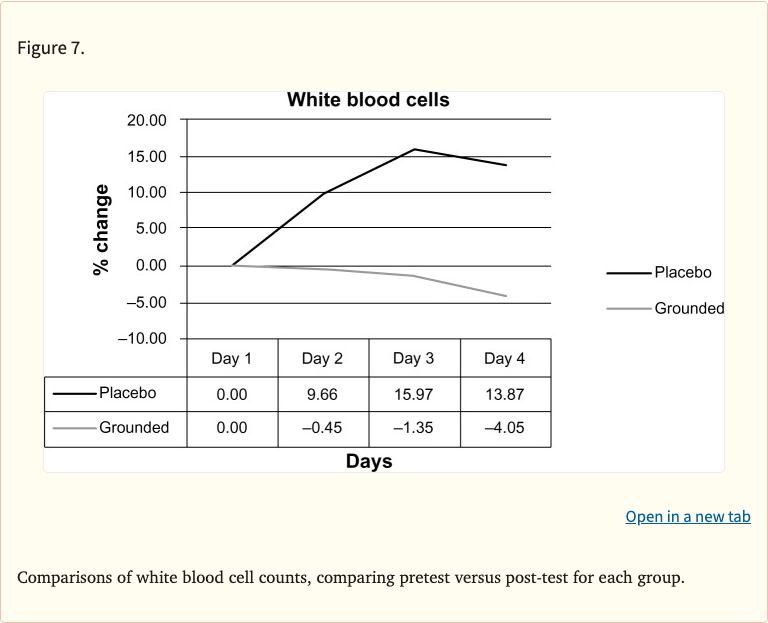 Figure 5
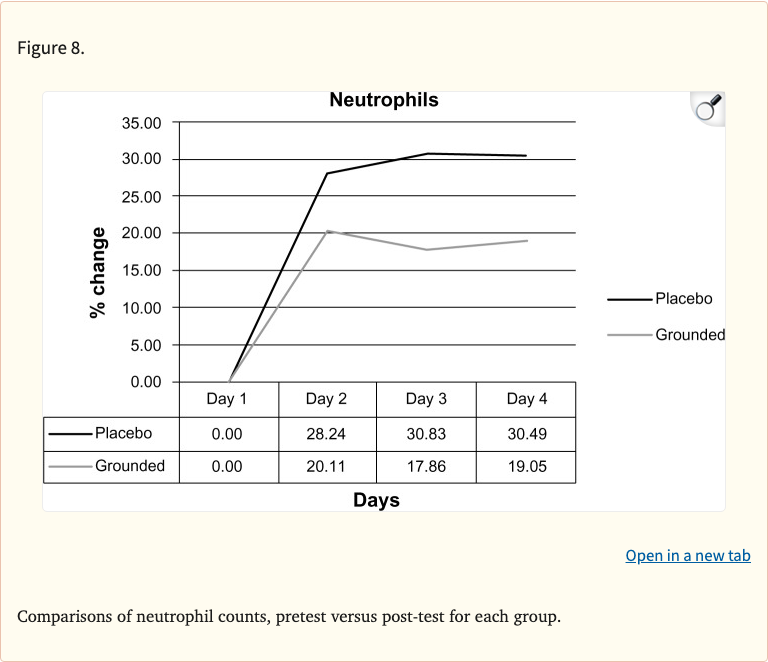 Figure 6
Limitations
- Review paper, not primary research
- Much evidence is preliminary
- Mechanistic focus over clinical outcomes
- Conflict of interest concerns