
Key Takeaway
Meta-analysis of 42 RCTs found yoga reduces evening cortisol, waking cortisol, resting heart rate, systolic blood pressure, fasting blood glucose, and LDL cholesterol vs active controls.
Summary
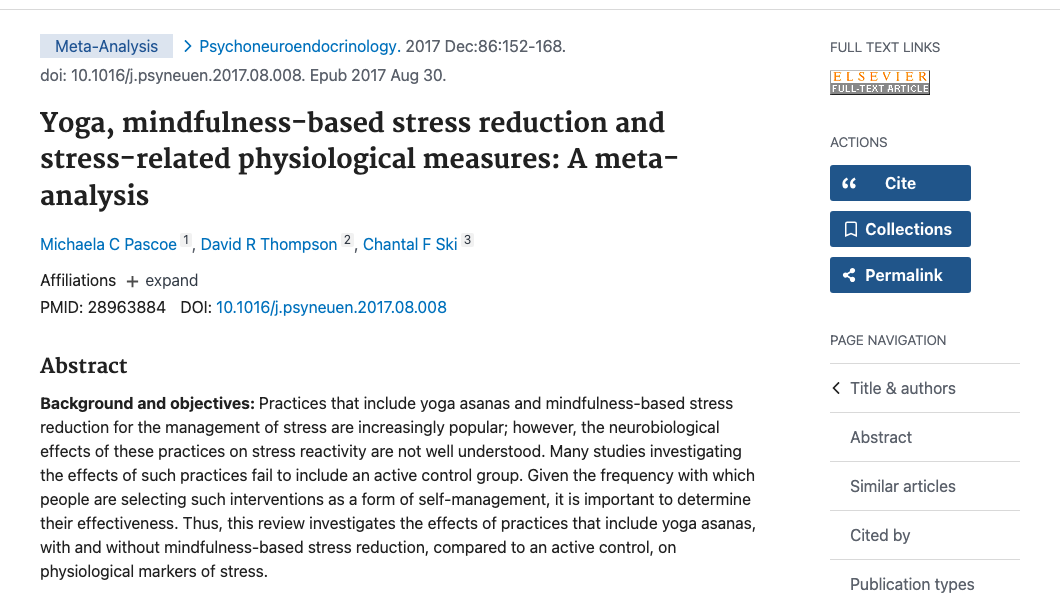
This meta-analysis examined 42 RCTs comparing yoga asanas (with and without mindfulness-based stress reduction) to active control groups across multiple physiological stress markers.
Yoga was associated with reduced evening cortisol, waking cortisol, ambulatory systolic blood pressure, resting heart rate, fasting blood glucose, cholesterol, and LDL. Heart rate variability (high-frequency component) also improved, indicating better parasympathetic tone.
The findings suggest yoga improves regulation of both the sympathetic nervous system and the HPA (hypothalamic-pituitary-adrenal) axis — the two primary stress response systems. This provides a physiological explanation for yoga's well-documented stress reduction effects beyond just subjective mood improvements.
Methods
- Meta-analysis of 42 randomized controlled trials
- Compared yoga asanas (± mindfulness) to active controls
- Outcomes: cortisol, blood pressure, heart rate, HRV, CRP, interleukins, glucose, cholesterol
Key Results
- Reduced evening and waking cortisol
- Lower ambulatory systolic blood pressure
- Lower resting heart rate
- Improved high-frequency HRV (parasympathetic tone)
- Lower fasting blood glucose, cholesterol, and LDL
Limitations
- Heterogeneous interventions across studies
- Various yoga styles and durations make dose-response unclear
- Active controls varied between studies