
Key Takeaway
24 of 26 RCTs reported favorable effects of yoga on inflammatory markers (IL-6, TNF-α, CRP), though pooled meta-analysis results did not reach statistical significance due to high heterogeneity and bias risk.
Summary
This systematic review and meta-analysis examined 26 RCTs on yoga's effects on inflammatory and immune markers in both chronic disease patients and healthy individuals. The most commonly measured markers were IL-6 (17 studies), TNF-α (13 studies), and CRP (10 studies).
The narrative results were encouraging: 24 of 26 studies reported favorable outcomes regardless of yoga type, condition studied, or intervention duration. Most showed reductions in pro-inflammatory markers in yoga groups vs controls. However, the pooled meta-analysis showed effects on IL-6, TNF-α, and CRP that favored yoga but did not reach statistical significance.
The disconnect between individual study results and pooled analysis reflects substantial heterogeneity and poor study quality — only 2 of 26 studies had low risk of bias. The authors conclude yoga can be a complementary intervention for chronic inflammatory conditions but call for better-designed research with standardized protocols and outcome measures.
Methods
- Systematic review and meta-analysis of 26 RCTs
- Included chronic inflammatory conditions and healthy populations
- Markers: IL-6 (17 studies), TNF-α (13), CRP (10), IFN-γ, IL-10, TGF-β, IgA, IL-2
- Risk of bias assessment for all studies
Key Results
- 24/26 studies reported favorable yoga outcomes on inflammatory markers
- Pooled effects on IL-6, TNF-α, CRP favored yoga but not statistically significant
- Only 2/26 studies had low risk of bias
- Substantial heterogeneity across studies
Figures
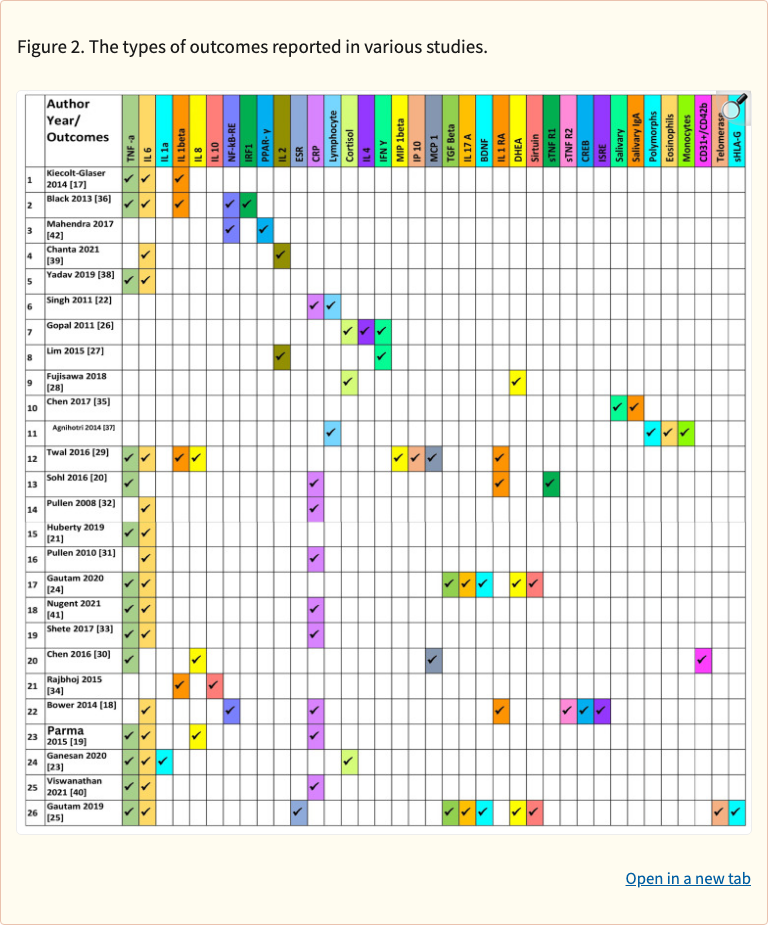 Figure 1
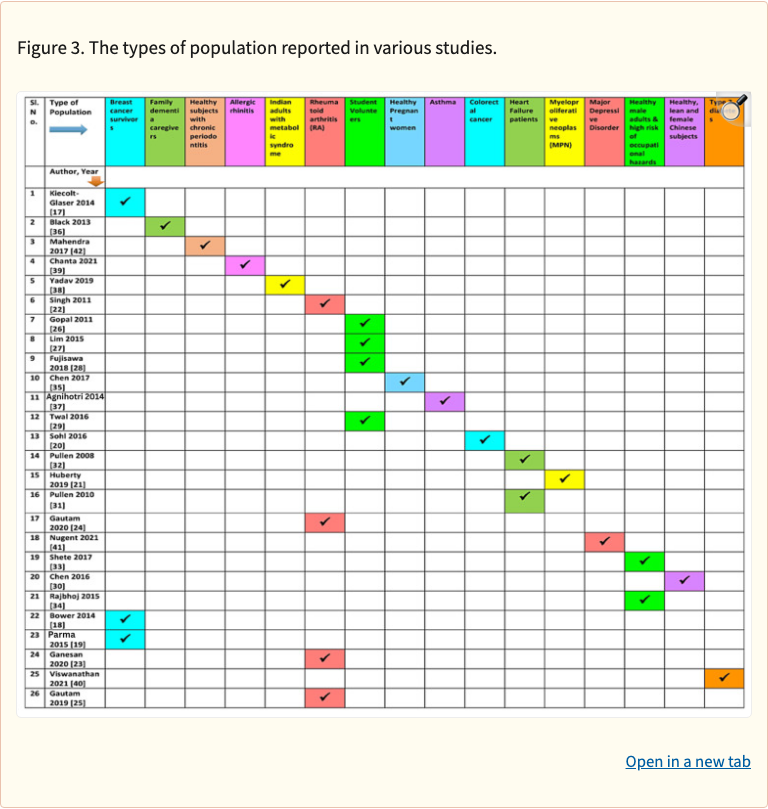 Figure 2
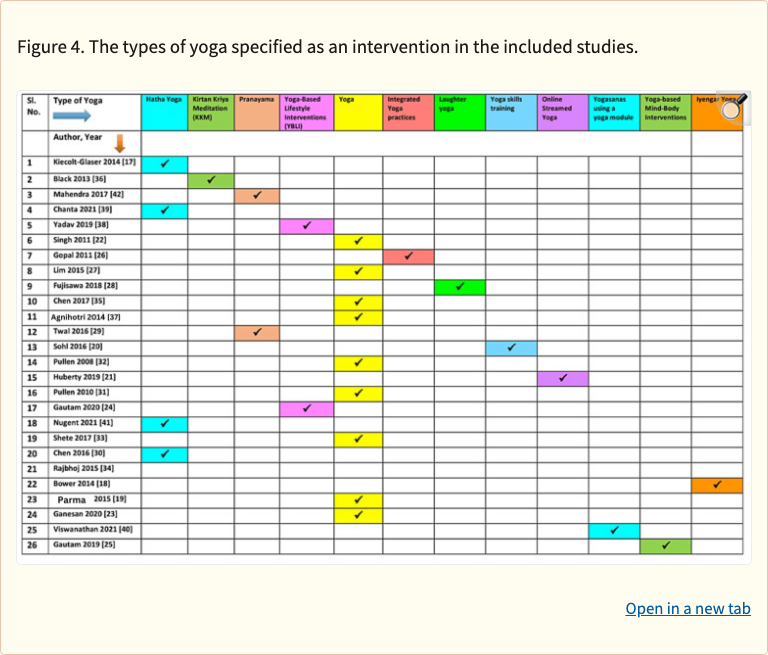 Figure 3
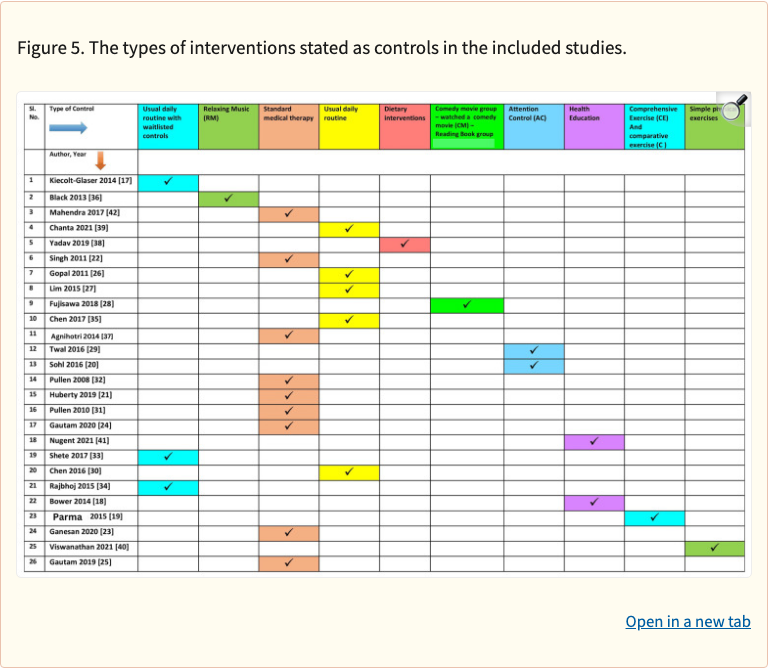 Figure 4
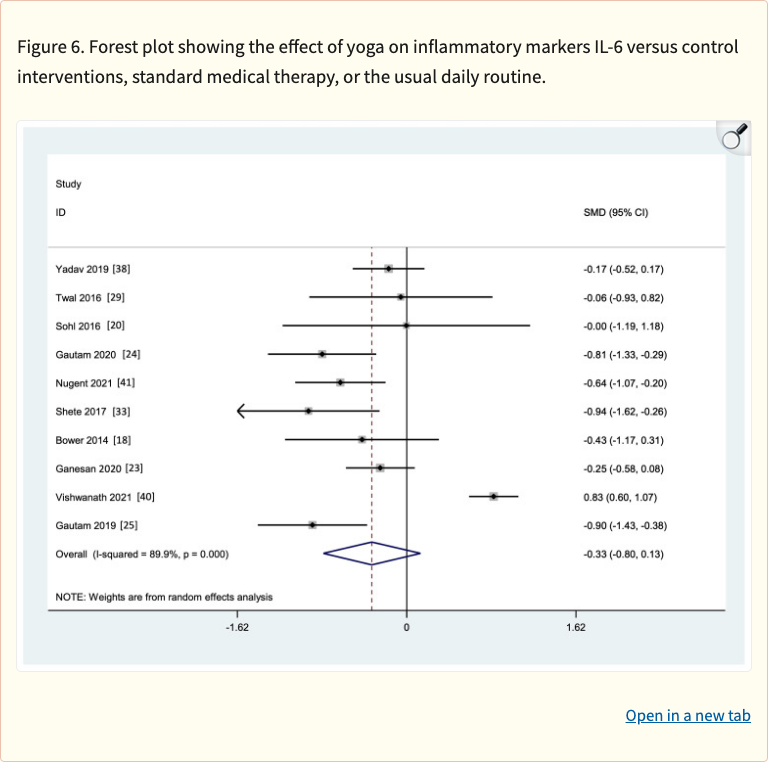 Figure 5
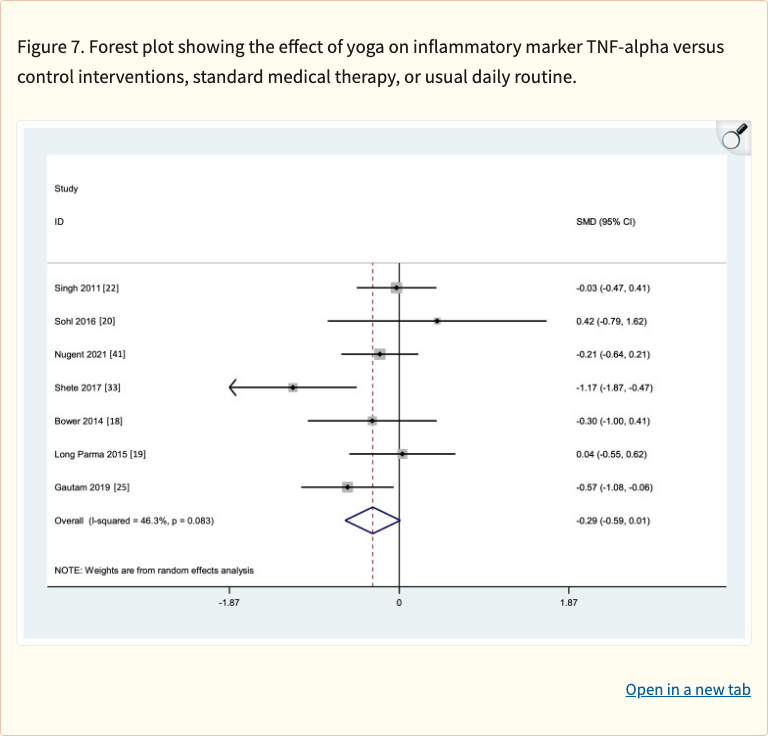 Figure 6
Limitations
- High risk of bias in 24/26 studies
- Heterogeneous yoga types, durations, and populations
- Pooled results not statistically significant despite individual positive studies
- Publication bias possible (favorable results more likely published)