
Key Takeaway
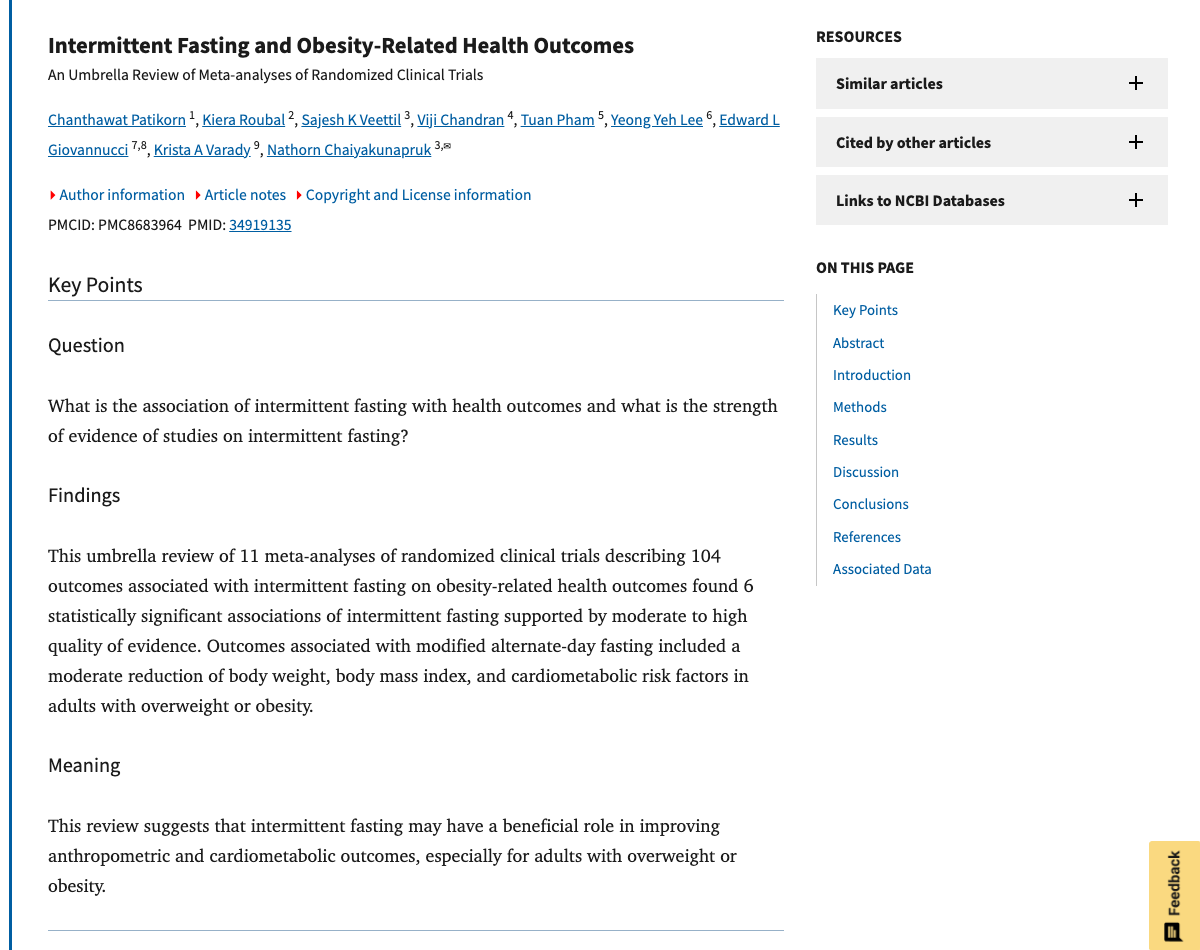
Umbrella review of 11 meta-analyses found intermittent fasting produced significant reductions in body weight (-2.4 to -5.5 kg), BMI, and waist circumference versus controls, with suggestive evidence for improved lipids and insulin resistance.
Summary
This umbrella review published in JAMA Network Open systematically evaluated meta-analyses of randomized clinical trials examining intermittent fasting for obesity-related health outcomes. The authors identified and synthesized 11 meta-analyses covering multiple IF protocols, including alternate-day fasting, modified alternate-day fasting (5:2 diet), and time-restricted eating.
The review used a rigorous evidence classification system, grading findings as convincing, highly suggestive, suggestive, weak, or not significant. Body weight reduction was classified as highly suggestive, with IF producing losses of approximately 2.4 to 5.5 kg compared to ad libitum eating controls. BMI and waist circumference reductions were also well-supported. Improvements in fat mass, LDL cholesterol, total cholesterol, triglycerides, fasting insulin, and HOMA-IR were classified as suggestive evidence.
Notably, when intermittent fasting was compared head-to-head with continuous energy restriction, the differences in weight loss and metabolic markers were generally small and not statistically significant, reinforcing that IF's advantage may lie in feasibility and adherence rather than metabolic superiority. The review provided one of the most comprehensive evidence appraisals for IF published at the time.
Methods
Umbrella review of meta-analyses of randomized clinical trials. Searched PubMed, Embase, Cochrane, and Epistemonikos through June 2021. Included meta-analyses of RCTs examining any intermittent fasting protocol versus control or continuous calorie restriction. Used a standardized evidence classification system (convincing, highly suggestive, suggestive, weak, not significant) based on statistical significance, sample size, heterogeneity, prediction intervals, and small-study effects. Quality of meta-analyses assessed using AMSTAR-2.
Key Results
- Body weight reduction: -2.4 to -5.5 kg vs. ad libitum controls (highly suggestive evidence)
- BMI reduction: significant across meta-analyses (highly suggestive evidence)
- Waist circumference: significant reduction (suggestive evidence)
- Fat mass reduction: significant (suggestive evidence)
- LDL cholesterol, total cholesterol, triglycerides: reduced (suggestive evidence)
- Fasting insulin and HOMA-IR: improved (suggestive evidence)
- Fasting glucose: weak or inconsistent evidence
- Blood pressure: limited evidence, generally not significant
- IF vs. continuous calorie restriction: no significant differences for most outcomes
Figures
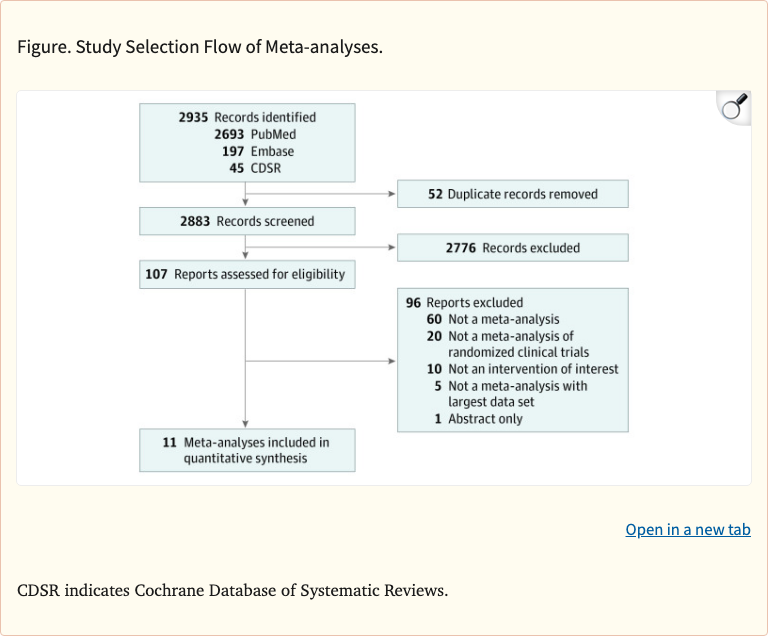 Figure 1
Limitations
- Many included meta-analyses had critically low quality on AMSTAR-2 assessment
- Most underlying RCTs were short-term (3-6 months), limiting long-term conclusions
- Heterogeneity in IF protocols across studies makes protocol-specific conclusions difficult
- Fasting glucose and blood pressure evidence was weaker, suggesting IF may not benefit all metabolic markers equally
- Limited data on lean mass preservation and body composition beyond fat mass
- Cannot assess differential effects by age, sex, or baseline metabolic status from available data

