
Key Takeaway
Comprehensive review demonstrates BPC-157 accelerates wound healing across multiple tissue types including skin burns, diabetic wounds, fistulas, and bone fractures in animal models.
Summary
This comprehensive review examines the wound healing properties of BPC-157 (stable gastric pentadecapeptide) across a wide range of tissue injury models. The authors, from the University of Zagreb where much of the foundational BPC-157 research has been conducted, synthesize evidence from numerous preclinical studies.
BPC-157 demonstrated significant wound healing effects in burn skin lesions, excisional wounds in diabetic rats, tracheocutaneous fistulas, perforated cecum defects, and tibial fractures. The peptide promoted angiogenesis, accelerated granulation tissue formation, and enhanced collagen organization. Notably, BPC-157 showed efficacy even in compromised healing scenarios such as diabetic wound models, where healing is typically impaired.
The review highlights BPC-157's interaction with the nitric oxide system, growth factor pathways, and its ability to counteract tissue damage from corticosteroids and NSAIDs. The authors propose that BPC-157 acts as a mediator of Robert's cytoprotection, extending protective and healing effects beyond the gastrointestinal tract to virtually all organ systems. While the breadth of evidence is impressive, the review acknowledges that human clinical trials remain limited.
Figures
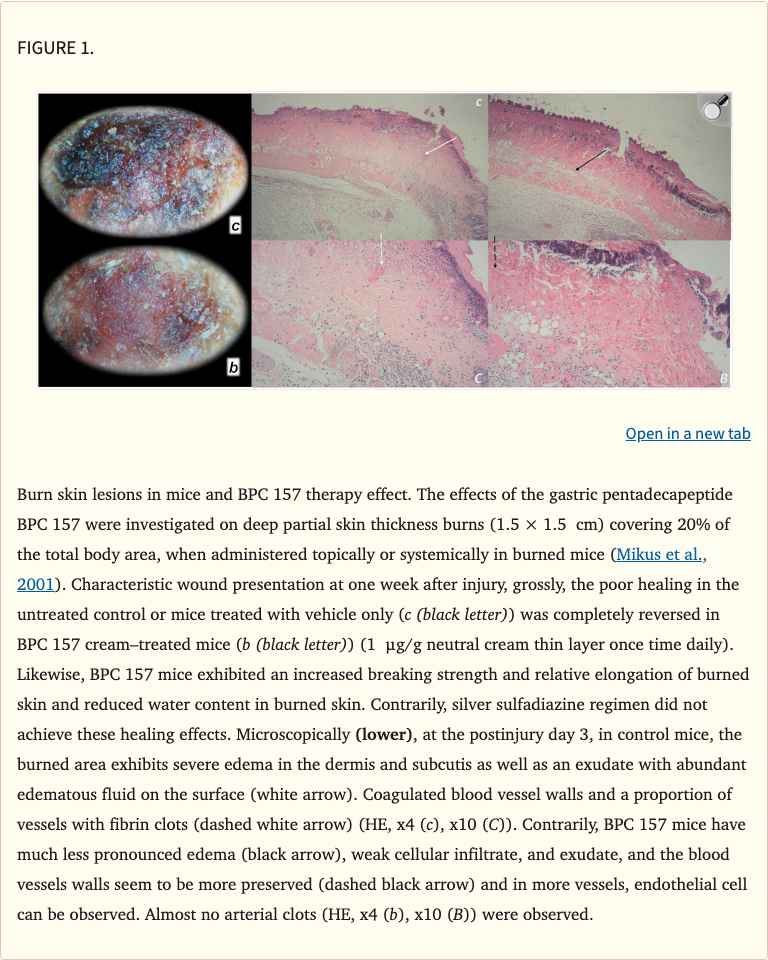 Figure 1
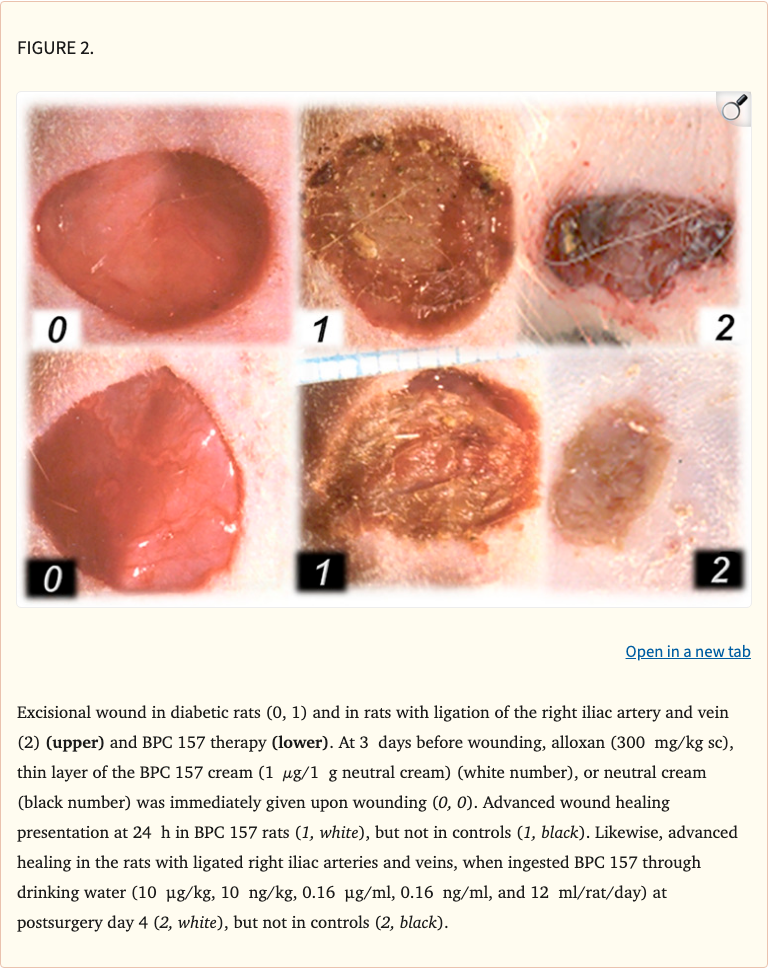 Figure 2
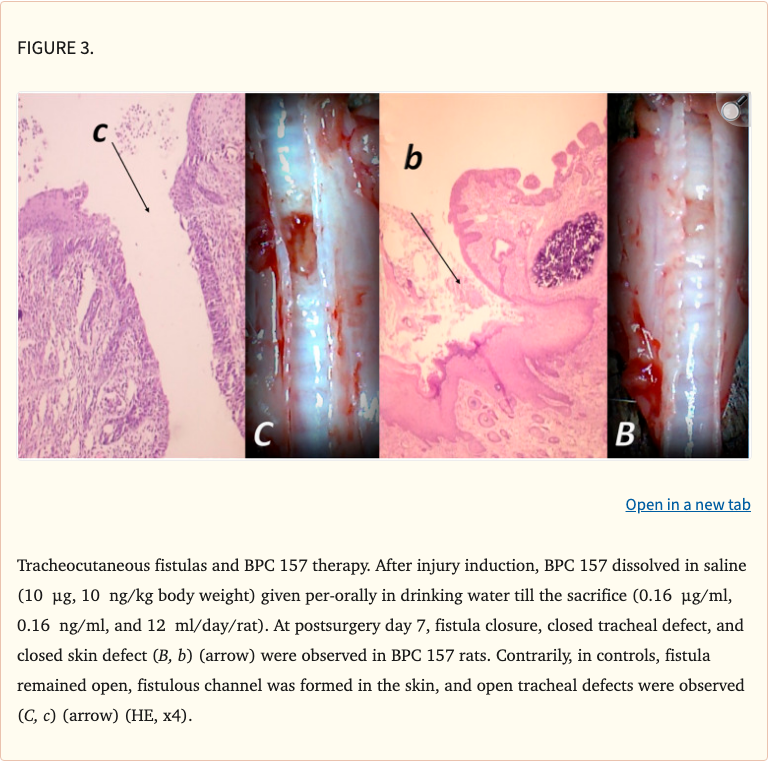 Figure 3
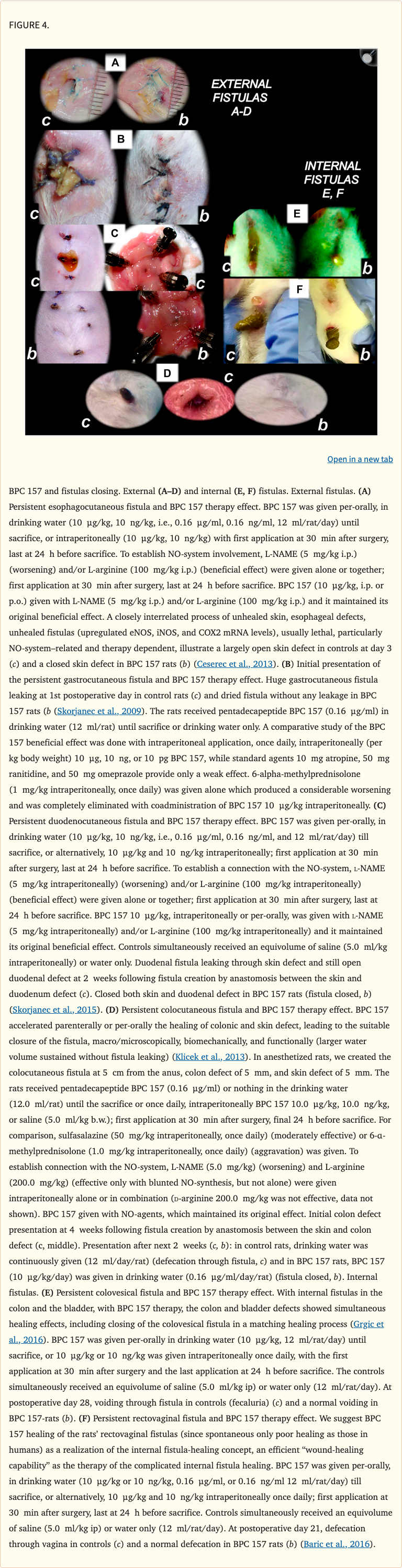 Figure 4
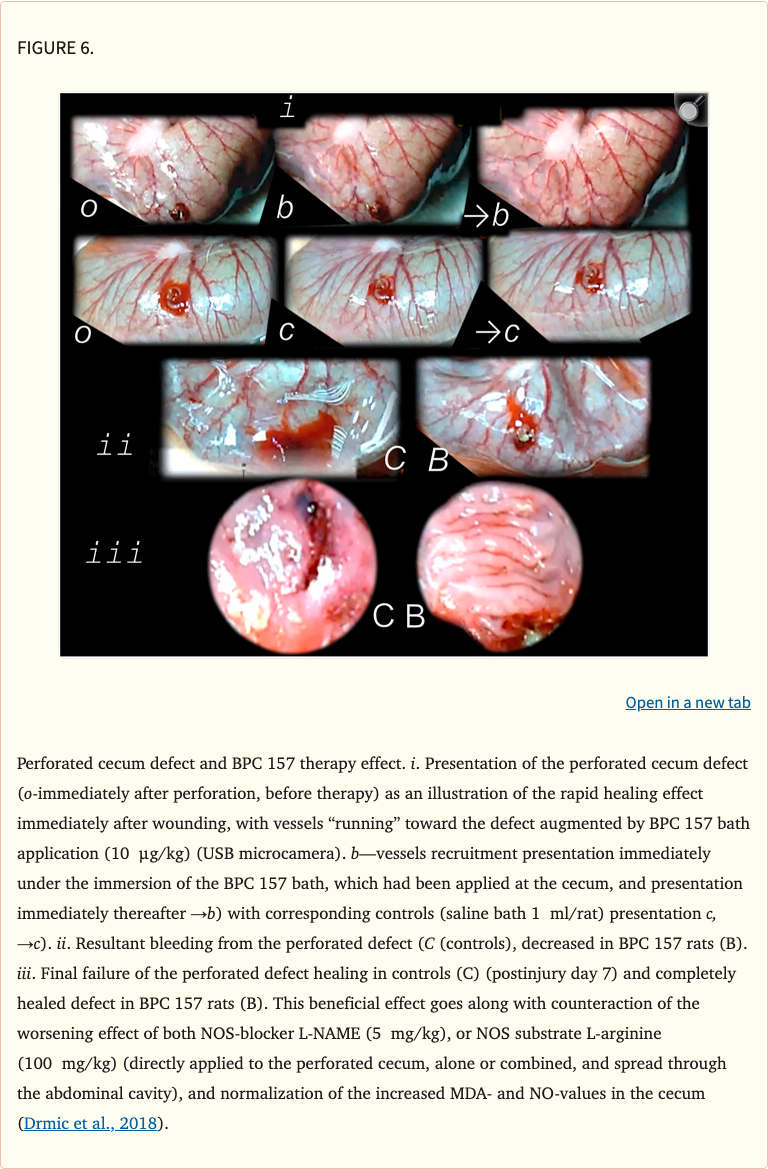 Figure 5
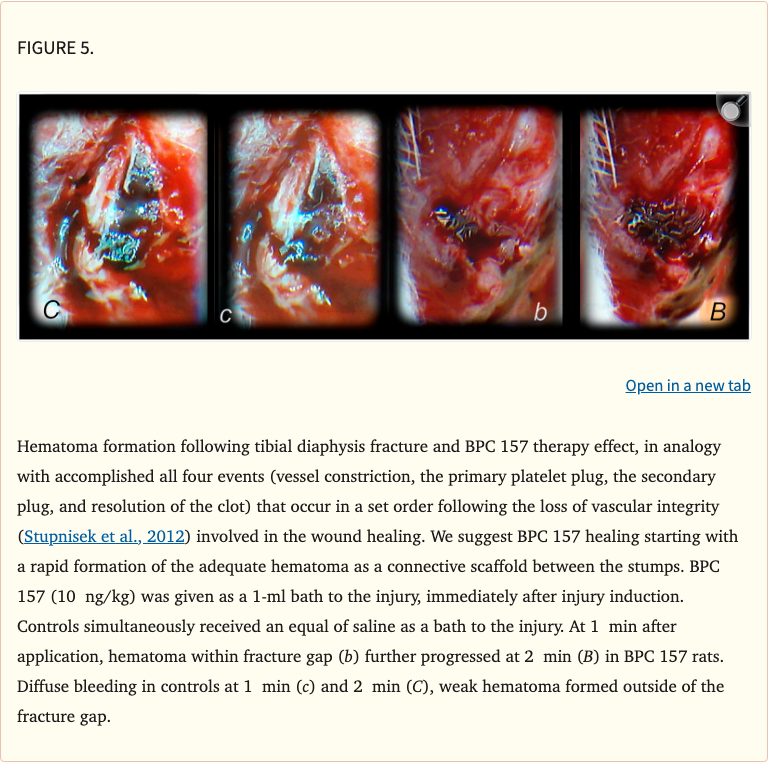 Figure 6