
Key Takeaway
Ricinoleic acid (the active component of castor oil) demonstrated anti-inflammatory and analgesic properties comparable to capsaicin in animal models
Summary
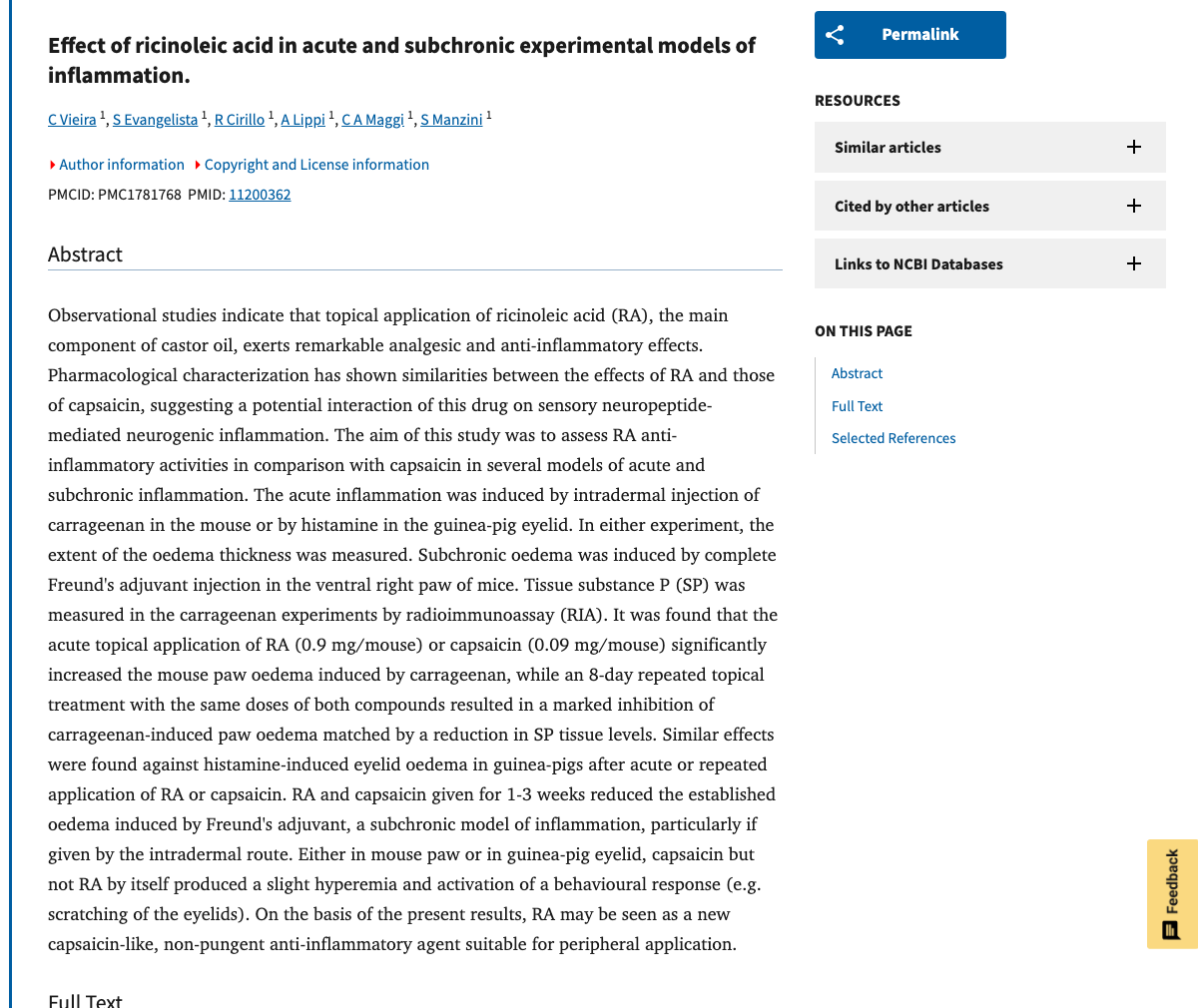
This study investigated the anti-inflammatory and analgesic effects of ricinoleic acid, the primary fatty acid in castor oil, using established animal models of inflammation.
Methods
- Animal study (rats)
- Tested ricinoleic acid in multiple inflammation models
- Carrageenan-induced paw edema model
- Acetic acid writhing test (pain model)
- Compared to capsaicin and standard anti-inflammatories
- Measured edema reduction and pain behaviors
Key Results
- Ricinoleic acid reduced inflammation significantly
- Anti-inflammatory effect comparable to capsaicin
- Analgesic effects observed in pain models
- Dose-dependent response
- Proposed mechanism via substance P pathway
- Effects seen with both oral and topical application
Limitations
- Animal model (may not translate to humans)
- Isolated compound vs whole castor oil
- Acute inflammation models only
- Mechanism not fully elucidated
- Dosing may differ for topical packs