
Key Takeaway
Landmark study showing humans retain photoperiod sensitivity - melatonin secretion duration changes with light exposure patterns, affecting sleep architecture.
Summary
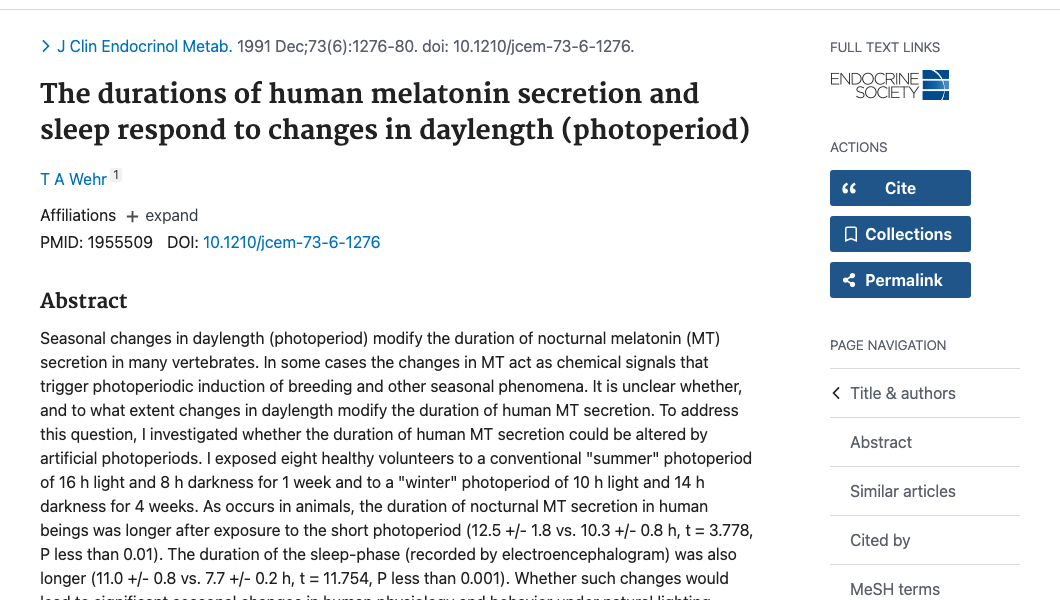
This foundational research demonstrated that humans, like other animals, respond to changes in photoperiod (daylength) with changes in melatonin secretion and sleep patterns.
Volunteers exposed to different artificial light-dark cycles showed significant changes in the duration of their nocturnal melatonin secretion - longer in winter-like conditions, shorter in summer-like conditions.
Methods
- Controlled light exposure experiments
- Melatonin measurement via blood samples
- Sleep pattern monitoring
- Different photoperiod conditions
Key Results
- Melatonin secretion duration responds to daylength
- Sleep patterns change with photoperiod
- Humans retain seasonal photosensitivity
- Circadian rhythms modifiable by light exposure
Limitations
- Artificial laboratory conditions
- Short-term study duration
- Individual variation observed
- Mechanisms not fully characterized
