
Key Takeaway
ESWT significantly improves pain, shoulder function, and range of motion in rotator cuff tendinopathy, with benefits seen across multiple validated outcome measures.
Summary
This systematic review and meta-analysis examined the effectiveness of extracorporeal shockwave therapy (ESWT) specifically for rotator cuff tendinopathy, one of the most common causes of shoulder pain. Published in BMC Musculoskeletal Disorders, the review pooled data from randomized controlled trials evaluating ESWT against control treatments for rotator cuff conditions.
The analysis assessed multiple validated outcome measures including Visual Analog Scale (VAS) for pain, Constant-Murley Score (CMS), UCLA Shoulder Score, range of motion (ROM), American Shoulder and Elbow Surgeons (ASES) score, and total effective rate (TER). Across these measures, ESWT consistently demonstrated significant improvements in pain relief, shoulder function, and mobility compared to control groups.
The comprehensive evaluation across six different outcome domains provides robust evidence supporting ESWT as an effective treatment for rotator cuff tendinopathy. The findings suggest ESWT can meaningfully improve both the pain experience and functional capacity in patients with this common shoulder condition, offering a non-invasive alternative to corticosteroid injections or surgery.
Methods
Systematic review and meta-analysis of RCTs evaluating ESWT for rotator cuff tendinopathy. Databases searched included PubMed, Embase, Cochrane Library, and Web of Science. Outcomes assessed via forest plot meta-analyses for VAS (pain), CMS (shoulder function), UCLA score, ROM, ASES score, and total effective rate. Risk of bias assessed using Cochrane tools. Random-effects models used for pooled analyses.
Key Results
ESWT significantly reduced VAS pain scores compared to controls. Shoulder function improved significantly as measured by Constant-Murley Score, UCLA Shoulder Score, and ASES score. Range of motion showed significant improvement. Total effective rate was significantly higher in ESWT groups. Forest plots for all six outcome measures favored ESWT over control treatments.
Figures
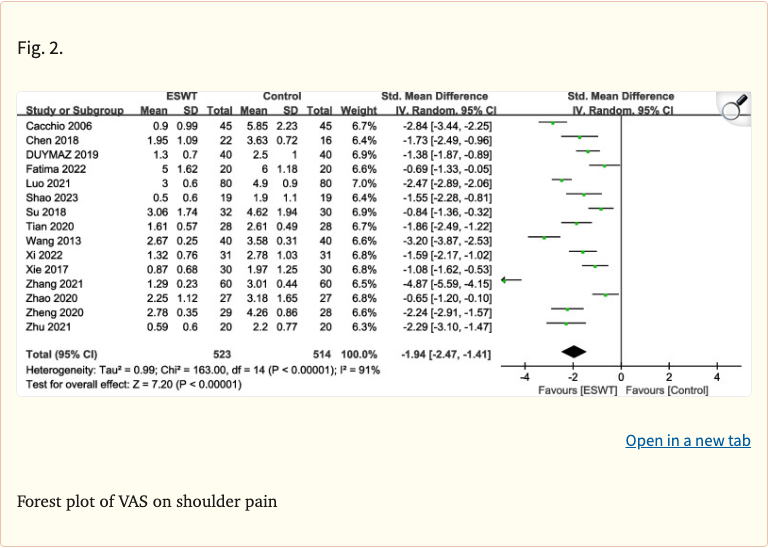 Figure 1
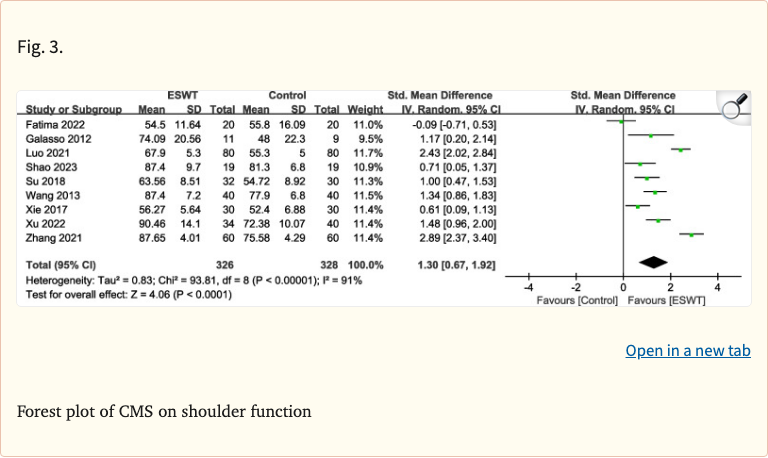 Figure 2
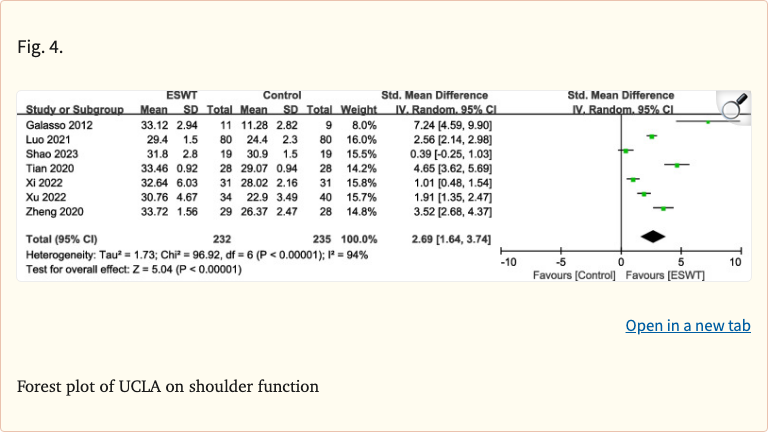 Figure 3
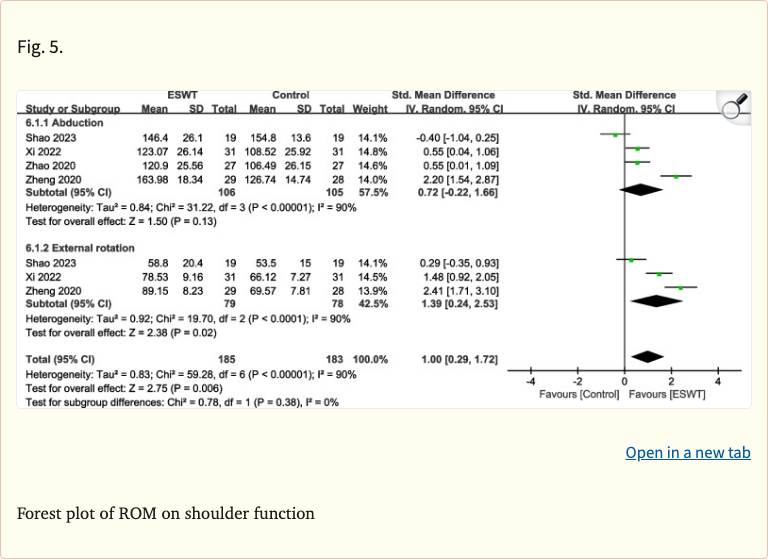 Figure 4
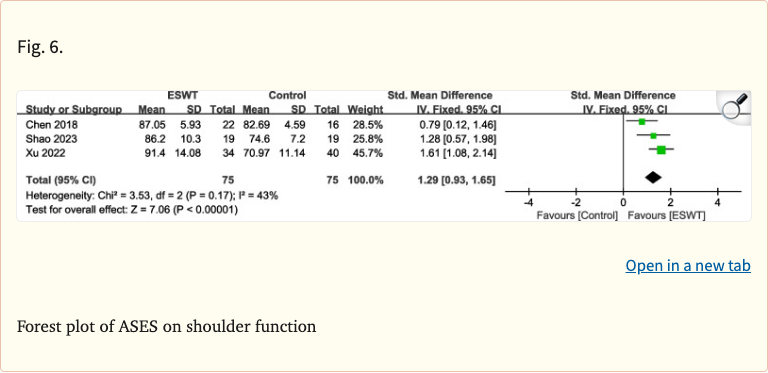 Figure 5
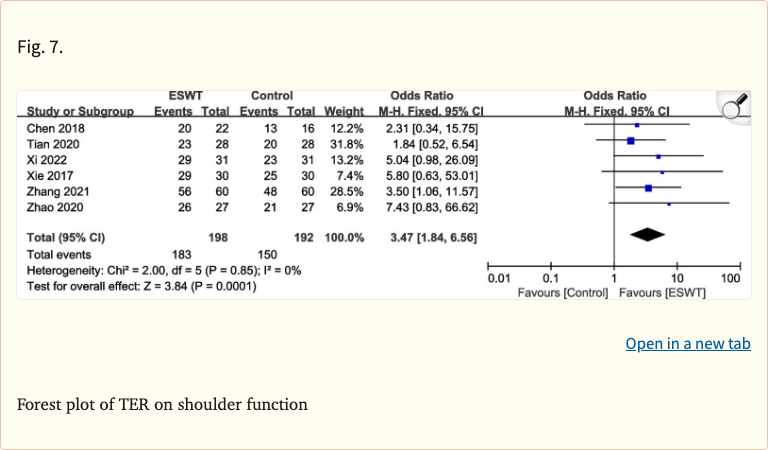 Figure 6
Limitations
Heterogeneity in ESWT protocols across studies (focused vs radial, energy settings, number of sessions). Some studies had relatively small sample sizes. Variability in control group treatments (sham ESWT, physiotherapy, no treatment). Limited data on long-term outcomes beyond 3-6 months. Most studies from single centers. Potential publication bias favoring positive results. Difficulty blinding participants to shockwave treatment.