
Key Takeaway
ESWT significantly reduces pain intensity and improves functional outcomes in myofascial pain syndrome of the trapezius compared to sham or conventional treatments.
Summary
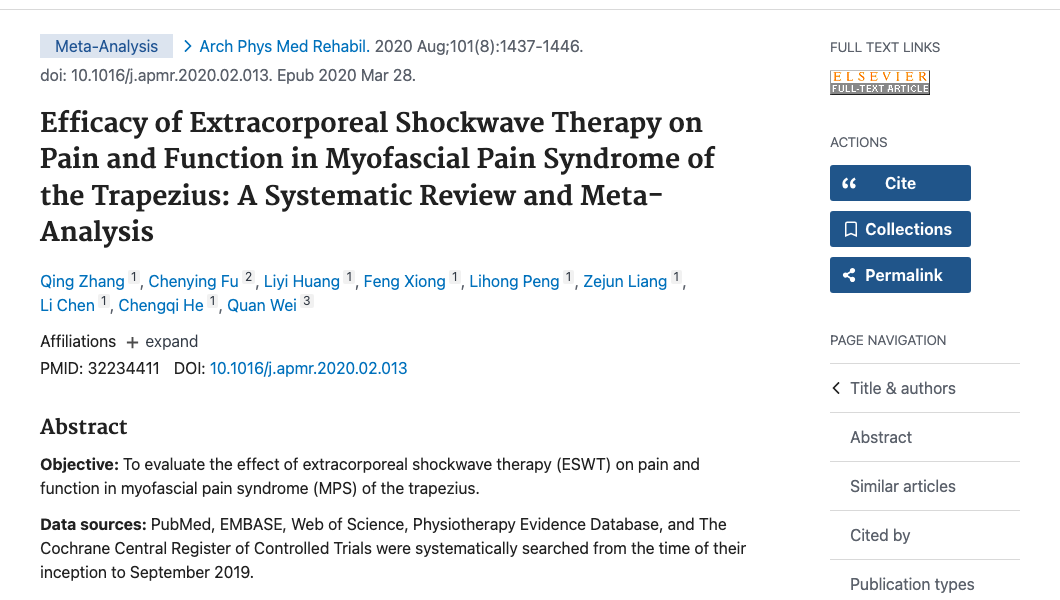
This systematic review and meta-analysis evaluated the efficacy of extracorporeal shockwave therapy (ESWT) for myofascial pain syndrome (MPS) specifically affecting the trapezius muscle. Published in Archives of Physical Medicine and Rehabilitation, the study addressed a common pain condition characterized by trigger points, referred pain patterns, and restricted range of motion in the neck and shoulder region.
The review synthesized data from randomized controlled trials comparing ESWT to sham treatment or conventional therapies for trapezius MPS. Primary outcomes included pain intensity measured via VAS or numeric rating scales and functional outcomes including range of motion and disability measures. The pooled analysis demonstrated that ESWT produced significant improvements in both pain and function compared to control groups.
The findings are clinically relevant because trapezius myofascial pain is extremely prevalent, particularly among office workers and those with repetitive strain. ESWT's ability to target trigger points and reduce pain offers a valuable treatment option beyond manual trigger point therapy, dry needling, or medication. The results support incorporating ESWT into the management of chronic trapezius MPS, especially for patients who have not responded to first-line conservative treatments.
Methods
Systematic review and meta-analysis following PRISMA guidelines. Searched PubMed, Embase, Cochrane Library, CINAHL, and Web of Science for RCTs comparing ESWT to sham or conventional treatments for trapezius myofascial pain syndrome. Primary outcomes were pain intensity (VAS/NRS) and functional measures. Study quality assessed using PEDro scale and Cochrane risk of bias tool. Pooled effect sizes calculated using random-effects meta-analysis.
Key Results
ESWT significantly reduced pain intensity in trapezius MPS compared to control treatments, with clinically meaningful effect sizes. Functional outcomes including neck range of motion and disability scores also improved significantly. Benefits were observed across different ESWT protocols including both focused and radial types. Pain reduction was evident at both short-term and medium-term follow-up assessments.
Limitations
Relatively small number of included RCTs available at the time of the review. Heterogeneity in ESWT protocols (energy levels, frequency, number of sessions). Varied definitions and diagnostic criteria for myofascial pain syndrome across studies. Limited long-term follow-up data. Some studies had small sample sizes and unclear allocation concealment. Difficulty in achieving true blinding with shockwave therapy. Lack of standardized outcome measures across all studies.