
Key Takeaway
HBOT carries a modestly higher risk of adverse effects than control treatments, with ear barotrauma being the most common side effect.
Summary
This systematic review and meta-analysis assessed the safety profile of hyperbaric oxygen therapy by examining adverse effects reported across randomized controlled trials. The authors searched multiple databases and included studies that compared HBOT to sham or conventional treatments across various clinical conditions.
The pooled analysis found that HBOT was associated with a statistically significant increase in overall adverse events compared to control groups. Ear barotrauma (middle ear pain and pressure injuries) was the most frequently reported side effect, consistent with the known mechanical effects of pressure changes on the ear. Other adverse effects included transient myopia, claustrophobia, and fatigue, though serious complications such as seizures or pulmonary oxygen toxicity were rare.
Subgroup analyses examined whether adverse event rates varied by number of sessions, chamber pressure, and clinical indication. Higher pressures (>=2.0 ATA) and greater session counts tended to be associated with more adverse events, though heterogeneity across studies was notable. The findings support HBOT as a generally safe intervention when administered under proper clinical supervision, while reinforcing the importance of patient screening and monitoring.
Methods
Systematic search of PubMed, Embase, Cochrane Library, and Web of Science for randomized controlled trials comparing HBOT to sham or conventional therapy. Risk of bias was assessed using the Cochrane tool. Data were pooled using random-effects meta-analysis with risk ratios and 95% confidence intervals. Subgroup analyses were conducted by session count (<=10, 11-20, >20), chamber pressure (<2.0 ATA, >=2.0 ATA), and clinical indication (TBI, stroke, diabetic foot ulcers, etc.).
Key Results
- HBOT was associated with a significantly higher overall adverse event rate vs. controls (pooled RR with 95% CI crossing above 1.0 in primary analysis)
- Ear barotrauma was the most common adverse event across all indications
- Higher chamber pressures (>=2.0 ATA) were associated with more adverse events than lower pressures
- Higher session counts (>20 sessions) showed a trend toward increased adverse events
- Serious adverse events (seizures, pulmonary toxicity) were rare across all included studies
- Heterogeneity was moderate to high across studies
Figures
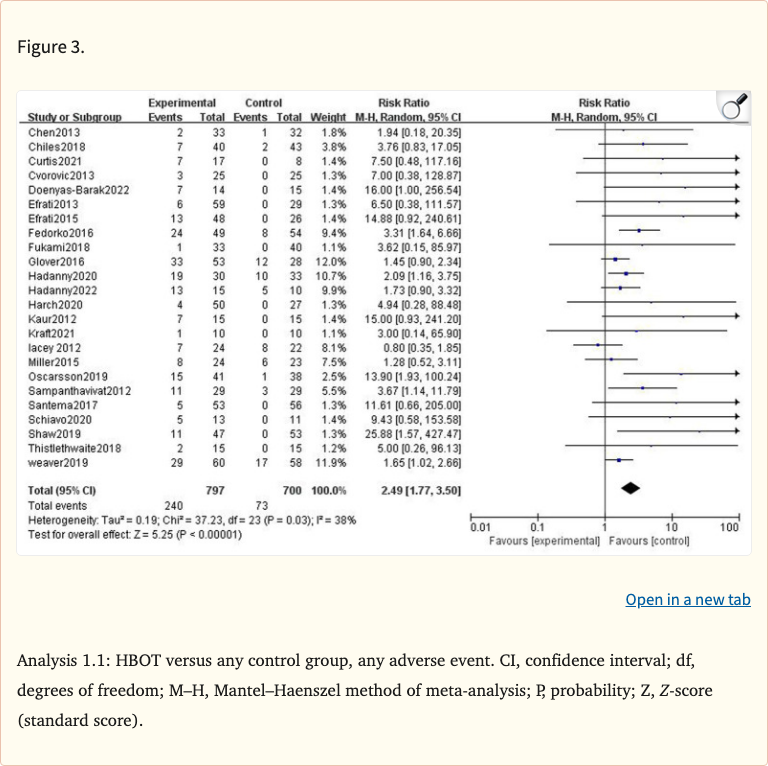 Figure 1
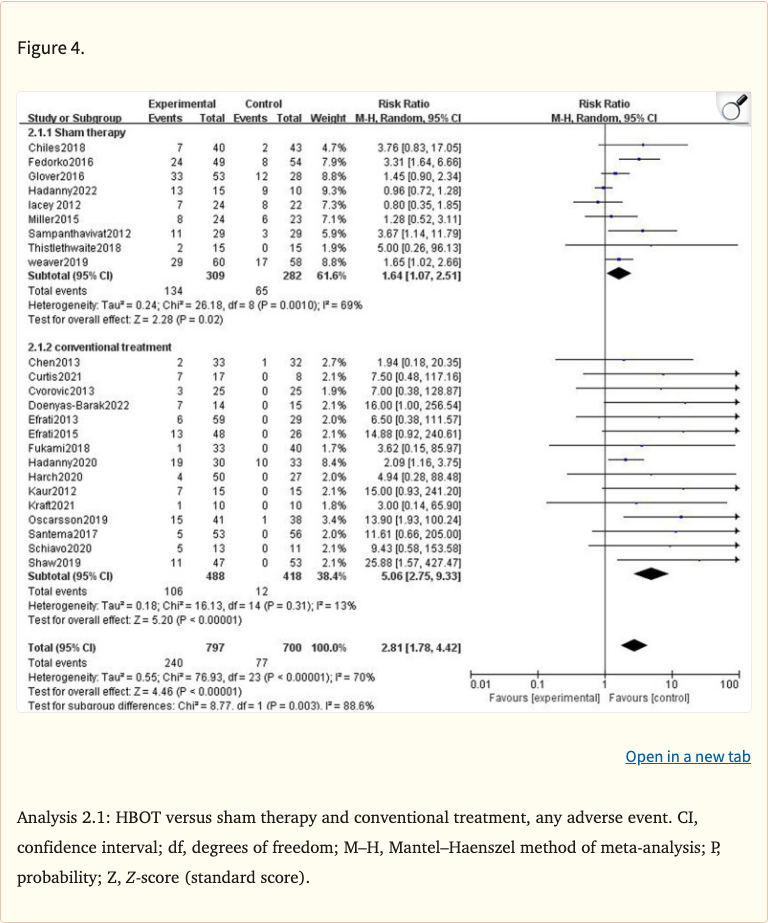 Figure 2
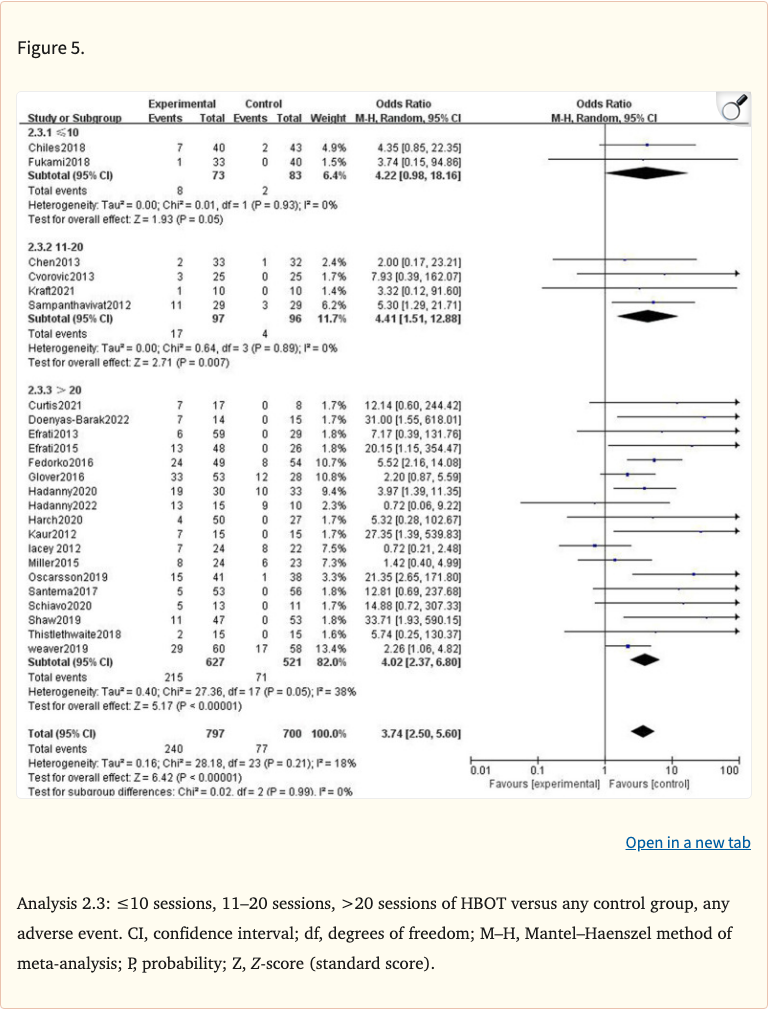 Figure 3
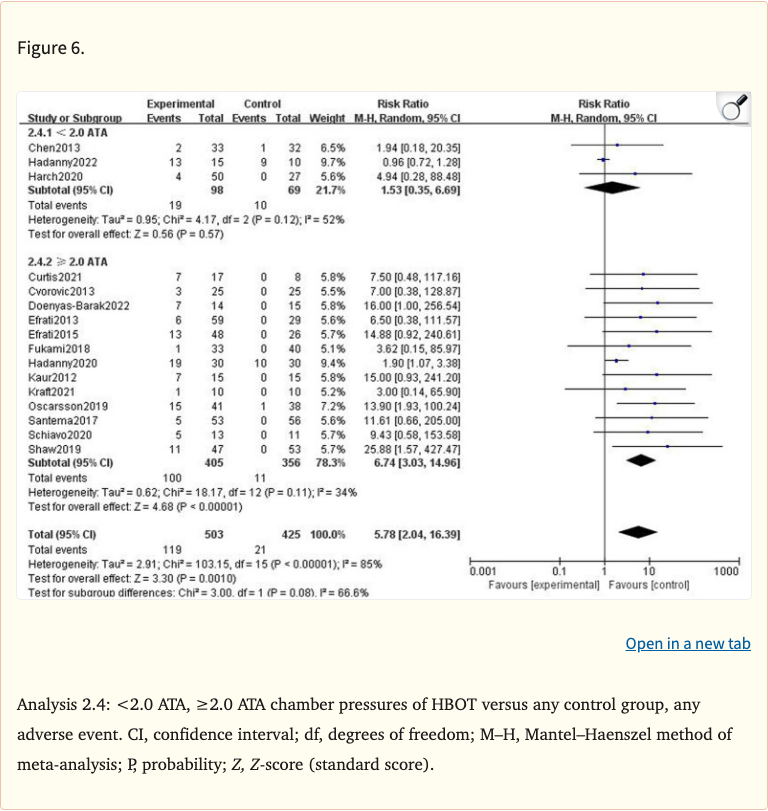 Figure 4
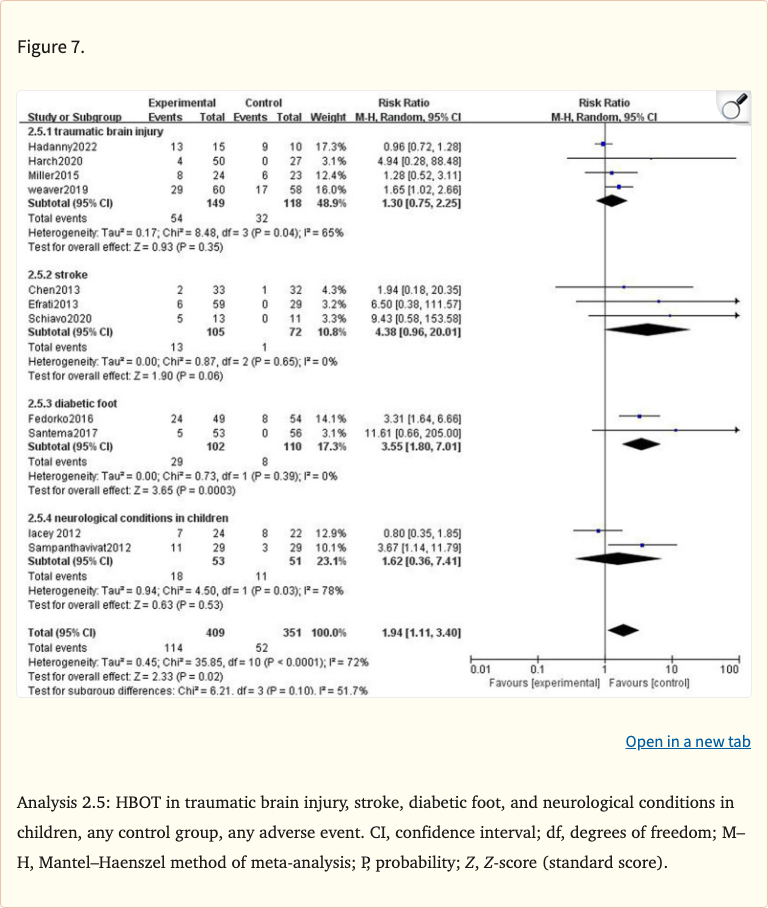 Figure 5
Limitations
- Significant heterogeneity across included studies due to varying clinical populations, pressures, and session protocols
- Many included trials had small sample sizes, limiting power for rare adverse event detection
- Adverse event reporting and definitions varied across studies
- Sham protocols differed (some used air at pressure, others used no intervention), complicating comparisons
- Long-term adverse effects beyond the study periods were not captured