Key Takeaway
Vitamin C supplementation in critically ill patients reduced ICU and hospital length of stay and duration of mechanical ventilation, but did not significantly reduce mortality.
Summary
This 2024 systematic review and meta-analysis examined the effects of vitamin C supplementation on outcomes in critically ill patients across randomized controlled trials. The study cast a broader net than sepsis-specific analyses, including patients in ICU settings with various critical conditions.
The meta-analysis found that vitamin C supplementation was associated with significant reductions in ICU length of stay, hospital length of stay, and duration of mechanical ventilation. However, it did not demonstrate a statistically significant reduction in overall mortality. These findings suggest that while vitamin C may improve recovery metrics and resource utilization in ICU settings, its impact on survival remains uncertain.
The authors assessed risk of bias across included studies and found variable quality. They concluded that vitamin C supplementation appears to be a safe and potentially beneficial adjunctive therapy for critically ill patients, particularly for reducing the burden of intensive care. Larger, higher-quality RCTs with standardized dosing protocols are needed to clarify the mortality question.
Figures
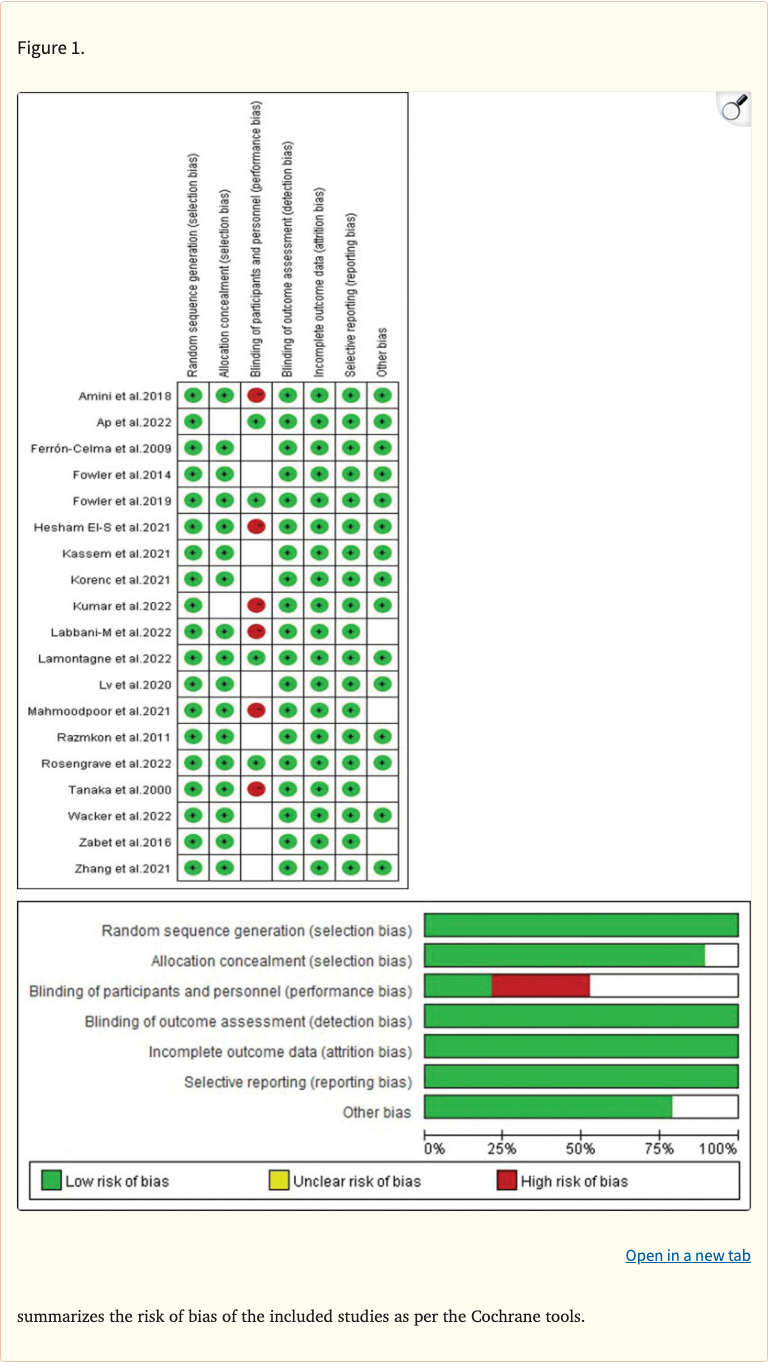 Figure 1
 Figure 2