
Key Takeaway
Network meta-analysis of 23 RCTs found treadmill desks were among the most effective active workstation interventions for reducing sedentary time in office workers.
Summary
This network meta-analysis compared multiple types of active workstations for their effectiveness in reducing work-specific sedentary time among office workers. The authors included 23 randomized controlled trials and used network meta-analysis methodology to rank different intervention types against each other, even when direct head-to-head comparisons were unavailable.
The analysis compared interventions including treadmill desks, standing desks, cycling desks, and multi-component approaches. Treadmill desks ranked among the most effective interventions for reducing sedentary time during the workday. The network meta-analysis approach provided a probability ranking of all interventions, giving clearer guidance on which active workstation types deliver the greatest reductions in sitting time.
The strength of this study lies in its comprehensive comparison across 23 RCTs and its use of network meta-analysis to generate relative effectiveness rankings. The findings support treadmill desks as a top-tier option for organizations looking to reduce employee sedentary behavior, with robust evidence from randomized controlled trial data.
Figures
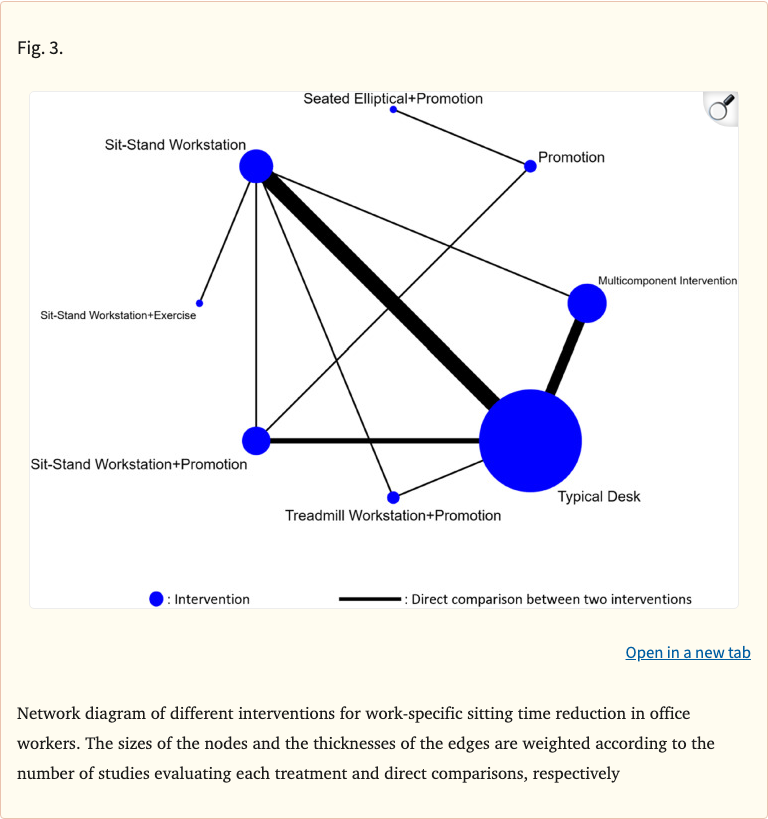 Figure 1
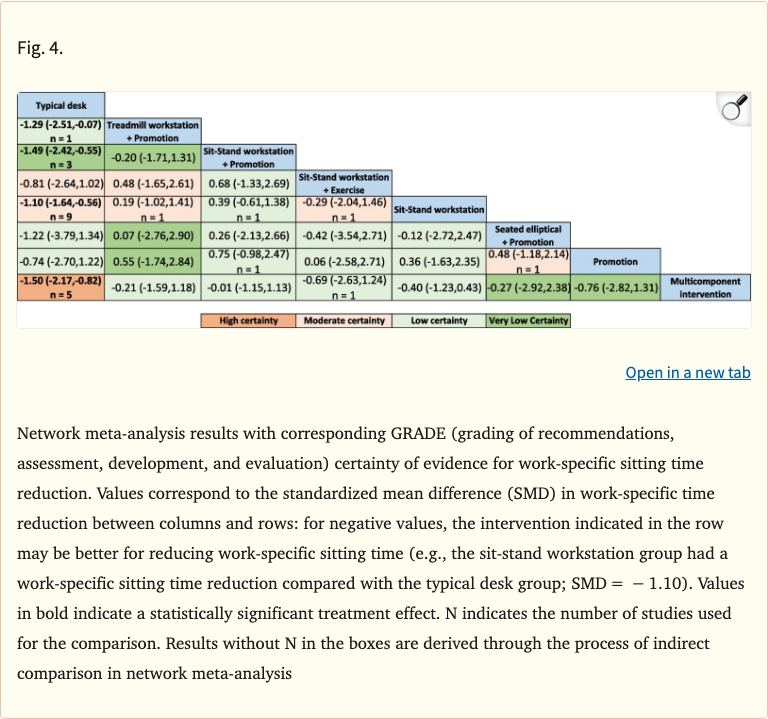 Figure 2
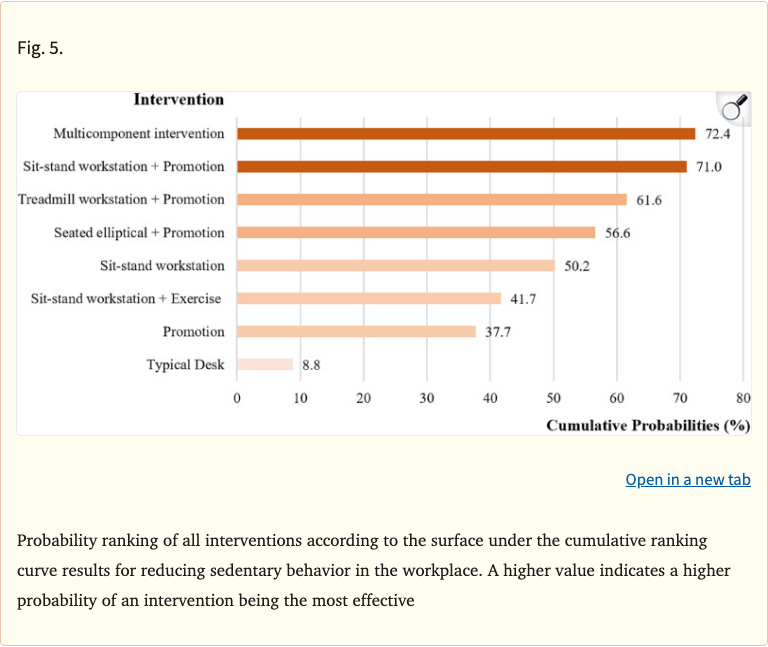 Figure 3