Summary
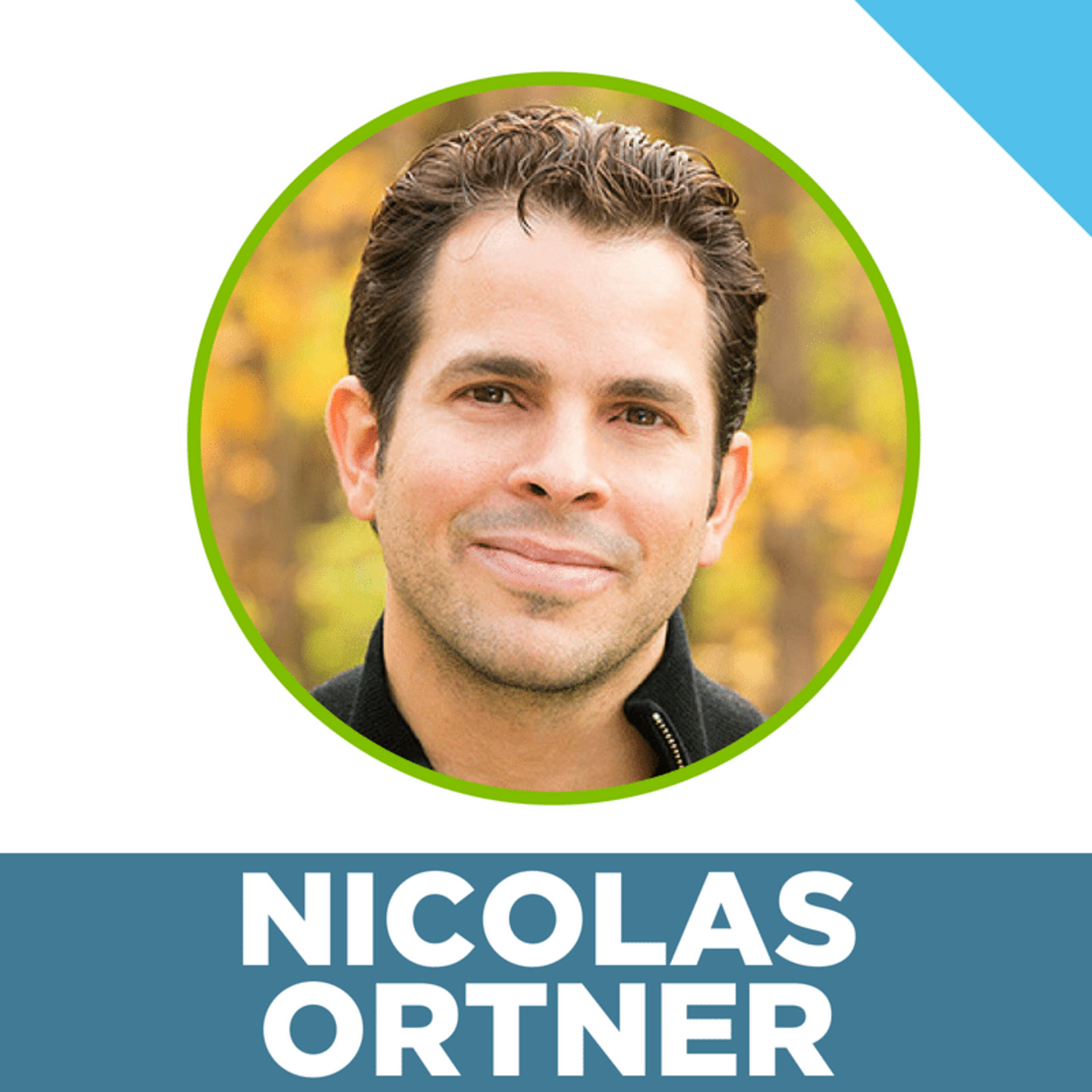
Ben Greenfield interviews Nick Ortner, author of The Tapping Solution and producer of the Tapping Solution documentary, about whether EFT is pseudoscience or a legitimate healing modality. Nick traces the history from Roger Callahan's 1979 discovery with a water-phobic patient through Gary Craig's simplification into EFT, and shares his own journey from skeptic to practitioner after watching a friend's football shoulder injury disappear during a car ride tapping session. Nick leads Ben through a live five-minute pain relief tapping session, targeting Ben's tight hamstring (rated a 6/10), walking through all the meridian points with setup statements and release phrases. They discuss the research -- over 100 published studies including cortisol reduction and DNA/RNA studies Nick's foundation has funded, available at research.eftuniverse.com. Nick shares the story of Sandy Hook mother Scarlett Lewis, who stopped a 3 AM panic attack with 10 minutes of solo tapping and fell right back to sleep. Ben pushes on the skeptic questions -- placebo effect, dismantling studies separating tapping from affirmations -- and Nick acknowledges the placebo effect is real and beneficial, while citing mechanism studies showing tapping itself is an active ingredient. They also discuss Dr. Mercola's early support for EFT in clinical practice.
Key Points
- Nick's foundation has funded or supported over 100 research studies on EFT, available at research.eftuniverse.com
- Roger Callahan discovered tapping in 1979 when tapping the stomach meridian point under a patient's eye cured her water phobia in one minute
- Gary Craig simplified the approach into EFT by tapping all major meridian endpoints every time rather than different sequences for different issues
- Dismantling studies have shown tapping itself is an active main ingredient beyond just the affirmation component
- Nick's foundation funded cortisol saliva tests and is studying DNA/RNA changes from tapping
- Sandy Hook mother Scarlett Lewis stopped a 3 AM panic attack with 10 minutes of solo tapping and fell back to sleep
- A woman's chronic tooth infection (visible on X-rays) cleared after tapping released stored grief, with post-tapping X-rays showing the infection gone
- Dr. Mercola found that patients who weren't getting better on his protocols often had unresolved emotional issues that tapping could address
Key Moments
Origin story - one minute cured a water phobia
Nick recounts how Roger Callahan discovered tapping in 1979 when he had a patient with a water phobia tap underneath her eye on the stomach meridian endpoint, curing the phobia in about one minute, then traces the evolution from thought field therapy to Gary Craig's simplified EFT.
"he said, well, try tapping underneath your eye while you look at the water. So she did that. She tapped for about a minute. And in that moment, which is still astounding, in that minute, the water phobia completely cleared. She just wasn't scared of it anymore."
Live pain relief tapping session with Ben Greenfield
Nick leads Ben through a live five-minute tapping session for his tight hamstring, walking through all the meridian points from karate chop through top of head with setup statements and release phrases while focusing on the physical pain.
"even though I'm holding on to this issue I choose to relax now"
Tooth infection cleared after tapping released stored grief
Nick shares the story of Kathy, whose chronic toothache and infection persisted through multiple root canals and antibiotics for two and a half years, but cleared after tapping on grief from her mother's recent death -- with before and after X-rays showing the infection was gone.
"We're bringing it up in order to send that calming signal to the amygdala in order to release that stress response. So if there's pain in your body, just feel into that pain for a moment. And now we go on to the side of the eye. It's not at the temple, right next to the eye on the bone. Again, one side or both sides. If something stressful happened, I want you to just think about it. If that hamstring got hurt in a particular event, something you were doing, just bring that to mind. Where did this pain come from? When did it start? Now we move under the eye. Maybe as you tune into that pain or stress in your body, you notice some emotions. So if I were to ask you if there was an emotion in that pain or there's an emotion in your body, what would it be? And some people will say anger or grief or sadness or anxiety. Under the nose. And just tune in to those feelings now. Being present with the pain. Being present with your thoughts and feelings about the pain or about the stress or about the anxiety. And now we move underneath the mouth, below the lip, above the chin, and that little crease in there, tapping gently, focusing on this stressful issue, focusing on what you're feeling and what you want to let go. For the collarbone point, feel for the two little bones of the collarbone and go just right below it. You can tap with all ten fingers of both hands. Tapping and thumping away, focusing on that issue. What's this all about? What's this pain about? What's this stress about? What's coming up for you? And how can you let it go? Two points left in this round. We go underneath the arm, three inches underneath the armpitit right on the broad line for women either side of the body tapping gently being focused on this challenge this stress this issue last point right at the top of the head right at the crown tapping gently being present to this stressful issue and now we'll do one more quick round back to the eyebrow and just say out loud it's hard to let this go it's hard to let this go side of the eye all this pain in my body all this pain in my body under the eye it's safe to feel it it's safe to feel it under the nose and it's safe to begin to release it And it's safe to begin to release it. And it's safe to begin to release it. Under the mouth. Letting it go. Letting it go. Collarbone. From every cell in my body. From every cell in my body. Under the arm. Right now. Right now. Top of the head. Right now. Right now. Take a deep breath in. And let it go. go that was a quick experience and now we tune back in so you check in on that anxiety that was an eight and where is it now you check in the pain where is it now and and then you also ask yourself what else came up now you know i'm guiding you know people through a very general process, so using general language and cues. If you're working one-on-one with someone or working more specifically on something, you can talk about. People will say, I remember working with a lady, Kathy, who had a terrible toothache for two and a half years, multiple root canals, antibiotics, nothing would do the job. And I asked her, when did this pain start? and she had never thought about that question or been asked that question because it's you know something doctors don't usually ask when it comes to a toothache i said what was going on in your life and she said my mom had just passed away like that weekend we went to vegas it was a total surprise it was a total shock and she made that connection that that horrible event happened right when her toothache happened and when that infection happened. We tapped. This was actually live on stage for Hay House. And I think we were in Baltimore or Washington, D.C. Three thousand people. She just came up from the audience. Her pain went from about an eight or nine to a two or three in those 15 minutes. And then my favorite part of it, she went home, got the book, did more tapping, got rid of the pain completely. And listen to this, man, this is my favorite part because this is what I know you and your listeners who care about the science and research and the reality of this as they should. She had x-rays from her dentist before the tapping. She had x-rays because they do x-rays with the root canal and you could clearly see in all her x-rays a huge infection around her tooth. So her tooth was infected, and that's why it hurt. She took antibiotics, root canals, nothing worked. She did the tapping. Pain goes away, and now people go, oh, well, is that in her head or whatever? She goes back. The infection's gone. Really? I have the x-rays. Yeah, I have the x-rays in the pain relief book. It's like some Wimff stuff where he shuts down the cytokines from eating ecoli by uh breathing and sitting sitting sitting in cold snow listen i love wim yeah um yeah she allowed her body to heal right the grief the pain the anxiety was continuing to stress the body and then no matter what outside interventions she was given the body wouldn't heal and just from you know doing the tapping and people say oh so it was the tapping that cured the body. And then no matter what outside interventions she was given, the body wouldn't heal. And just from, you know, doing the tapping and people say, Oh, so it was the tapping that cured the infection. No, what I think happened is that tapping allowed her body to relax about louder body, let go, allowed those healing mechanisms to turn on. And then right. Put her in a de-stress place where she actually could heal. Exactly. Yeah. It's like, it's like what people say about cancer. I was listening to somebody talk about this earlier today, about how the body is not going to heal itself of cancer if you're just constantly moving and asking the body to be performing all the time, under stress all the time, traveling all the time. It was, what was it? Oh, it was my friend Brian Johnson. He has this thing called Philosopher's Notes where he'll do certain books and cover certain books. And he covered this book called Anti-Cancer. And I think it was the author of the book eventually died. He went to relapse for a long time and beat his cancer eventually died he said the reason was because like he he wrote this book or he started speaking and he just started making himself more available to the world and speaking and and not giving his body a chance to just be unstressed and on its own and eventually relapse and that was how uh he died of cancer um because he didn't put himself into a state where his body could heal or where it could stay healed. It's a really interesting go-go culture. Right. It's like, so I got sick for the first time in seven years, four days ago. You can hear I'm still just a little bit congested. I got the flu. I was down and out for two days in bed. But it was right at the tail end of having a film team come to my house and film a documentary and a whole bunch of workouts to begin to prepare for this year's race season. And your body will force you to stop at some point. You can either do it yourself or your body can force you to do it. And in my case, and, and, um, you know, in my case, my body just put me into bed where I couldn't move. And it was a, it was a good reminder of my own mortality and a good way to keep me humble and a good way to help to remind me to slow down and to say no sometimes. And, uh, yeah, slow down. Seven years is a good run though. Well done. Yeah. As, as my friend Paul check says, you know, you make yourself available to the world 24-7. As cool as that is and as much as it stokes the ego, there's drawbacks. Right behind me here in my office is a tiny little black device that I can blow into and it tells me how much fat I'm burning and how many carbs I'm burning. It's called the Lumen. It's the world's first handheld metabolic coach. It's a device that measures your metabolism through your breath. Look, I used to run an exercise physiology lab. We used to have a lot of tubes and a lot of equipment and a lot of big, heavy boxes to be able to test how many calories, how much fat, and how many carbs you're burning. And now I feel like an idiot because, actually, I feel old because technology has progressed to the point where now it's in a tiny little handheld device smaller than a phone. And it just ties to an app that tells you if you're burning fat or carbs. And not only that, but it gives you tailored guidance to improve your nutrition, your workouts, sleep, your stress management, all based on a simple breath. So it's incredible. It's convenient. Again, it makes me feel like a dinosaur using all this techie stuff back in my exercise physiology days that now is teeny, teeny, tiny and super convenient. If you want to check this thing out and find out how much fat and how many carbs you're burning and how to keep your metabolism healthy, then go to lumen.me, L-U-M-E-N.me slash Greenfield to get 20% off your Lumen. That's lumen.me slash Greenfield. I'm a very responsible drinker. I have one cocktail or one glass of wine when I go to a restaurant. Occasionally, if it's a hot date with my wife, I have a cocktail, then we split a glass of wine. And I mean, yeah, really, I'm a total lightweight. But regardless of how much you drink, it's great to feel incredible the next day. So enter pre-alcohol. Pre-alcohol is a probiotic drink that breaks down the byproduct of alcohol responsible for rough mornings after drinking or just mornings on which you want to feel your best after some drinking. It's engineered by a team of PhD microbiologists, pre-alcohol, made by a company called Z-Biotics. It's the world's first genetically engineered probiotic. It was invented by PhD scientists to tackle rough mornings after drinking. Here's how it works. When you drink, alcohol gets converted into a toxic byproduct in the gut. It's that byproduct, not dehydration, contrary to popular belief. That's to blame for your rough next day. Pre-alcohol produces an enzyme to break that byproduct down. So you just make pre-alcohol your first drink of the night before you drink any alcohol. Then you drink responsibly and you will feel your best tomorrow. This stuff works, especially with the holiday season upon us. I know some of us might be venturing outside our normal comfort zone when it comes to how much alcohol we consume. With pre-alcohol, you can stay on track and not let this holiday season throw you off course. I'm stocked up. It's time for you to get stocked up on the Z Biotics pre-alcohol. Go to zbiotics.com. That's the letter Z, biotics.com slash ben15 to learn more and get 15% off your first order when you use ben15 at checkout. Z Biotics is backed with a 100% money back guarantee. If you're unsatisfied for any reason, they'll refund your money. No questions asked. Remember to head to zbiotics.com slash Ben 15 and use the code Ben 15 at checkout for 15% off. You're going to love it. I am addicted to this stuff. It's the richest, creamiest, most delicious honey I've ever had. It's called Manukora honey. You can't make this up. It's made by master beekeepers in the remote forests of New Zealand. The bees collect the nester from Manuka tea tree. You may have heard of Manuka honey before. It's extremely good for you. This stuff, what they do is they make it in such a way that it has three times more antioxidants and prebiotics than your average honey. And this Manu Cora honey has a special antibacterial in it called methylglyoxal, MGO. It comes from the nectar of the tea tree. So they third-party test every single harvest or MGO, and they make these results available through their QR system online. It's a game changer. All you need is one teaspoon each day to get the most out of all the amazing bioactive compounds in Manuka, but you're going to want more than that. I mean, breakfast, toast, tea, coffee, protein shakes, salad dressings. I use it as a steak rub last night. It is incredible. It's a honey with superpowers and even if it had none of those superpowers, it tastes better than any honey I've ever had in my life. So it's easier now than ever to try Manukora honey. You go to manukora.com slash Ben. That's M-A-N-U-K-O-R-A.com slash Ben to get 25 bucks off their starter kit. Comes with the MGO 850 plus. It's a lot of MGO. Manuka honey jar. Five honey travels sticks. A wooden spoon to make getting your honey convenient. And a guidebook. It's incredible. Monocora honey. So anyways, I want to get back to your football player and shoulder story, but already I've got some skeptic questions for you based on what we just did. first of all how much of this is me just doing the effort like could I just stand there and do those affirmations that you said and not tap? Like, has anybody ever looked into what if you just do the affirmations or, and I'm going to be a very advanced devil's advocate now, what if you just do the tapping without the affirmations? Like, why do you do both? Yeah, look, I mean, this is what I think. It is my belief. There's been some research studies that have, you know, they call them dismantling studies, right? Try to pull apart the mechanisms and, you know, what's what in the tapping action. You know, there are some mechanism papers that have shown specifically that, you know, the tapping is an active main ingredient that makes the difference. Now, if you stand there and do those affirmations, that's good for you too, right? So I sort of think that all of it combines for the maximum effect. So if you say, great, we have the affirmations, and let's call that 10% of the result or plus 10 points in what result you're going to get. Okay. And then you have the tapping and then, yeah, that by itself can have something. Then you have working with someone who's good. So if you've got a one-on-one relationship with a competent practitioner who knows what they're doing, they're going to do a better job. If you, you know, so as you stack all these different elements on, people always say the placebo effect. Is it the placebo of course it is everything has a placebo effect in it right like everything you know modern medicine is fights at rib eye steaks rib eye steaks are not a placebo not at all at all you cannot tell me i've eaten a ribeye steak and make me feel better but i can guarantee when i sink my teeth into a big juicy French cut bone in ribeye, there's zero placebo. It's just freaking 100% pure protein and ambrosia. So everything. So, you know, we say the placebo effect as if it's a bad thing. No, it's a good thing. It's the power of the mind to heal. So we might as well use that placebo effect. If you're going to do something, I mean, really, whatever you do, whether you do tapping or whether, you know, you listen to another podcast and say, hey, I'm going to try this. If you go into it with that positive expectation, it's going to work better. If you pick up a supplement and you're like, and you just listened to 10 podcasts telling you how great that supplement is, its efficacy is likely to improve because we've shown that. We've shown that the body creates these healing chemicals. So, you know, my feeling is that it's all of it combined. That's where the magic really happens. And, you know. But nobody's ever actually like just studied what happens when you tap these points or what happens when you just do an affirmation? No, I mean, they have studied it. So let me see if I can pull up a research study. Well, you're pulling it up. I mean, I guess Louise Hay's book is all affirmations without tapping, right? Like that's an example of affirmations, I suppose. Maybe tapping, like an example of tapping without affirmations would just be like acupressure or acupuncture. I mean, because you're putting pressure on certain meridians, right? Yeah, well, 100%. And people, it's like, hey, if you want to do acupuncture with it, like, great. Yeah, there's been a couple dismantling studies. So one that I'm reading here now, I mean, there's over 100 research studies on tapping. I never memorize them all. I'm too busy actually doing the tapping. Where are you finding them? So the best link for everyone to check out, and we put some show notes too, is, let me give you the exact link. It's, let me make sure I get it right. So it's research.eftuniverse.com. That's my friend, Dawson Church. We funded a lot of the studies through our foundation, but he's the guy who actually gets them done. And you can see on there, anxiety, PTSD, one after another showing really consistent results. You funded the research though? Some of it. You guys ever get called out for that because you wrote a book and did a documentary and stuff? No, honestly. And if people say that, first off, I can only fund a couple of them because they're so expensive."
Sandy Hook mother stops panic attack with solo tapping
Nick describes how Scarlett Lewis, who lost her son in the Sandy Hook shootings, woke at 3 AM with a panic attack and was about to call 911, but instead did 10 minutes of solo tapping and fell right back to sleep, illustrating tapping's power as a self-administered emergency tool.
"she did 10 minutes of tapping by herself in the midst of that panic attack. And when she was done, she was asleep. She went right to sleep."