Summary
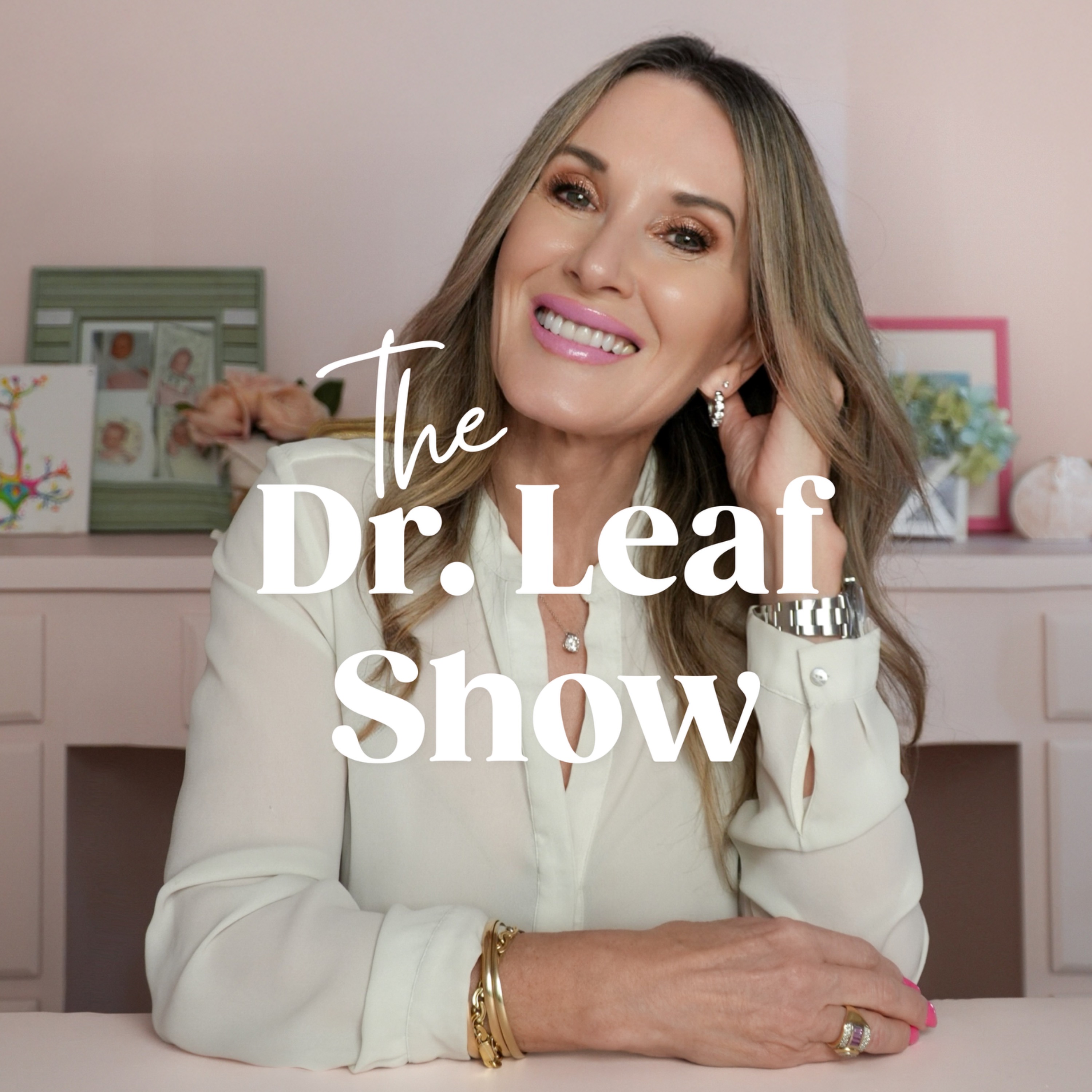
Dr. Caroline Leaf interviews Dr. Andrew Salzman, a Harvard-trained physician with 30 years of NAD research experience, about the role of NAD in brain health and aging. Dr. Salzman challenges the narrative that cognitive decline is inevitable, explaining how NAD depletion drives much of the functional loss people associate with aging. He details the evolutionary context of human lifespan, noting that we did not evolve to live past 30-40 years, so the aging problems we face today in our 60s, 70s, and 80s were never selected for by evolution. The conversation centers on CD38 as the primary villain in NAD depletion. Dr. Salzman uses the ovarian aging model to illustrate how rising CD38 levels consume NAD and directly cause menopause by depleting the energy eggs need to be released. He explains that animal studies show mice given CD38 inhibitors can continue ovulating well beyond their normal reproductive lifespan. The discussion covers Wonderfeel's dual approach of boosting NAD production through NMN while simultaneously blocking CD38-driven depletion with compounds like hydroxytyrosol. Dr. Leaf ties this into her broader work on mind management and neuroplasticity, emphasizing that combining mental practices with NAD support can protect brain function through the decades.
Key Points
- NAD is involved in 500+ reactions and is responsible for all major cellular functions including thinking, movement, immune response, and hormonal signaling
- NAD levels fall roughly 50% between ages 20 and 50, primarily because CD38 enzyme activity increases with age and destroys NAD faster than it can be produced
- The brain receives 25% of all blood flow from the heart, making it uniquely vulnerable to NAD depletion and energy shortfalls
- Menopause is directly linked to CD38-driven NAD depletion in the ovary; animal models show continued ovulation when CD38 is suppressed
- Humans did not evolve to live past 30-40 years; the health challenges of older age are a consequence of outliving our evolutionary programming
- Two strategies for maintaining NAD: boost supply with precursors like NMN, and block depletion by inhibiting CD38
- Brain fog, memory decline, and cognitive slowing are often metabolic problems that can be addressed by restoring NAD levels
- Mind management and neuroplasticity practices complement NAD supplementation for preserving brain function
Key Moments
NAD is the most important molecule in the body
Dr. Salzman describes NAD as probably the most important molecule in the body, involved in 500 different reactions, responsible for all major cellular functions from thinking and movement to immune and sexual function.
"most important molecule, I would say, in the body. It's involved in 500 different reactions. It's a small molecule. It's a normal metabolite, if you will. We make it. We make it in every cell. And NAD is responsible for all of the major functions for thinking or moving, for digesting or sexual function, for immune function. There isn't anything in the body that isn't touched by this amazing molecule."
Brain function is intimately linked to NAD levels in neurons
Dr. Salzman explains how functional MRI shows the brain lighting up during thinking, and how falling NAD levels slow this metabolic process, leading to brain fog, slower thinking, and impaired memory encoding.
"If NAD levels are okay and they haven't fallen significantly with aging, then that can proceed very well and you can be sharp as a tack and be, you know, completely cognizant of everything going on. But as your NAD levels fall, that metabolic process slows."
Menopause is caused by CD38-driven NAD depletion in the ovary
Dr. Salzman explains how rising CD38 levels in the ovary consume NAD and directly cause menopause by depleting the energy eggs need to be released. In animal studies, suppressing CD38 allows continued ovulation at the equivalent of 90 years of age.
"And they rise so much that so little NAD is left because it's chewing it up. That's what CD38 does. That you don't even have enough energy for the egg to leave the ovary."
We did not evolve to become elderly
Dr. Salzman explains that average human survival was 25 years until recently, so the aging problems we face in our 60s-80s were never selected for by evolution. Modern health challenges are a consequence of outliving our evolutionary programming.
"So we did not evolve to become elderly. There's no evolutionary advantage to be 80 years old."