
Key Takeaway
Activated charcoal remains effective for acute poisoning when administered within 1-2 hours of ingestion, but routine use without clear indication is not recommended.
Summary
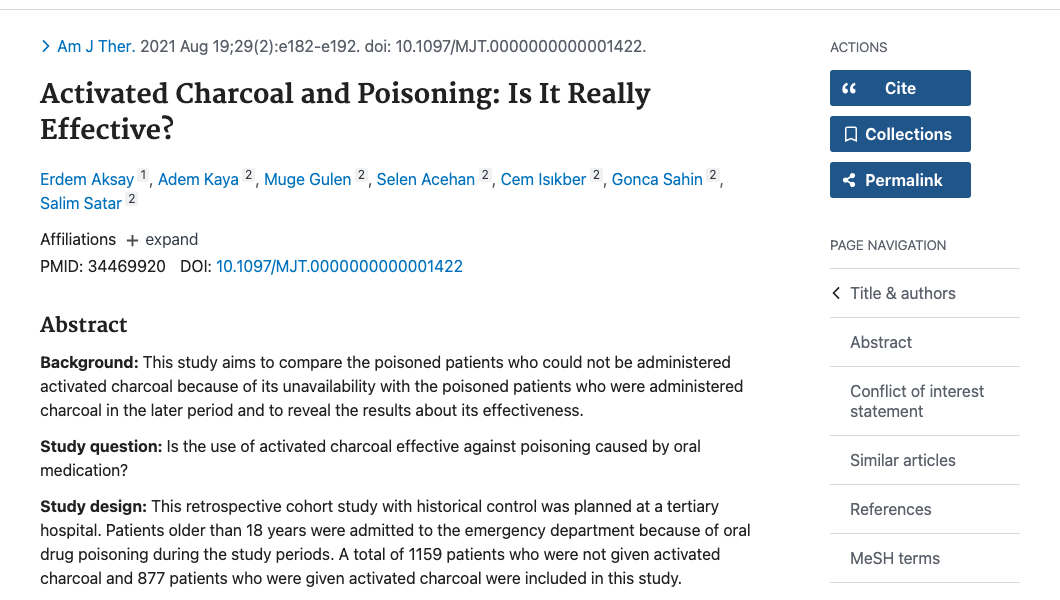
This review examines the clinical effectiveness of activated charcoal as a gastrointestinal decontamination agent in acute poisoning cases. The authors analyze existing evidence on the efficacy, timing, and appropriate indications for activated charcoal administration in emergency settings.
The review finds that activated charcoal can reduce absorption of many toxic substances when given within 1-2 hours of ingestion, but its benefit diminishes significantly with delayed administration. Single-dose activated charcoal should not be administered routinely in all poisoning cases, but rather should be considered when a potentially toxic amount of a substance known to be adsorbed by charcoal has been ingested within a timeframe where benefit is expected.
The paper also discusses contraindications, including risk of aspiration in patients with decreased consciousness, and situations where charcoal is ineffective such as poisoning with metals, alcohols, or corrosive substances. The findings reinforce activated charcoal as a targeted intervention in emergency toxicology rather than a universal antidote.