
Key Takeaway
Activated charcoal significantly reduced hydrogen gas production and bloating symptoms in a double-blind crossover trial, supporting its use for intestinal gas relief.
Summary
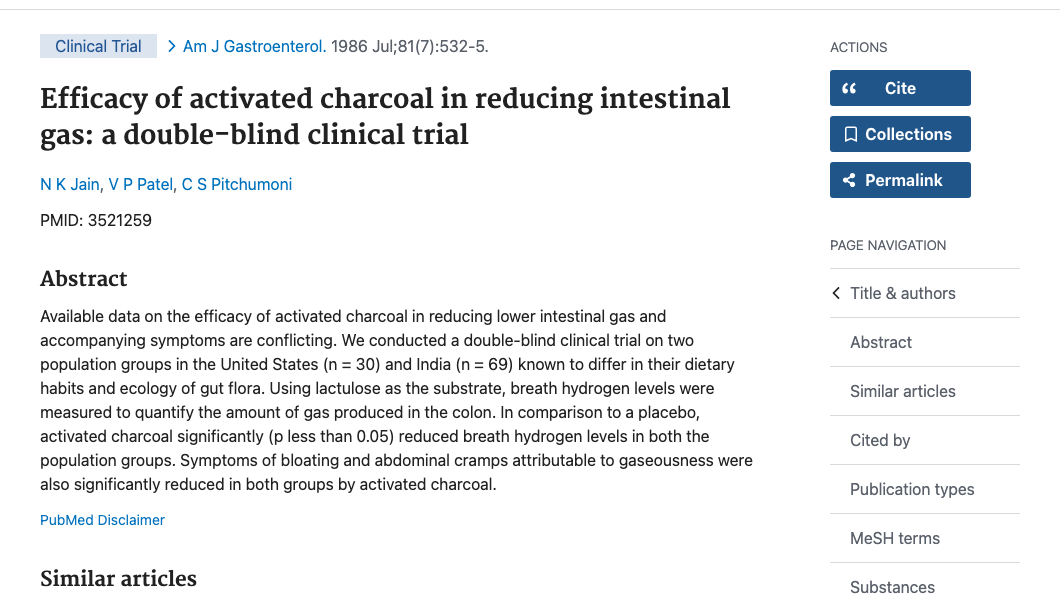
This double-blind, crossover RCT tested whether activated charcoal could reduce intestinal gas production and associated symptoms. Participants consumed a gas-producing meal and then received either activated charcoal or placebo, with outcomes measured by breath hydrogen levels and subjective symptom reports.
The study found that activated charcoal significantly reduced breath hydrogen concentrations (a marker of intestinal gas production) compared to placebo. Participants also reported less bloating and abdominal discomfort when taking charcoal. This is one of the few controlled trials directly testing charcoal for its most common consumer use: gas and bloating relief.
While the results support occasional use of charcoal for gas symptoms, the study used a single-dose protocol and does not support chronic daily use.
Methods
- Double-blind, crossover design
- Participants consumed a standardized gas-producing meal
- Received either activated charcoal or placebo
- Measured breath hydrogen levels as objective marker of intestinal gas
- Collected subjective symptom scores for bloating and discomfort
Key Results
- Significant reduction in breath hydrogen levels with activated charcoal vs placebo
- Reduced self-reported bloating and abdominal discomfort
- Effects observed within hours of charcoal administration
- Single-dose protocol was effective for acute gas symptoms
Limitations
- Small sample size typical of 1980s clinical trials
- Single-dose protocol; does not address repeated or chronic use
- Gas-producing meal is a controlled but artificial stimulus
- Older study; methods may not meet current standards for rigor
- Does not assess long-term safety or nutrient binding effects