Key Takeaway
Low magnesium status is associated with poor sleep quality, and supplementation may improve sleep parameters, particularly in those with deficiency.
Summary
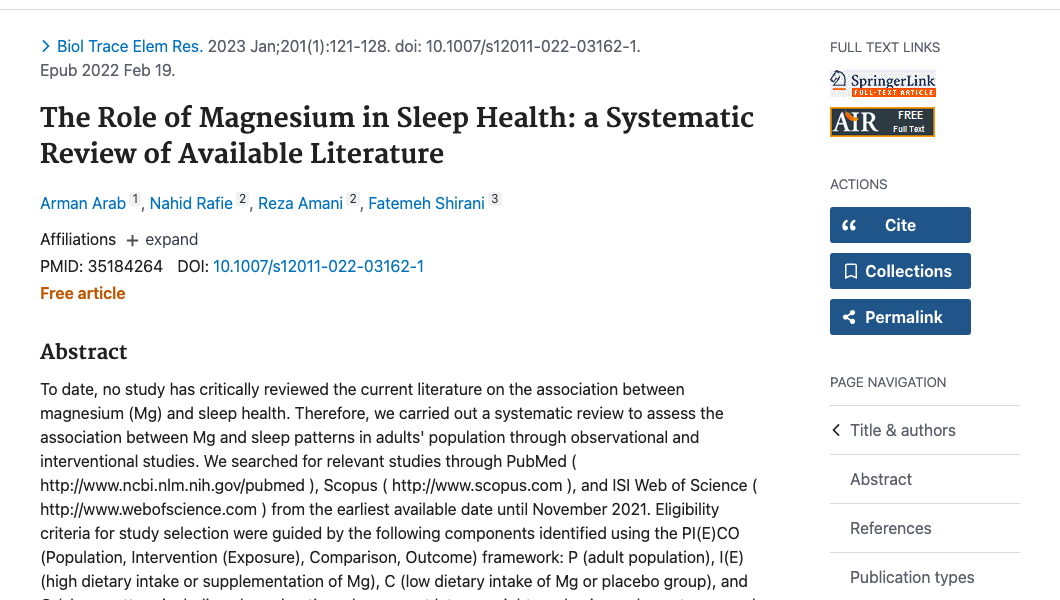
This systematic review comprehensively examined the relationship between magnesium and sleep health, including both observational studies on magnesium status and interventional trials of supplementation. The authors analyzed evidence from multiple study types to understand magnesium's role in sleep regulation.
The review found consistent associations between low serum magnesium levels and poor sleep quality in observational studies. Intervention studies generally showed that magnesium supplementation improved subjective sleep quality, sleep efficiency, and sleep onset latency, with effects most pronounced in populations with low baseline magnesium or sleep disturbances.
Mechanistically, magnesium appears to support sleep through GABA receptor modulation, melatonin regulation, and reduction of cortisol. The authors conclude that magnesium plays an important role in sleep health and supplementation may be beneficial, especially for those with inadequate intake or deficiency.
Methods
- Comprehensive literature search across PubMed, Scopus, and Web of Science
- Included both observational and interventional studies
- Evaluated studies examining serum magnesium and sleep outcomes
- Assessed randomized controlled trials of magnesium supplementation
- Quality assessment using Newcastle-Ottawa Scale and Cochrane risk of bias tools
Key Results
- Observational studies consistently linked low magnesium with poor sleep quality
- Short sleep duration associated with lower dietary magnesium intake
- Supplementation trials showed improvements in Pittsburgh Sleep Quality Index scores
- Sleep onset latency reduced with magnesium supplementation
- Increased sleep time and sleep efficiency observed in several trials
- Benefits most evident in elderly populations and those with insomnia symptoms
Limitations
- Heterogeneity in magnesium forms and dosages across intervention studies
- Variable sleep outcome measures used
- Many studies conducted in specific populations (elderly, athletes)
- Serum magnesium may not reflect intracellular status
- Limited studies on long-term effects
- Potential confounding from dietary and lifestyle factors
Related Interventions
Related Studies
Discussed In