Key Takeaway
Magnesium supplementation reduced sleep onset latency by 17.4 minutes vs placebo in older adults (p=0.0006), though evidence quality was low.
Summary
This systematic review and meta-analysis examined 3 RCTs with 151 older adults to evaluate whether oral magnesium supplementation improves insomnia outcomes compared to placebo.
Key findings:
- Sleep onset latency decreased by 17.36 minutes with magnesium vs placebo (95% CI: -27.27 to -7.44, p = 0.0006)
- Total sleep time showed a non-significant increase of 16.06 minutes
- All included trials had moderate-to-high risk of bias
- Evidence quality rated low to very low by GRADE assessment
Clinical implications:
Despite limited evidence quality, the meaningful reduction in sleep onset latency and magnesium's favorable safety profile, low cost, and wide availability make it a reasonable option for older adults with insomnia.
Methods
Searched MEDLINE, EMBASE, Allied and Complementary Medicine, clinicaltrials.gov, and grey literature for RCTs comparing oral magnesium to placebo or no treatment in older adults. Outcomes included sleep quality, quantity, and adverse events. Risk of bias assessed with RoB 2.0; evidence quality graded with GRADE methodology. Three RCTs with 151 participants across three countries met inclusion criteria.
Key Results
- Sleep onset latency: 17.36 min reduction with magnesium vs placebo (95% CI: -27.27 to -7.44, p = 0.0006)
- Total sleep time: non-significant improvement of 16.06 min
- Magnesium doses were less than 1g given up to three times daily
- No serious adverse events reported
Figures
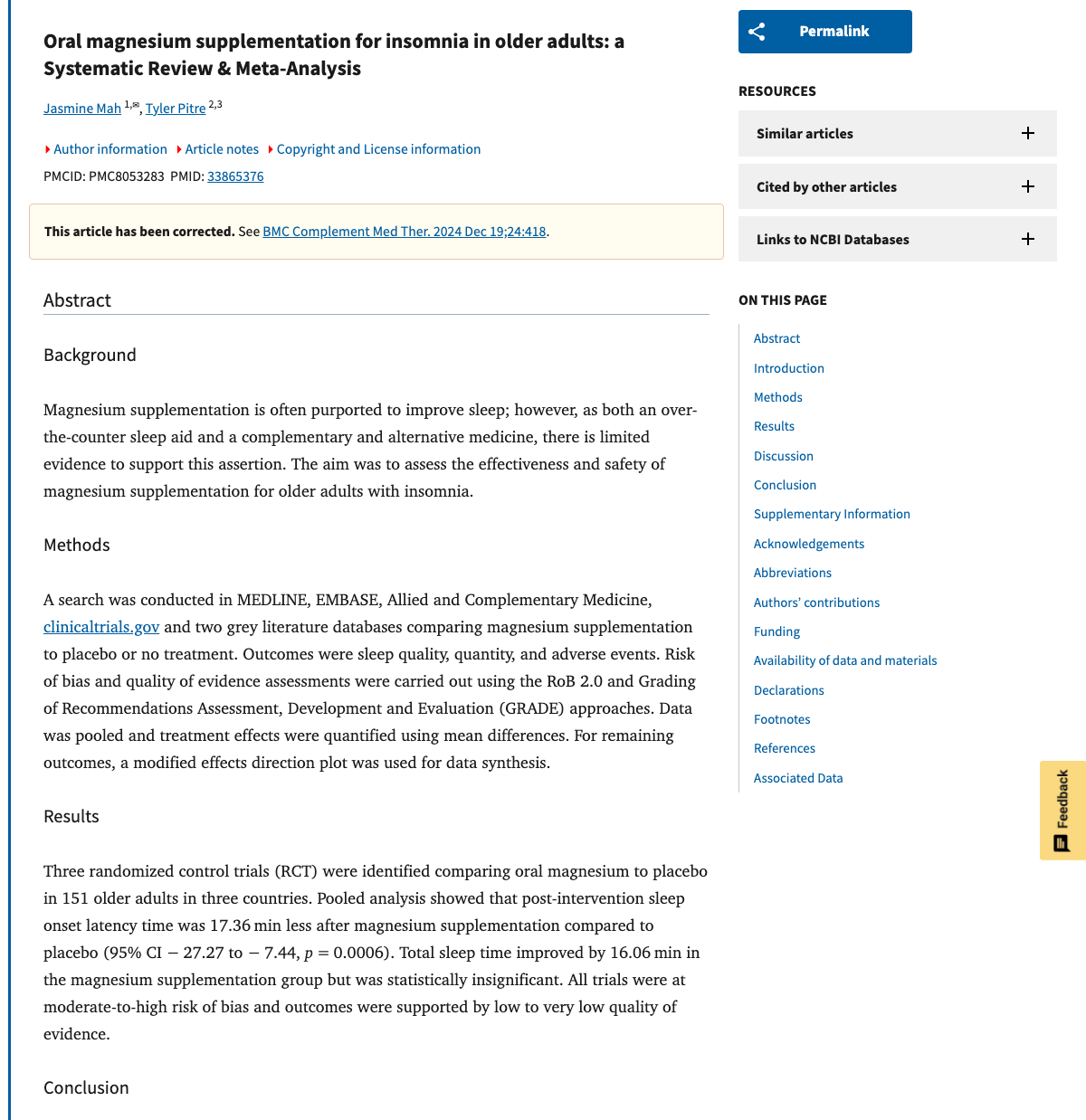
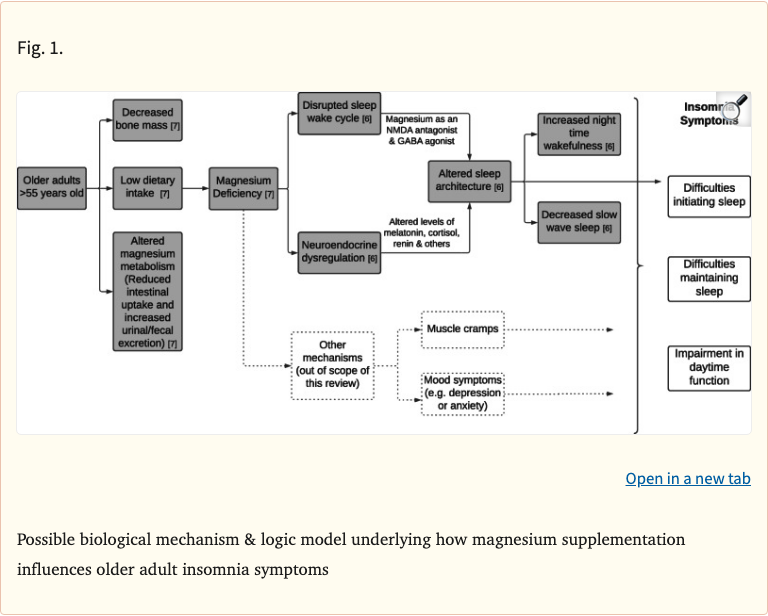 Figure 1
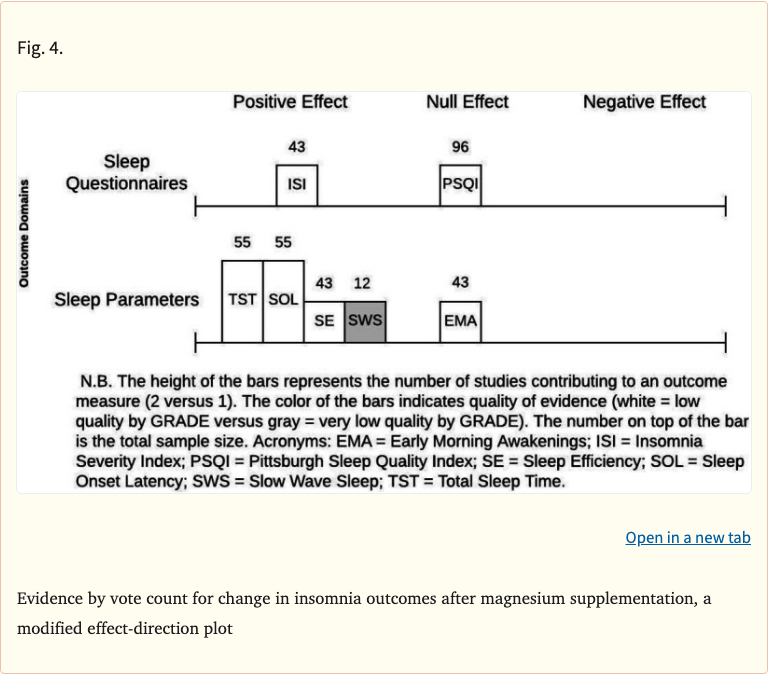 Figure 2
 Figure 3
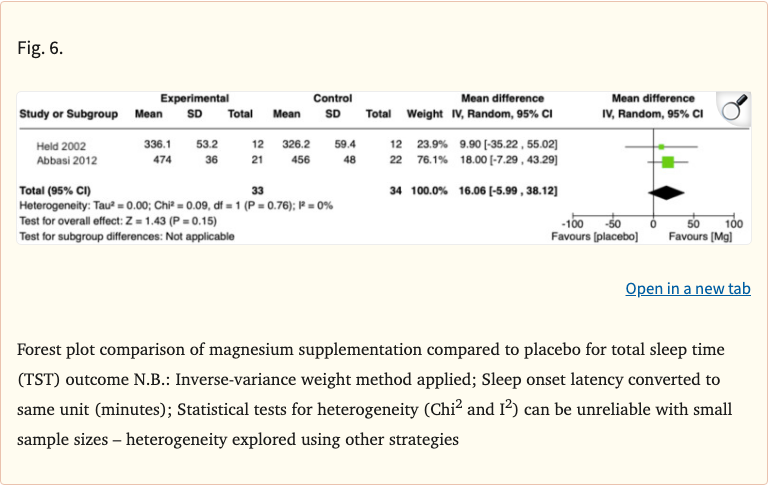 Figure 4
Limitations
- Only 3 RCTs met inclusion criteria with just 151 total participants
- All trials had moderate-to-high risk of bias
- Evidence quality rated low to very low by GRADE
- Total sleep time improvement did not reach statistical significance
- Limited to older adult populations, may not generalize to younger adults
Related Interventions
Related Studies
Discussed In