
Key Takeaway
GRADE-assessed meta-analysis of 7 studies shows ACV significantly reduces fasting blood sugar by 22 mg/dL and HbA1c by 1.53% in type 2 diabetes patients, with each 1 mL/day increase associated with 1.26 mg/dL FBS reduction.
Summary
This systematic review and dose-response meta-analysis specifically examined the effects of apple cider vinegar on glycemic control and insulin sensitivity in patients with type 2 diabetes. The researchers searched three medical databases through November 2024 and assessed study quality using both the Cochrane risk-of-bias tool and the GRADE framework for certainty of evidence.
Seven controlled clinical trials met the inclusion criteria. The pooled analysis found that ACV significantly reduced fasting blood sugar by 21.93 mg/dL (p < 0.001) and HbA1c by 1.53% (p = 0.008) in type 2 diabetes patients. Interestingly, insulin levels increased by 2.06 uU/mL, though HOMA-IR (a measure of insulin resistance) showed no significant change.
A key contribution of this study is the dose-response analysis, which found a linear relationship between ACV intake and blood sugar reduction: each additional 1 mL/day of ACV was associated with a 1.26 mg/dL decrease in fasting blood sugar. Greater effects were observed at dosages exceeding 10 mL/day. These findings provide the most specific dosing guidance available for ACV in diabetes management.
Methods
- Systematic review and dose-response meta-analysis
- Searched 3 databases through November 2024
- Included 7 controlled clinical trials in T2DM patients
- Quality assessment via Cochrane risk-of-bias and GRADE criteria
- Random-effects meta-analysis
- Non-linear dose-response modeling
Key Results
- Fasting blood sugar: -21.93 mg/dL (95% CI: -29.19, -14.67; p < 0.001)
- HbA1c: -1.53% (95% CI: -2.65, -0.41; p = 0.008)
- Insulin: +2.06 uU/mL (p = 0.025)
- HOMA-IR: no significant effect
- Dose-response: each 1 mL/day increase = -1.26 mg/dL FBS
- Greater effects at doses >10 mL/day
Figures
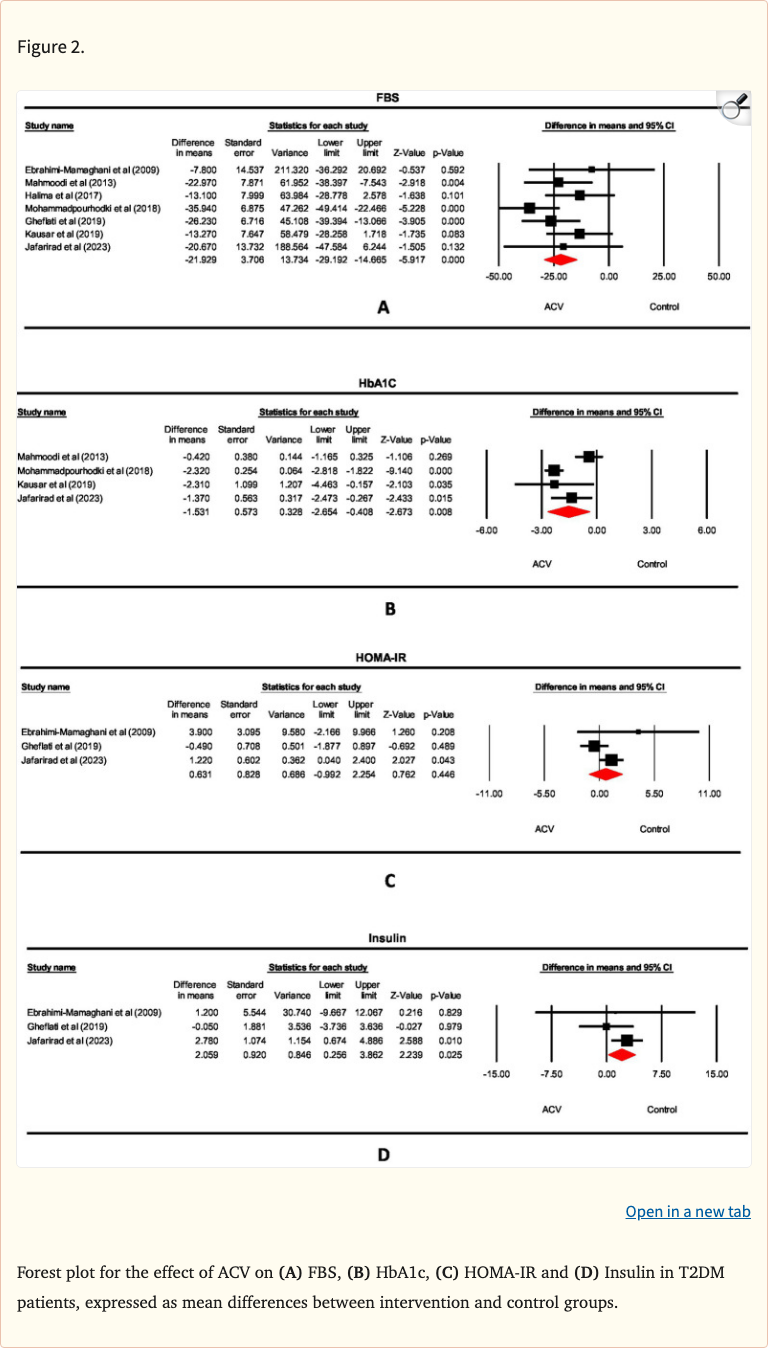 Figure 1
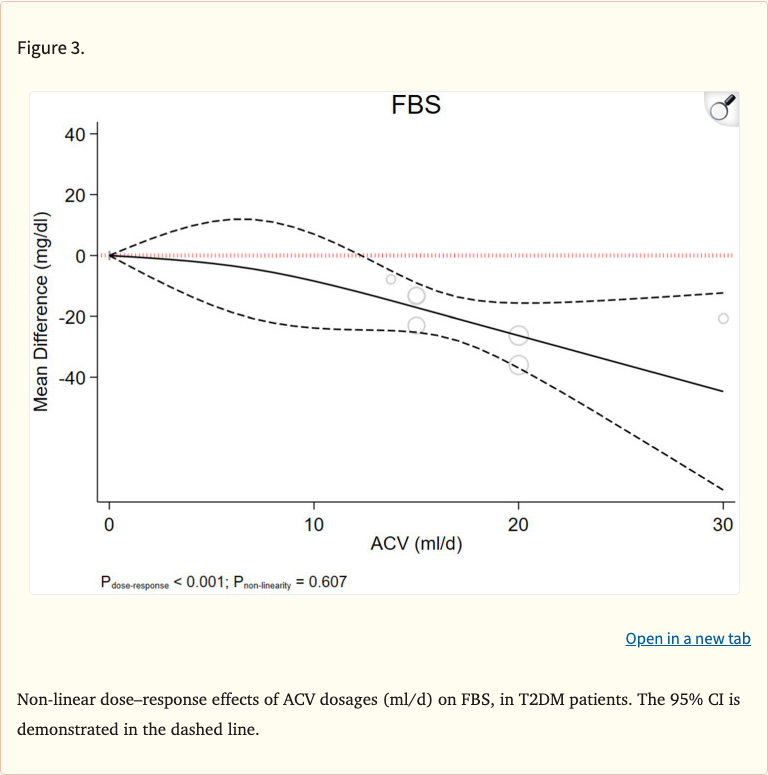 Figure 2
Limitations
- Only 7 studies met inclusion criteria
- Heterogeneity in vinegar types and concentrations across studies
- Relatively small total sample sizes
- Most studies were short to medium duration
- GRADE certainty of evidence varied by outcome