
Key Takeaway
Meta-analysis of 6 studies (317 patients) confirms vinegar consumption significantly improves HbA1c and fasting blood glucose in type 2 diabetes patients, with secondary benefits for total cholesterol and LDL, supporting vinegar as an adjunct glycemic management tool.
Summary
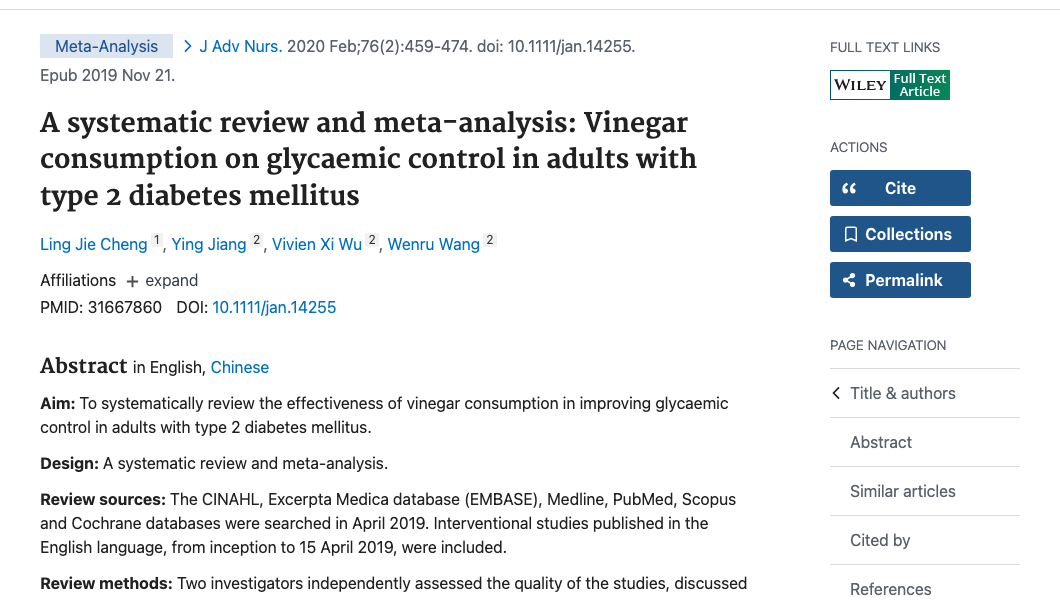
This systematic review and meta-analysis investigated whether vinegar consumption improves glycemic control in adults with type 2 diabetes. The researchers conducted a comprehensive search across six databases (CINAHL, EMBASE, Medline, PubMed, Scopus, and Cochrane Library) through April 2019 and used the Cochrane risk-of-bias tool to assess study quality.
From 356 initially identified records, six interventional studies involving 317 patients with type 2 diabetes met the inclusion criteria. The random-effects meta-analysis demonstrated that vinegar consumption led to significantly better fasting blood glucose and HbA1c levels compared to controls. As secondary outcomes, total cholesterol and LDL cholesterol also showed notable reductions.
The authors noted several limitations, including variation in vinegar content across studies and relatively small sample sizes. Nevertheless, they concluded that clinicians could consider incorporating vinegar consumption as part of dietary advice for diabetes patients. This study is notable for being published in a nursing journal, reflecting the growing interest in practical, low-cost dietary interventions that healthcare providers can recommend alongside standard diabetes management.
Methods
- Systematic review and meta-analysis
- Searched 6 databases (CINAHL, EMBASE, Medline, PubMed, Scopus, Cochrane)
- Search through April 2019
- Included 6 interventional studies, 317 T2DM patients
- Quality assessment via Cochrane risk-of-bias tool
- Random-effects meta-analysis using Review Manager 5.3.5
Key Results
- Significantly improved fasting blood glucose (primary outcome)
- Significantly improved HbA1c (primary outcome)
- Notable reductions in total cholesterol (secondary outcome)
- Notable reductions in LDL cholesterol (secondary outcome)
- Effects consistent across included studies
Limitations
- Vinegar content and type varied across studies
- Relatively small sample sizes in included studies
- Limited number of eligible studies (6 total)
- Heterogeneity in intervention protocols
- Caution warranted when generalizing results