
Key Takeaway
Meta-analysis of 9 RCTs shows apple cider vinegar consumption significantly reduces fasting plasma glucose (-7.97 mg/dL), total cholesterol (-6.06 mg/dL), and HbA1c (-0.50%), supporting its use as a functional food for metabolic health.
Summary
This systematic review and meta-analysis evaluated the effects of apple cider vinegar (ACV) consumption on lipid profiles and glycemic parameters across randomized clinical trials. The researchers searched medical databases through January 2020 and included studies that tested ACV alone (not combined with other interventions) for at least 2 weeks.
Nine studies comprising 10 study arms met the inclusion criteria. Using random-effects meta-analysis, the authors found that ACV consumption significantly decreased serum total cholesterol by 6.06 mg/dL and fasting plasma glucose by 7.97 mg/dL, along with meaningful reductions in HbA1c concentrations. However, no significant changes were observed in LDL cholesterol, HDL cholesterol, fasting insulin, or HOMA-IR.
Subgroup analyses revealed that the benefits were most pronounced in type 2 diabetic patients consuming 15 mL or less daily for periods longer than 8 weeks. The authors concluded that ACV consumption can beneficially affect blood lipid levels and fasting plasma glucose, positioning it as a potential adjunct dietary intervention for metabolic health.
Methods
- Systematic review and meta-analysis of randomized clinical trials
- Database search through January 2020
- Included 9 studies (10 study arms) of ACV consumption
- Excluded studies combining ACV with other interventions or lasting <2 weeks
- Random-effects meta-analysis
- Subgroup analyses by diabetes status, dose, and duration
Key Results
- Fasting plasma glucose: -7.97 mg/dL (significant)
- Total cholesterol: -6.06 mg/dL (95% CI: -10.95, -1.17; significant)
- HbA1c: -0.50% (significant)
- No significant effect on LDL-C, HDL-C, fasting insulin, or HOMA-IR
- Benefits strongest in T2DM patients at doses <=15 mL/day for >8 weeks
Figures
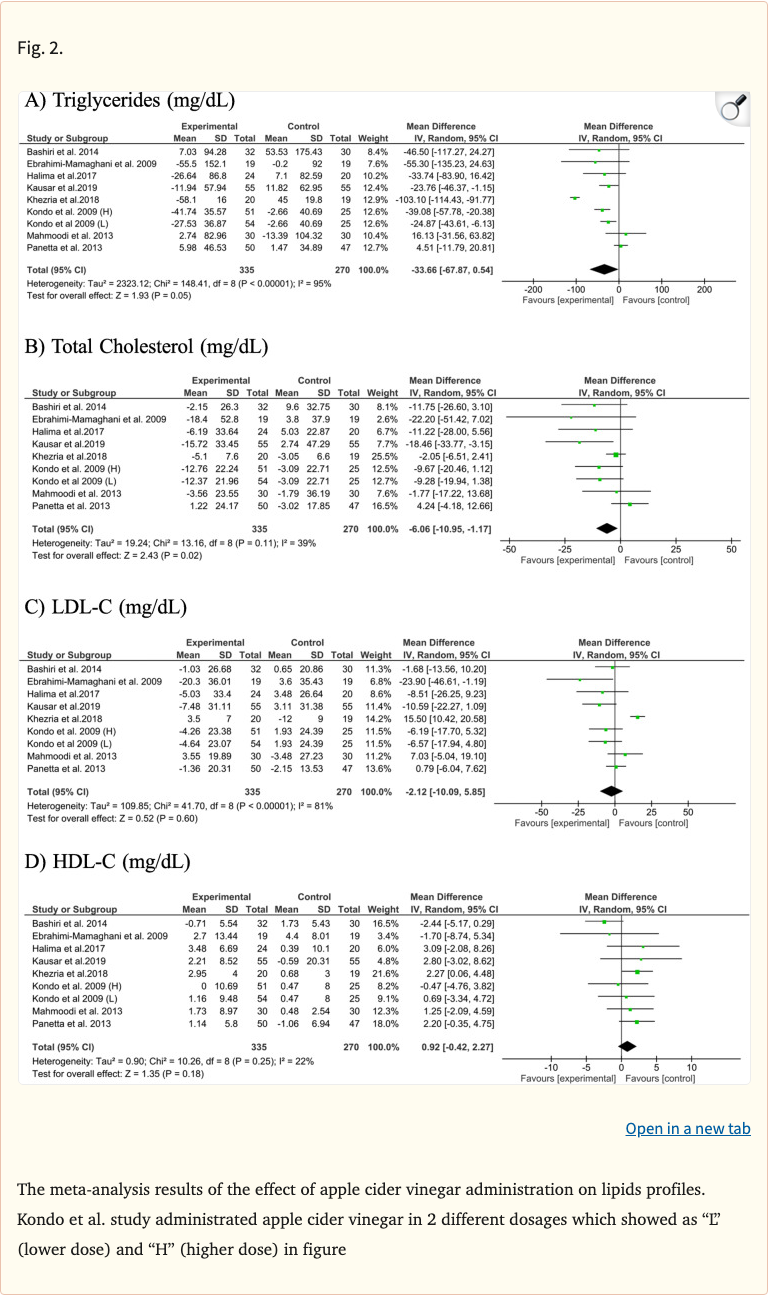 Figure 1
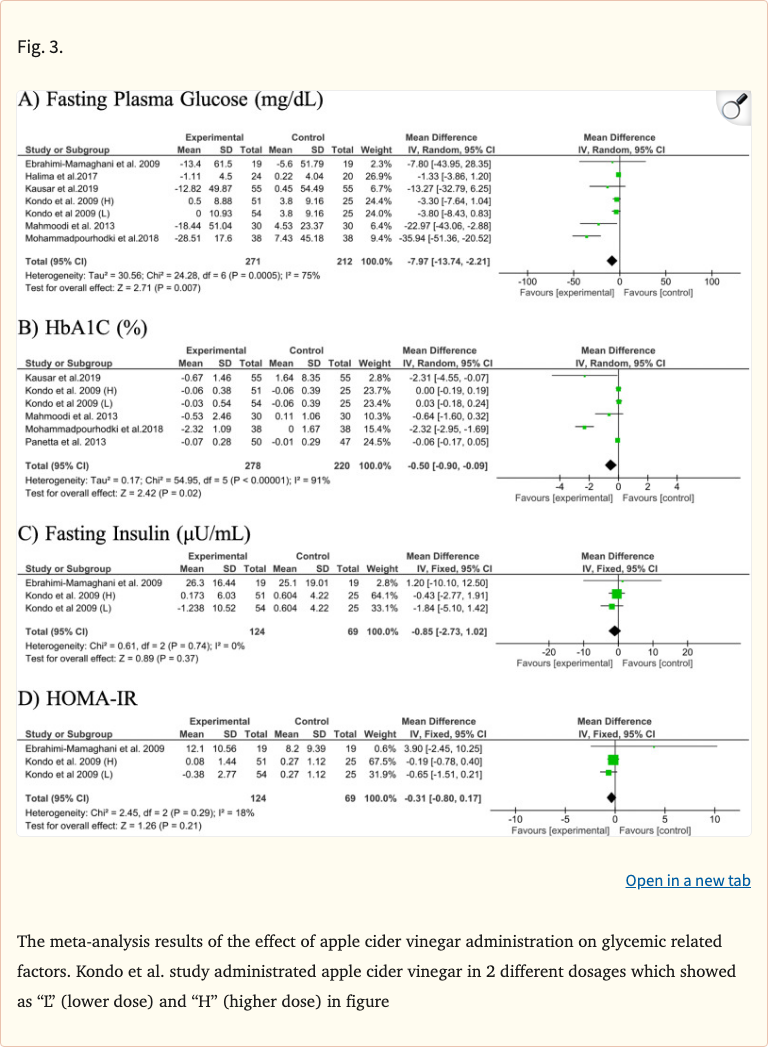 Figure 2
Limitations
- Relatively small number of included studies (9 RCTs)
- Heterogeneous study designs and populations
- Subgroup analyses limited by small sample sizes
- Some studies had short durations
- Publication bias possible