
Key Takeaway
Slow-paced diaphragmatic breathwork (including box breathing patterns) significantly reduced anxiety symptoms in adults with clinically diagnosed anxiety disorders, with effects comparable to some pharmacological treatments.
Summary
This scoping review mapped the existing literature on breathwork interventions for adults with clinically diagnosed anxiety disorders, including generalized anxiety disorder, panic disorder, social anxiety disorder, and PTSD-related anxiety. The authors identified and analyzed studies that specifically used structured breathing techniques as a primary or adjunctive intervention for clinical anxiety populations.
The review found that slow-paced diaphragmatic breathing practices — including techniques like box breathing, resonance frequency breathing, and paced respiration — were consistently associated with significant reductions in anxiety symptoms. The proposed mechanisms include activation of the parasympathetic nervous system via vagal stimulation, reduction of sympathetic arousal, and modulation of the hypothalamic-pituitary-adrenal (HPA) axis. Several studies reported effect sizes comparable to established pharmacological interventions.
The authors highlight that breathwork interventions are particularly promising due to their accessibility, low cost, minimal side effects, and potential for self-administration. However, they note that the field is still emerging, with most studies being small-scale and lacking rigorous controlled designs. They call for larger RCTs with standardized breathwork protocols and longer follow-up periods to establish clinical guidelines.
Methods
Scoping review following the PRISMA-ScR framework. Searched PubMed, PsycINFO, Embase, and Cochrane Library for studies examining breathwork interventions in adults with clinically diagnosed anxiety disorders. Included all study designs (RCTs, quasi-experimental, observational, case studies). Studies were charted by breathwork type, anxiety diagnosis, outcome measures, study design, and key findings. The review mapped the breadth of evidence rather than pooling effect sizes.
Key Results
The majority of included studies reported statistically significant reductions in anxiety symptoms following breathwork interventions. Slow-paced diaphragmatic breathing techniques showed the most consistent benefits across anxiety disorder subtypes. Several studies found improvements in secondary outcomes including depression, sleep quality, and physiological stress markers (cortisol, heart rate variability). Acute effects were observable within single sessions, while sustained practice over weeks produced more durable improvements. Some studies reported breathwork effects comparable to cognitive behavioral therapy or pharmacotherapy benchmarks.
Figures
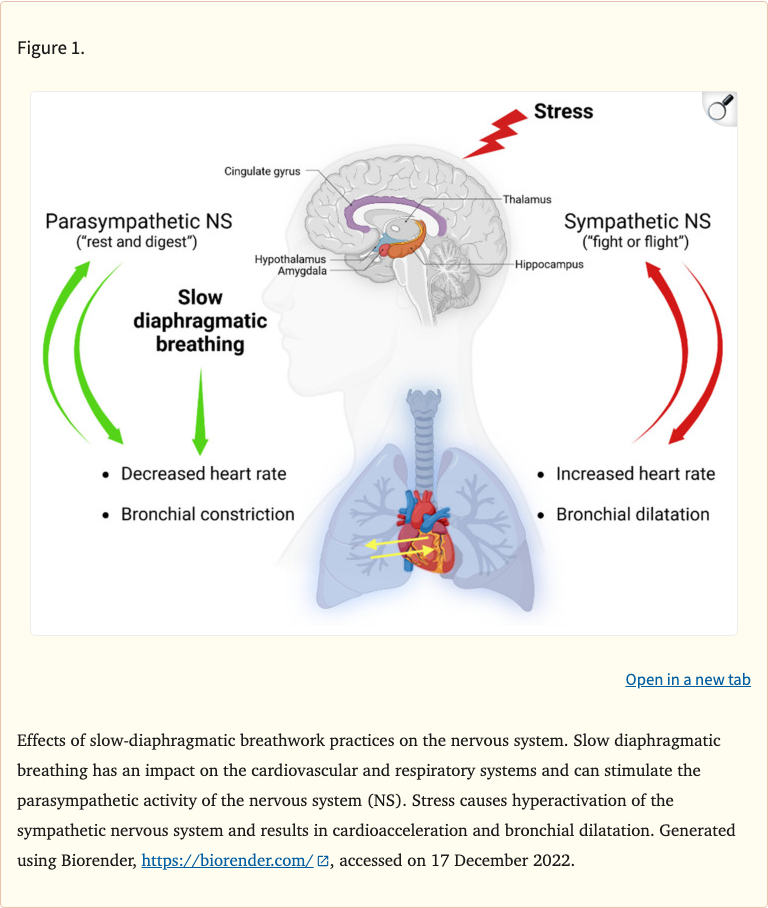 Figure 1
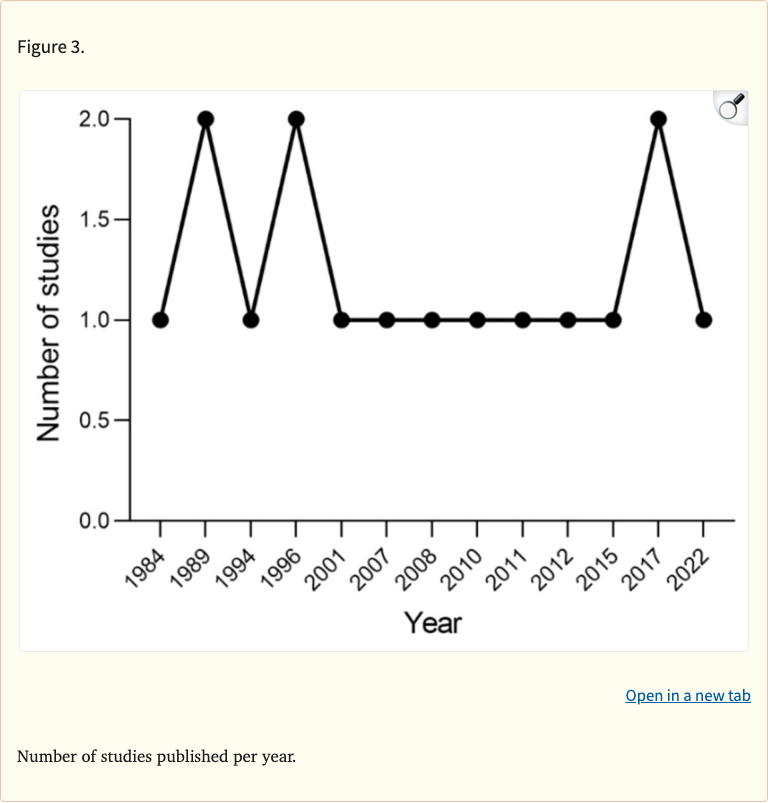 Figure 2
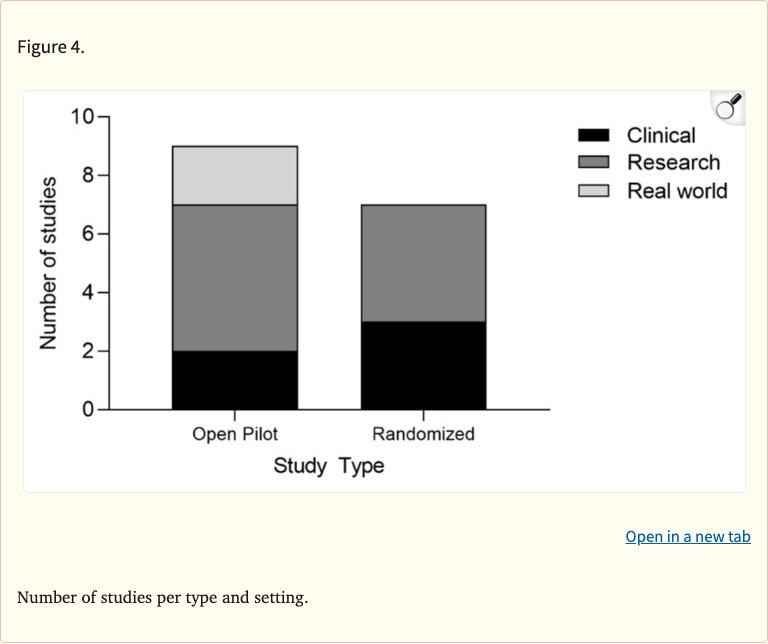 Figure 3
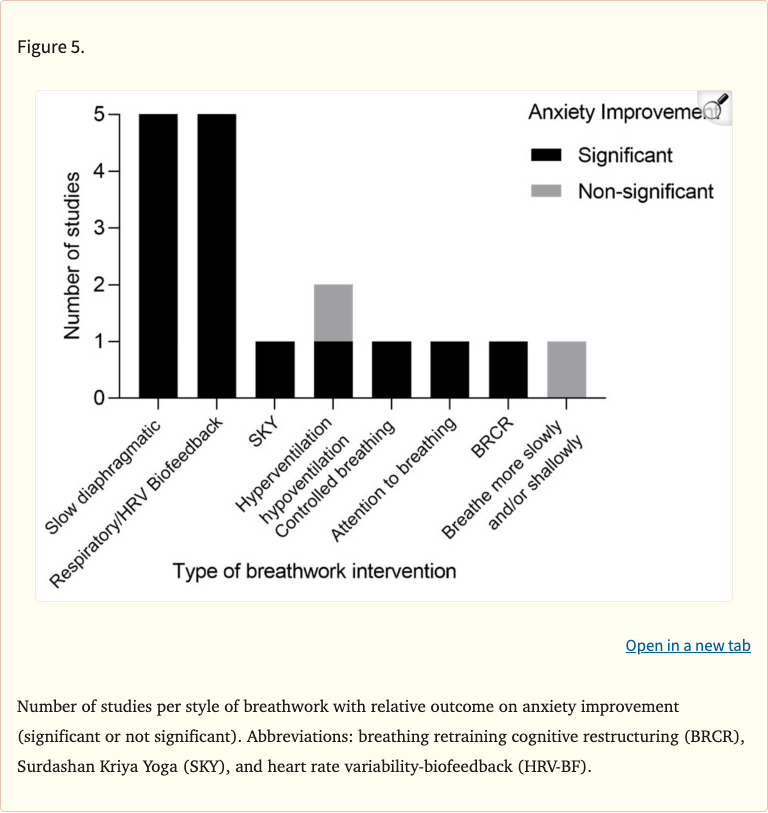 Figure 4
Limitations
As a scoping review, no meta-analytic pooling or formal quality appraisal was conducted. Most included studies had small sample sizes and short follow-up periods. Heterogeneity in breathwork protocols, session parameters, and outcome measures limits cross-study comparisons. Many studies lacked active control groups or blinding. The clinical diagnosis criteria varied across studies, and some relied on self-reported diagnoses. Publication bias may favor positive results.