
Key Takeaway
Diaphragmatic breathing significantly reduced physiological stress (cortisol, blood pressure, heart rate) and psychological stress across 6 high-quality studies involving adults in various settings.
Summary
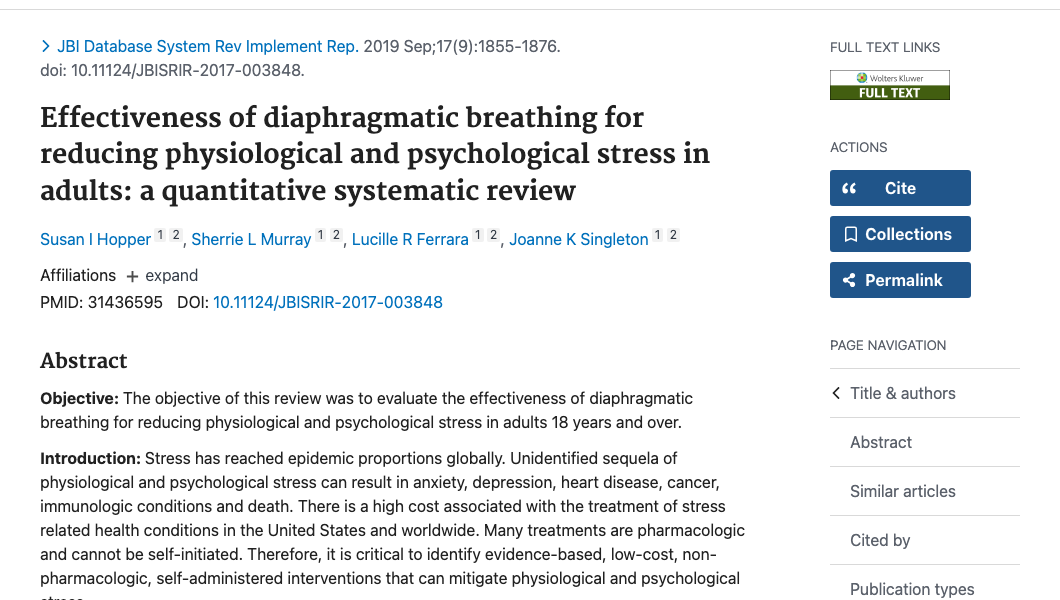
This quantitative systematic review examined the effectiveness of diaphragmatic breathing (DB) interventions for reducing physiological and psychological stress in adults. The authors searched multiple databases and identified six studies meeting inclusion criteria, all scoring above 60% on quality appraisal using JBI critical appraisal tools.
The review found consistent evidence that diaphragmatic breathing techniques reduce both physiological markers of stress — including salivary cortisol, blood pressure, and heart rate — and self-reported psychological stress. Studies included diverse populations such as healthcare workers, patients with chronic conditions, and healthy adults, with intervention durations ranging from single sessions to multi-week programs.
The findings support diaphragmatic breathing as a simple, cost-effective, non-pharmacological intervention for stress management. The authors note that while the evidence is promising, the small number of included studies and heterogeneity in outcome measures limit the strength of conclusions. They recommend standardized protocols and larger RCTs to further establish optimal dosing and long-term effects.
Methods
Systematic review following JBI methodology. Searched PubMed, CINAHL, PsycINFO, Cochrane Library, and other databases for studies evaluating diaphragmatic breathing interventions in adults measuring stress outcomes. Six studies met inclusion criteria and were critically appraised using JBI tools, with all scoring above the 60% quality threshold. Data were synthesized narratively due to heterogeneity in outcome measures.
Key Results
All six included studies demonstrated statistically significant reductions in at least one stress outcome following diaphragmatic breathing interventions. Physiological stress markers (cortisol, blood pressure, heart rate) and psychological stress measures (self-report scales) consistently improved across studies. Effect sizes varied but were generally moderate to large. Improvements were observed in both acute (single-session) and chronic (multi-week) intervention formats.
Limitations
Small number of included studies (n=6) limits generalizability. Heterogeneity in outcome measures, intervention protocols, and populations prevented meta-analytic pooling. Most included studies had small sample sizes. Lack of standardized diaphragmatic breathing protocols across studies makes direct comparisons difficult. Limited long-term follow-up data available.