
Key Takeaway
Across 58 studies, slow-paced breathing techniques (4-10 breaths/min) were effective for stress and anxiety reduction in 81% of studies, with sessions of 10-20 minutes showing the strongest results.
Summary
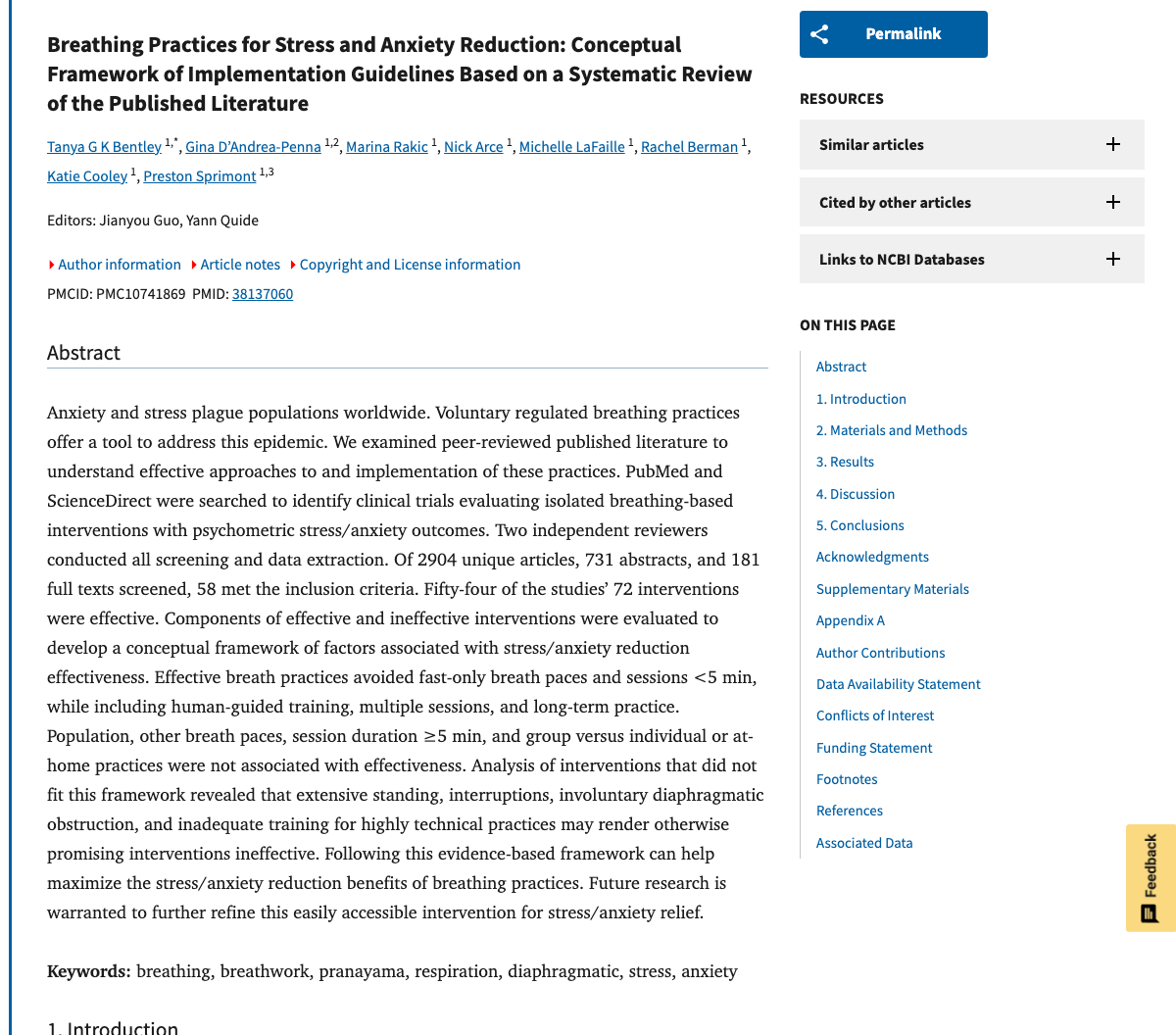
This systematic review synthesized evidence from 58 published studies to develop a conceptual framework and implementation guidelines for breathing practices targeting stress and anxiety reduction. The review covered a wide range of breathing interventions including slow-paced breathing, diaphragmatic breathing, box breathing, and other structured techniques.
The authors found that slow-paced breathing at 4-10 breaths per minute was the most consistently effective approach, with positive outcomes in the vast majority of studies examined. Session durations of 10-20 minutes appeared optimal, and benefits were observed across both healthy populations and clinical groups with anxiety disorders. The review identified key quality issues in existing research, including inconsistent terminology, lack of standardized protocols, and insufficient reporting of breathing parameters.
Based on their synthesis, the authors proposed a conceptual framework for implementing breathing-based interventions that includes specific recommendations for breath rate, session duration, training format, and outcome measurement. This framework provides practical guidelines for clinicians, researchers, and individuals seeking evidence-based breathing practices for stress management.
Methods
Systematic review following PRISMA guidelines. Searched PubMed, PsycINFO, Web of Science, and Scopus for peer-reviewed studies examining breathing interventions for stress or anxiety outcomes. Fifty-eight studies met inclusion criteria. Studies were categorized by breathing technique type, session parameters, population characteristics, and outcome measures. Quality was assessed using a standardized appraisal tool, and findings were synthesized into a conceptual framework.
Key Results
Of 58 included studies, 81% reported significant reductions in stress or anxiety following breathing interventions. Slow-paced breathing (4-10 breaths/min) was the most commonly studied and most consistently effective technique. Sessions lasting 10-20 minutes showed strongest effects. Both acute (single-session) and chronic (multi-week) interventions demonstrated benefits. Physiological outcomes (heart rate variability, cortisol, blood pressure) and psychological measures (state anxiety, perceived stress) both improved significantly.
Figures
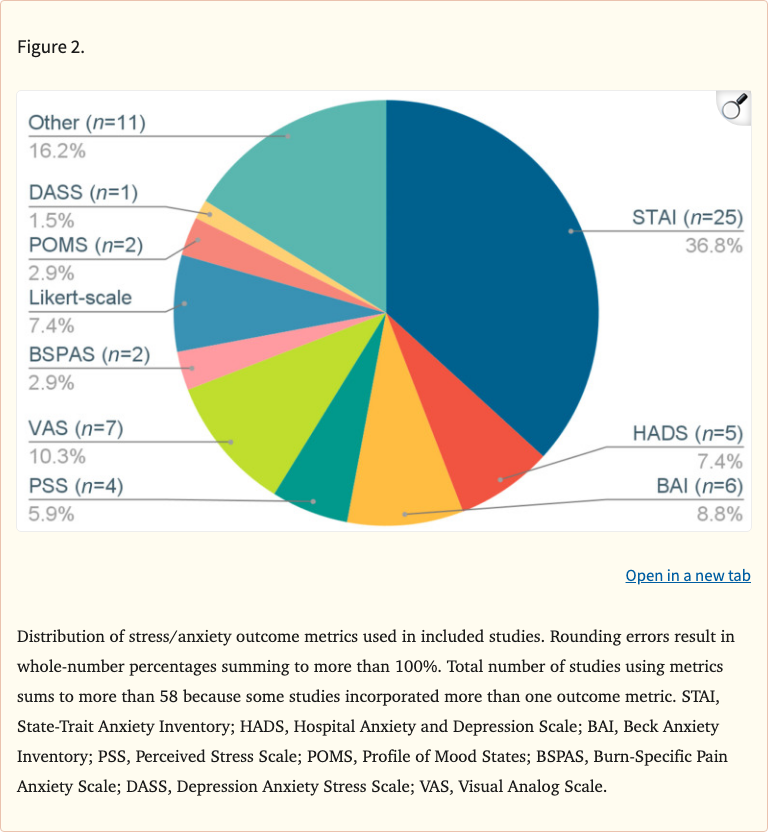 Figure 1
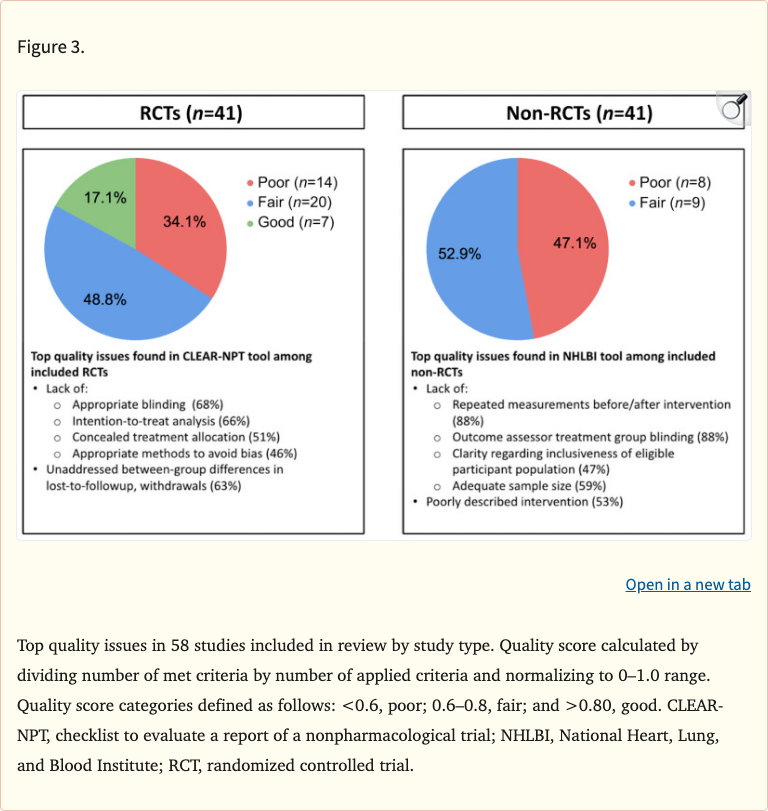 Figure 2
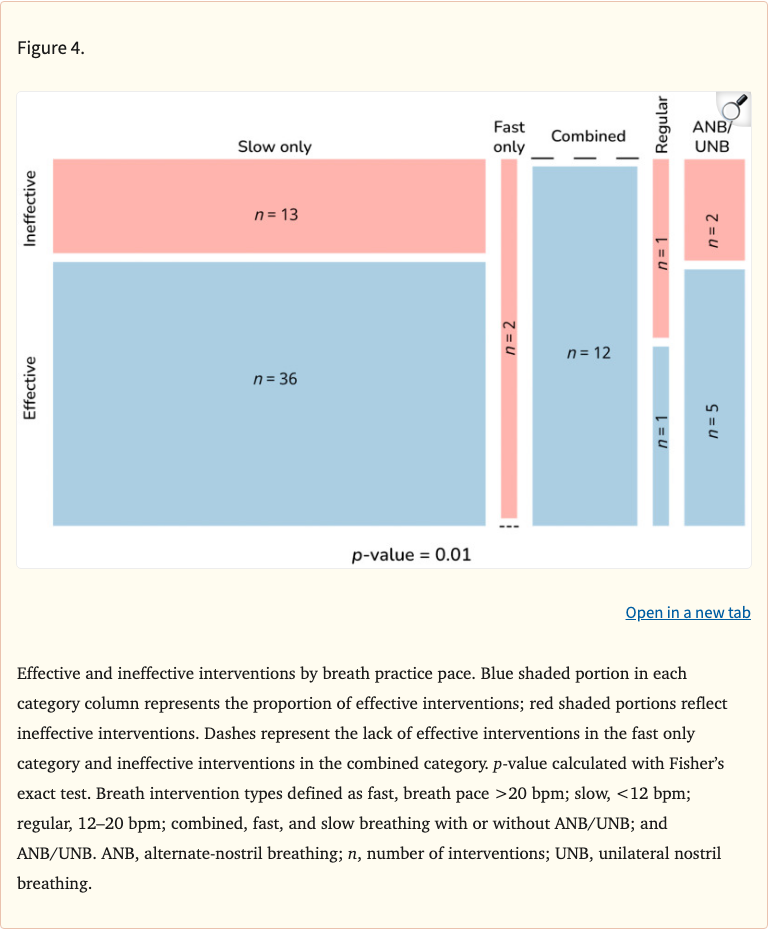 Figure 3
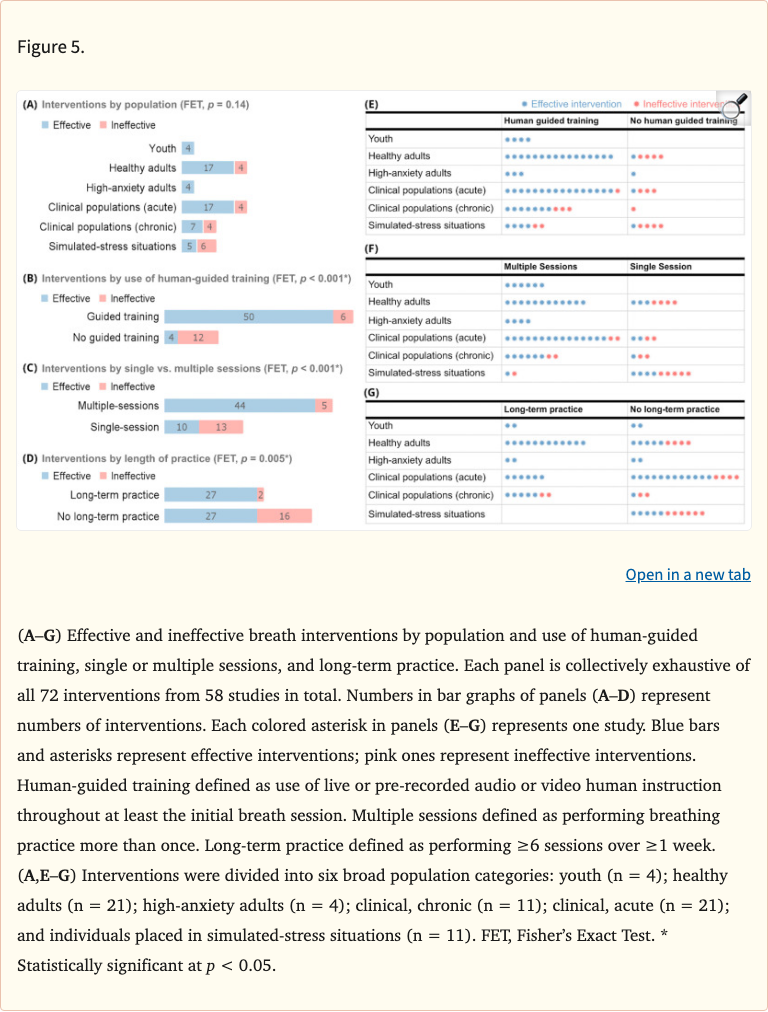 Figure 4
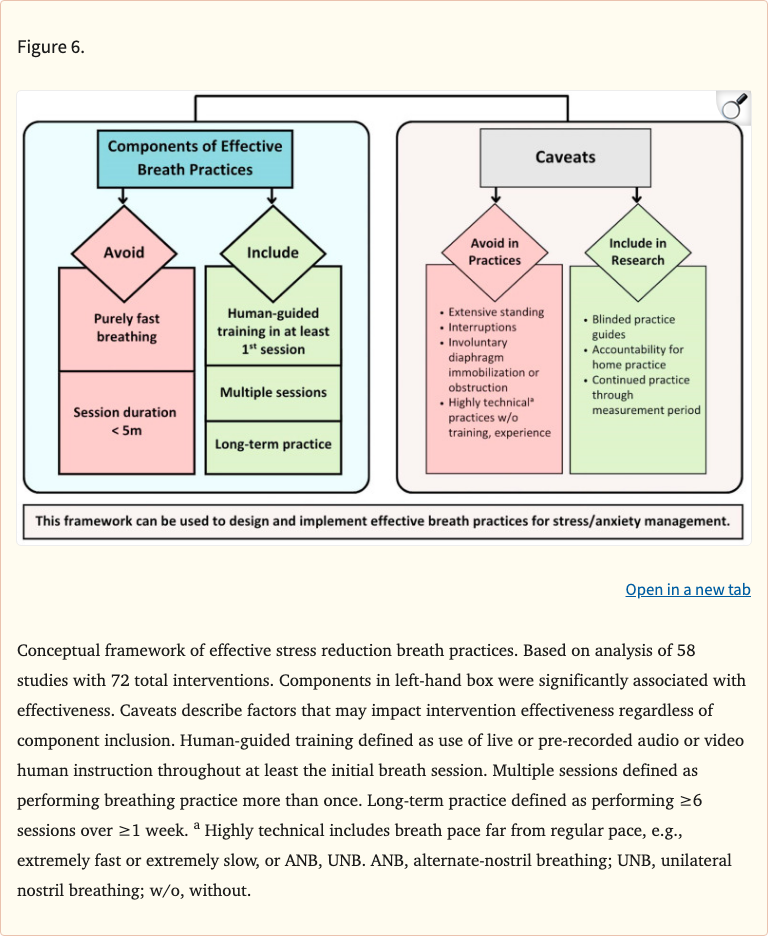 Figure 5
Limitations
High heterogeneity across studies in breathing protocols, terminology, and outcome measures limited direct comparisons. Many studies had small sample sizes and lacked active control groups. Quality issues were prevalent, with inconsistent reporting of breathing parameters (rate, depth, timing). Publication bias toward positive results may inflate effect estimates. Limited evidence on long-term maintenance of benefits beyond the intervention period.