
Key Takeaway
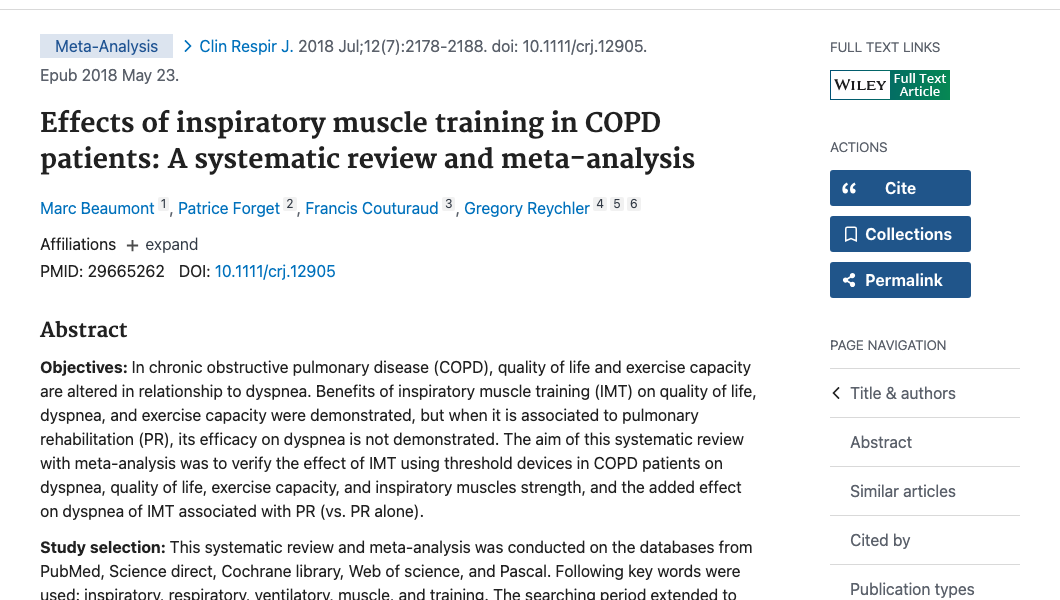
IMT using threshold devices significantly improves inspiratory muscle strength, exercise capacity, and quality of life in COPD patients, while reducing dyspnea.
Summary
This systematic review and meta-analysis evaluated the effects of inspiratory muscle training in patients with chronic obstructive pulmonary disease (COPD), one of the most common clinical populations to benefit from respiratory muscle conditioning. The authors systematically searched major databases and included randomized controlled trials that compared IMT to control or sham conditions in COPD patients.
The pooled results demonstrated that IMT produced significant improvements across multiple clinically meaningful outcomes. Inspiratory muscle strength, measured by maximal inspiratory pressure (MIP or PImax), showed substantial gains. Exercise capacity, assessed via the 6-minute walk test and other functional measures, was significantly improved. Importantly, patients reported reduced dyspnea (breathlessness) and improved health-related quality of life -- outcomes that matter most to patients living with chronic respiratory disease.
The analysis found that threshold loading devices were the most effective and well-studied approach to IMT in COPD. These devices provide a consistent, quantifiable inspiratory load regardless of breathing pattern, making them preferable to resistive devices where the training stimulus depends on flow rate. The threshold approach allows for precise intensity prescription, typically set at 30-60% of maximal inspiratory pressure, with progressive overload as strength improves.
These findings have direct clinical implications for pulmonary rehabilitation programs. While general exercise training remains the cornerstone of COPD rehabilitation, adding specific IMT provides additional benefits for inspiratory muscle strength and dyspnea that general exercise alone may not fully address. The relatively low cost and simplicity of threshold IMT devices makes this an accessible intervention for the large population of COPD patients worldwide.