
Key Takeaway
Adult palatal expansion requires surgically-assisted methods for true skeletal effects, supporting the inadequacy of manual DIY approaches.
Summary
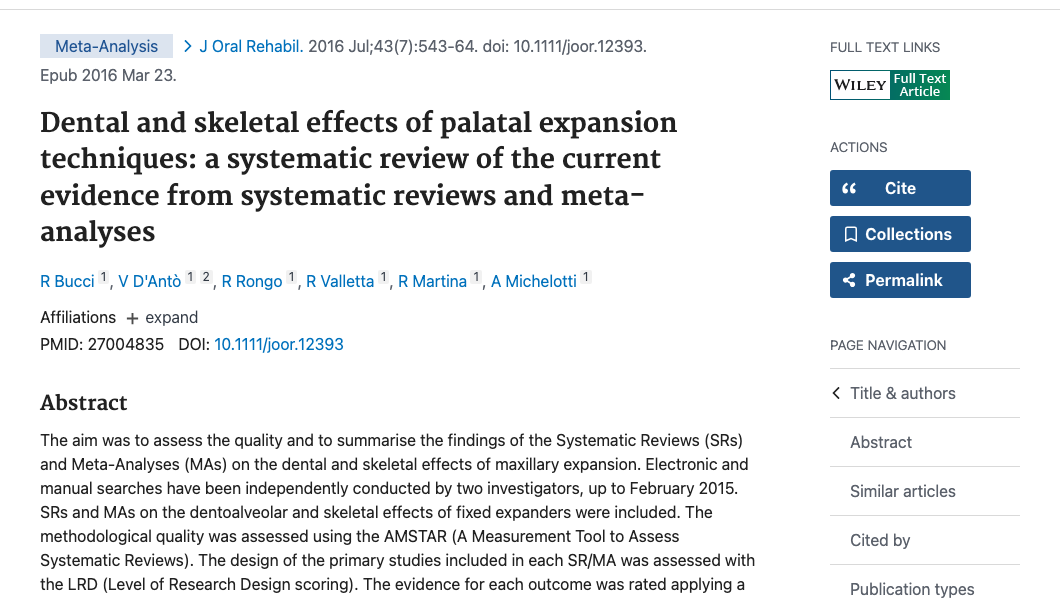
This systematic review examined the evidence for skeletal maxillary expansion in adults.
Review Question:
Can adults achieve true skeletal palatal expansion (vs. just dental tipping)?
Key Findings:
| Method | Skeletal Effect | Evidence |
|---|---|---|
| Tooth-borne RPE | Minimal skeletal | Mostly dental |
| SARPE (surgical) | True skeletal | Well-documented |
| Bone-borne devices | Promising skeletal | Emerging evidence |
| Manual techniques | None studied | No evidence |
The Problem with Non-Surgical Methods:
- Adult sutures resist opening
- Force goes to teeth, not bone
- Teeth tip outward instead
- Risk of root resorption
- Unstable results
SARPE (Surgically Assisted Rapid Palatal Expansion):
- Surgical weakening of suture
- Followed by expansion device
- True skeletal expansion achieved
- More predictable in adults
Force Requirements:
| Population | Required Force |
|---|---|
| Children | 5-10 kg (RPE works) |
| Adolescents | 10-20 kg |
| Adults | 20+ kg or surgical |
Implications for Manual Techniques:
This review confirms: - Adult expansion needs significant force - Surgical or bone-borne approaches needed - Manual pressure (thumb pulling) is inadequate - No evidence for DIY methods
Clinical Relevance:
Adults seeking palatal expansion should pursue: 1. Professional orthodontic evaluation 2. CBCT imaging to assess suture 3. SARPE or MSE if indicated 4. NOT DIY manual techniques