
Key Takeaway
Airway-focused orthodontic treatment emphasizes proper breathing and tongue posture as foundational to facial development, aligning with mewing principles.
Summary
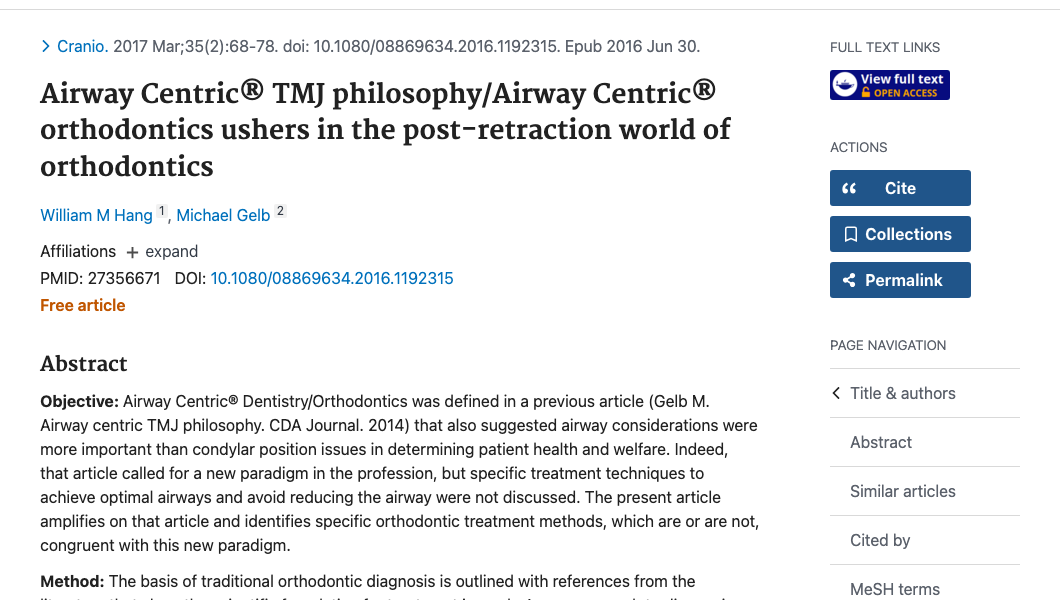
This paper presents the "airway centric" approach to orthodontics, which prioritizes nasal breathing and tongue posture in treatment planning.
Core Principles:
| Traditional Orthodontics | Airway Centric |
|---|---|
| Focus on tooth alignment | Focus on airway and function |
| May extract teeth | Preserve or expand arch |
| Retraction common | Forward development preferred |
| Less attention to breathing | Breathing assessment essential |
Key Arguments:
- Breathing mode shapes facial development
- Extraction orthodontics may worsen airway
- Expansion often preferable to extraction
- Tongue posture fundamental to stability
Facial Development Factors:
| Factor | Effect |
|---|---|
| Nasal breathing | Horizontal growth, wide face |
| Mouth breathing | Vertical growth, narrow face |
| Tongue on palate | Palatal expansion |
| Low tongue | Narrow, high palate |
Treatment Implications:
- Screen for mouth breathing
- Address tongue posture before/during treatment
- Consider myofunctional therapy
- Avoid treatments that reduce airway
Relevance to Mewing:
Supports the core mewing principles: - Tongue posture matters - Nasal breathing essential - Function drives form - Proper oral posture for stability
Controversy:
- Not all orthodontists agree
- Traditional vs. functional debate ongoing
- More research needed
- Represents paradigm shift in thinking
Limitations:
- Opinion/perspective piece
- Not a controlled trial
- Represents one viewpoint in ongoing debate