
Key Takeaway
Orofacial myofunctional therapy reduced AHI by 10.2 points in adults with obstructive sleep apnea, with significant improvements in daytime sleepiness and sleep quality.
Summary
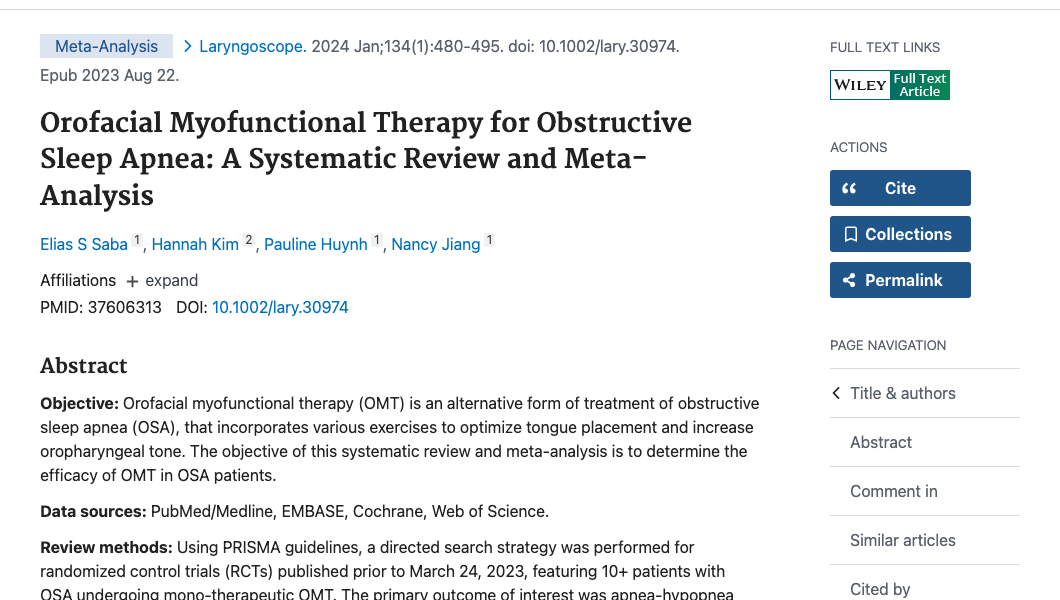
This systematic review and meta-analysis evaluated orofacial myofunctional therapy (OMT) as a treatment for obstructive sleep apnea (OSA). OMT incorporates exercises to optimize tongue placement and increase oropharyngeal muscle tone - principles closely aligned with mewing.
Seven RCTs involving 310 patients were included from 1,244 abstracts screened, following PRISMA guidelines for studies published before March 2023.
Adults showed a statistically significant AHI reduction of -10.2 points (95% CI: -15.6 to -4.8, p < 0.05) compared to controls. Secondary outcomes also improved significantly: Epworth Sleepiness Scale dropped by 5.66 points, Pittsburgh Sleep Quality Index improved by 3.00 points, and minimum oxygen saturation increased by 2.71 points.
The single pediatric RCT showed poor compliance (<50%) and no meaningful improvements in AHI, oxygen saturation, or snoring frequency in children.
Methods
Systematic review and meta-analysis of RCTs following PRISMA guidelines. Searched for studies published before March 24, 2023. Included RCTs with 10+ OSA patients receiving mono-therapeutic OMT. Seven RCTs (310 patients) met inclusion criteria from 1,244 abstracts reviewed.
Key Results
- AHI reduction: -10.2 points (95% CI: -15.6 to -4.8, p < 0.05) in adults
- Epworth Sleepiness Scale: -5.66 points (p < 0.05)
- Pittsburgh Sleep Quality Index: -3.00 points (p < 0.05)
- Minimum oxygen saturation: +2.71 points (p < 0.05)
- Pediatric compliance: <50%, no significant improvements
Limitations
- Only 7 RCTs met inclusion criteria, limiting statistical power
- Single pediatric RCT with poor compliance
- Long-term efficacy data is lacking
- Heterogeneity in OMT protocols across studies
- Most studies had relatively small sample sizes