
Key Takeaway
Meta-analysis of 11 RCTs found moderate effect sizes favoring combined caffeine and L-theanine for alertness and attentional switching accuracy within 2 hours of dosing
Summary
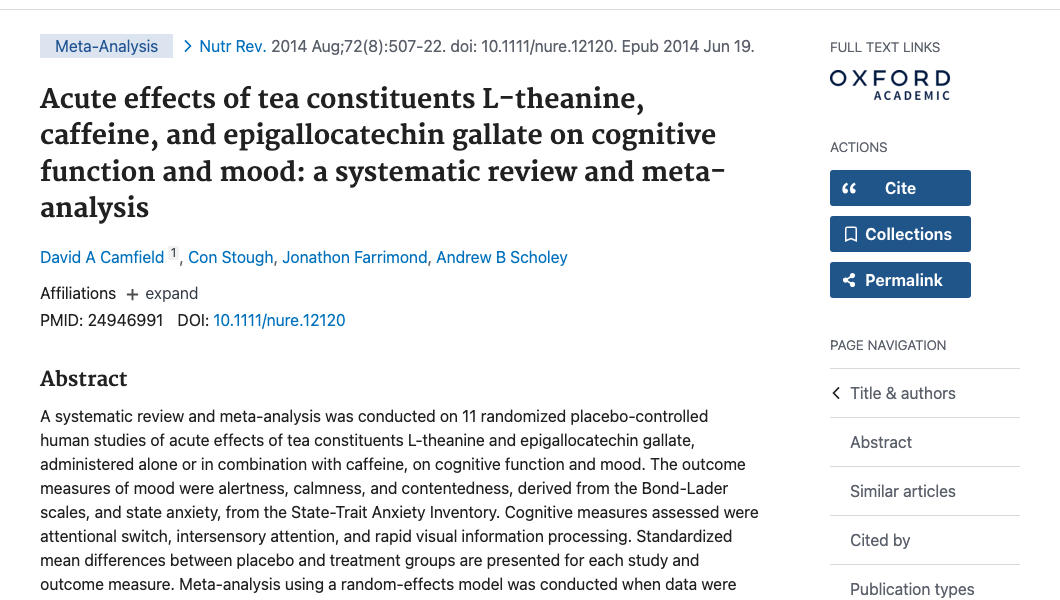
This systematic review and meta-analysis synthesized evidence from 11 randomized placebo-controlled trials examining the acute cognitive and mood effects of tea constituents L-theanine and epigallocatechin gallate (EGCG), administered alone or in combination with caffeine. The analysis focused on both mood outcomes (alertness, calmness, contentedness, anxiety) and cognitive measures (attentional switching, intersensory attention, rapid visual information processing).
The key finding was that the combination of caffeine and L-theanine produced moderate effect sizes for improved alertness and attentional switching accuracy within the first 2 hours after dosing. This supports the "calm focus" concept - the combination enhances cognitive performance while maintaining a positive mood state. The effects were less pronounced for unisensory and multisensory attention outcomes.
Interestingly, moderator analysis revealed that caffeine dose had a stronger influence on effect sizes than L-theanine dose, particularly during the first hour. This suggests caffeine drives the initial cognitive boost while L-theanine modulates the quality of that stimulation - smoothing jitteriness and supporting sustained attention.
Methods
- Design: Systematic review and meta-analysis
- Studies included: 11 randomized placebo-controlled human trials
- Interventions: L-theanine and EGCG, alone or combined with caffeine
- Mood measures: Bond-Lader scales (alertness, calmness, contentedness), State-Trait Anxiety Inventory
- Cognitive measures: Attentional switching, intersensory attention, rapid visual information processing
- Analysis: Random-effects model with standardized mean differences
- Meta-analysis conducted when data available from 3+ studies per outcome
Key Results
- Moderate effect sizes favoring combined caffeine + L-theanine within first 2 hours postdose
- Significant improvements in Bond-Lader alertness scores
- Significant improvements in attentional switching accuracy
- Smaller but positive effects on unisensory and multisensory attention
- Caffeine dose showed stronger effect size moderation than L-theanine dose
- Effects most pronounced during first hour for caffeine, sustained through second hour for combination
- L-theanine alone showed more modest cognitive effects compared to the combination
Limitations
- Limited number of studies for some outcome measures (minimum 3 required for meta-analysis)
- Most studies used acute dosing only - chronic effects not assessed
- Variation in L-theanine and caffeine doses across studies
- Studies primarily in healthy young adults
- EGCG effects difficult to separate in some tea-based studies
- Short assessment windows (typically 1-2 hours postdose)