Key Takeaway
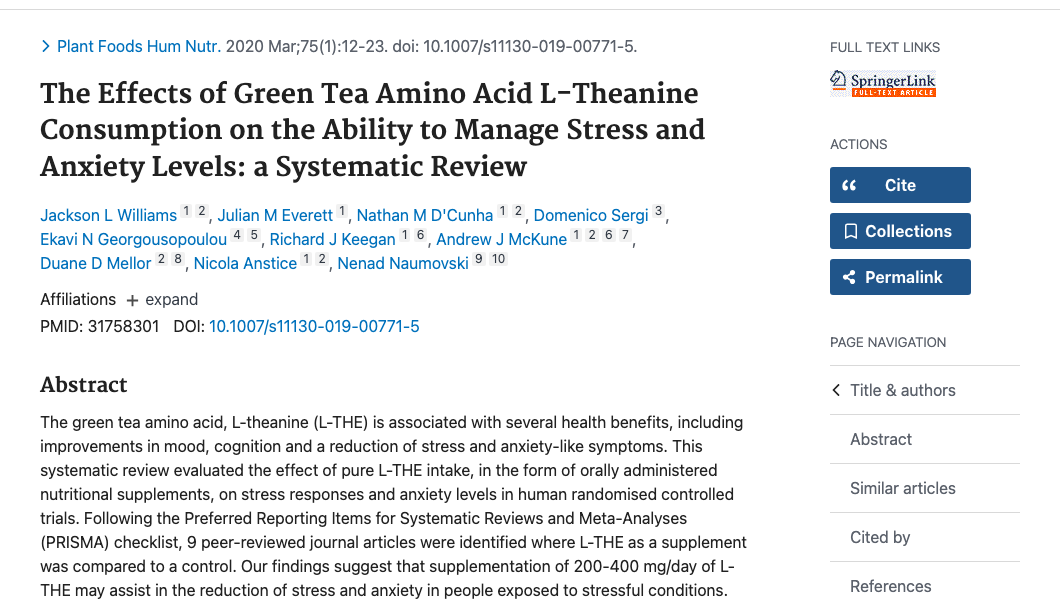
Systematic review of 9 RCTs confirms that 200-400mg/day L-theanine reduces stress and anxiety in people exposed to stressful conditions
Summary
This systematic review evaluated the effects of pure L-theanine supplementation on stress and anxiety across multiple randomized controlled trials. The findings provide strong support for L-theanine as an effective, safe intervention for stress management.
Methods
- Design: Systematic review following PRISMA guidelines
- Databases: PubMed, CINAHL, Cochrane Library, Scopus
- Inclusion: RCTs comparing L-theanine supplements to control
- Studies included: 9 peer-reviewed journal articles
- Outcomes: Stress responses, anxiety levels, physiological markers
Key Results
- 200-400mg/day L-theanine assists in stress and anxiety reduction
- Effects most pronounced in people exposed to stressful conditions
- Multiple mechanisms identified:
- Increased alpha brain wave activity
- Reduced cortisol response to stress
- Modulation of neurotransmitters (GABA, serotonin, dopamine)
- Consistent findings across different study populations
- Good safety profile across all included studies
- Both acute and chronic supplementation showed benefits
Limitations
- Heterogeneity in study designs and populations
- Variable dosing protocols across studies
- Most studies had relatively small sample sizes
- Limited long-term data (>8 weeks)
- Publication bias possible (positive results more likely published)
- Need for larger, more rigorous trials