
Key Takeaway
Review of shilajit's neuroprotective potential, highlighting fulvic acid's ability to inhibit tau protein aggregation - a key mechanism in Alzheimer's disease.
Summary
This review examined the scientific evidence for shilajit's potential cognitive and neuroprotective effects, with particular focus on Alzheimer's disease mechanisms.
The authors highlighted that fulvic acid, a major component of shilajit, has been shown to inhibit tau protein self-aggregation in vitro. Tau aggregation is a hallmark of Alzheimer's disease pathology.
The review also discussed shilajit's antioxidant properties, anti-inflammatory effects, and traditional use for cognitive enhancement. The authors concluded that while promising, more clinical research is needed.
Methods
- Narrative review of existing literature
- Analysis of in vitro and animal studies
- Review of traditional Ayurvedic use for cognition
- Focus on fulvic acid mechanisms
- Assessment of potential therapeutic applications
Key Results
- Fulvic acid inhibits tau aggregation in vitro
- Antioxidant activity may protect neurons
- Traditional use supports cognitive benefits
- Multiple potential neuroprotective mechanisms identified
- Animal studies show cognitive improvements
Figures
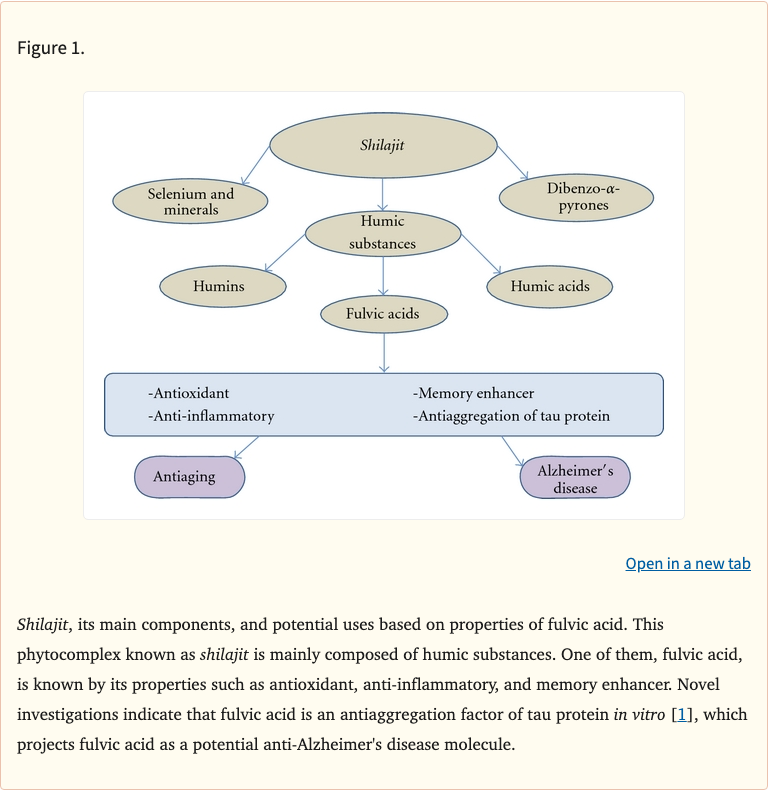 Figure 1
Limitations
- No human clinical trials on cognitive outcomes reviewed
- In vitro effects may not translate to humans
- Mechanism research still in early stages
- Optimal dosing for cognitive effects unknown
- Long-term effects on brain health not established