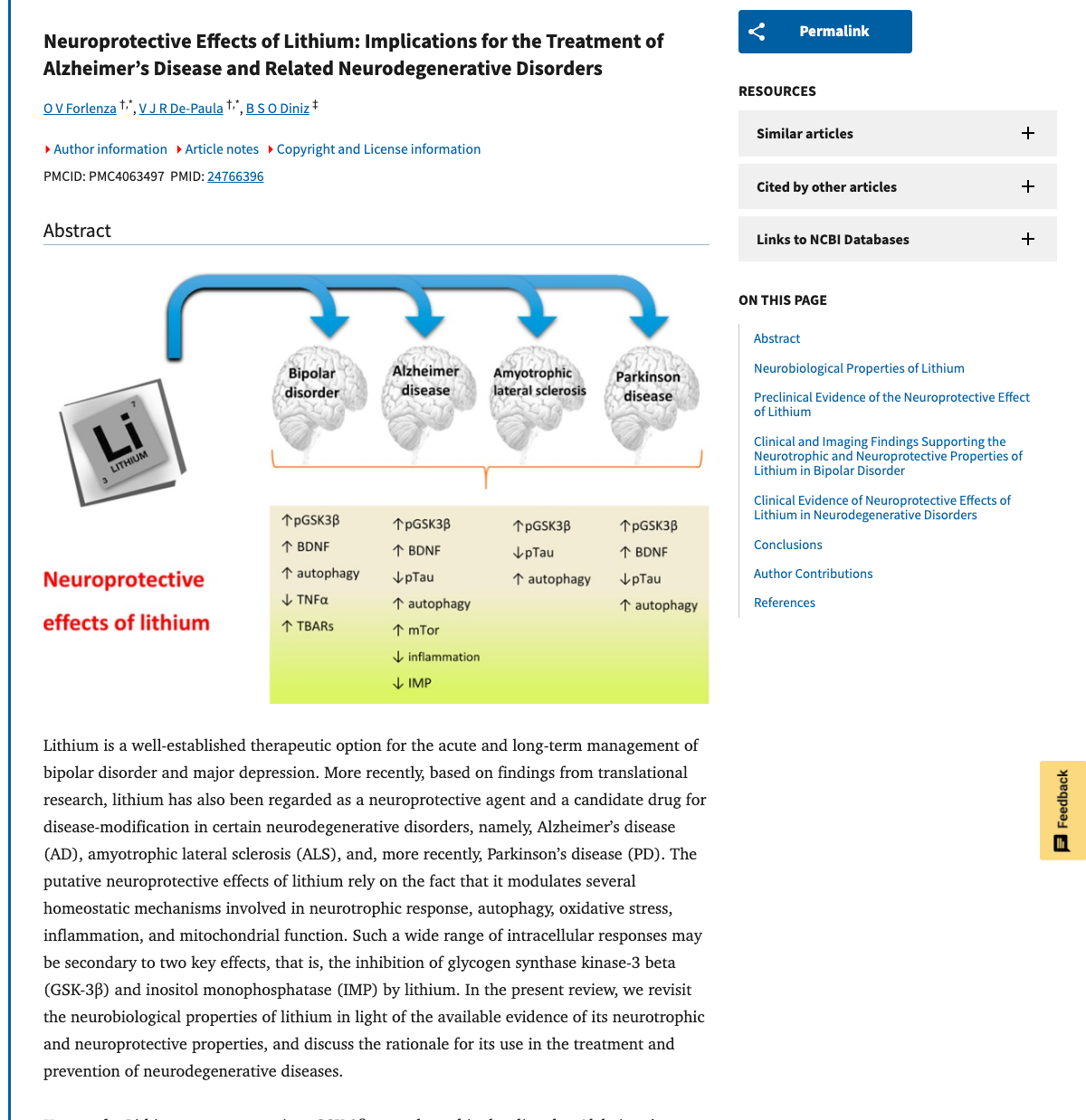
Key Takeaway
Comprehensive review of lithium's neuroprotective mechanisms including GSK-3β inhibition, BDNF upregulation, and autophagy enhancement.
Summary
This comprehensive review examines the mechanisms by which lithium provides neuroprotection and potential applications for neurodegenerative diseases.
Key mechanisms:
- GSK-3β inhibition (key neuroprotective pathway)
- BDNF upregulation (promotes neuroplasticity)
- Autophagy enhancement (cellular cleanup)
- Anti-inflammatory effects
- Mitochondrial protection
Evidence reviewed:
- Epidemiological studies on lithium and dementia
- Mechanistic studies in cell and animal models
- Clinical trials in bipolar disorder showing neuroprotection
- Emerging research on low-dose applications
Clinical implications:
- Supports further research on lithium for neurodegeneration
- Questions optimal dosing for neuroprotection
- Highlights potential for preventive applications
Clinical significance:
Establishes strong mechanistic foundation for lithium's neuroprotective effects, supporting interest in low-dose supplementation for brain health.