
Key Takeaway
Clinical EFT meets APA Division 12 criteria as an evidence-based treatment, with over 100 studies demonstrating efficacy for anxiety, depression, PTSD, pain, and physiological markers like cortisol.
Summary
This comprehensive systematic review evaluated the full body of evidence for Clinical EFT (Emotional Freedom Techniques) across both psychological and physiological conditions. The authors assessed whether EFT meets the American Psychological Association's Division 12 standards for empirically validated treatments, reviewing over 100 clinical trials and outcome studies published through 2022.
The review covered EFT's application across a wide range of conditions including anxiety disorders, depression, PTSD, phobias, chronic pain, food cravings, and physiological biomarkers such as cortisol, blood pressure, and immune function. The authors examined study quality, replication by independent research teams, and consistency of findings across populations and settings.
The review concluded that Clinical EFT meets the criteria for an evidence-based practice across multiple conditions. The strongest evidence was found for anxiety (Cohen's d = 1.23), depression (d = 1.31), and PTSD (d = 2.96). Physiological studies showed significant cortisol reduction and improvements in immune markers, suggesting EFT works through both psychological and biological pathways.
Methods
Systematic review following PRISMA guidelines across PubMed, PsycINFO, and specialized databases. Studies were evaluated against APA Division 12 criteria for empirically validated treatments, which require treatment manuals, specific populations, reliable outcome measures, independent replication, and superiority to placebo or equivalence to established treatments.
Key Results
- Anxiety: Large effect size (d = 1.23) across multiple RCTs
- Depression: Large effect size (d = 1.31) with consistent replication
- PTSD: Very large effect size (d = 2.96), comparable to CBT and EMDR
- Cortisol: Significant reductions (24-50%) documented in controlled studies
- Pain: Moderate to large effects across chronic pain conditions
- Food cravings: Significant reductions maintained at 6-12 month follow-up
- Phobias: Rapid symptom relief, often in 1-3 sessions
- Over 100 published studies identified, majority showing positive outcomes
Figures
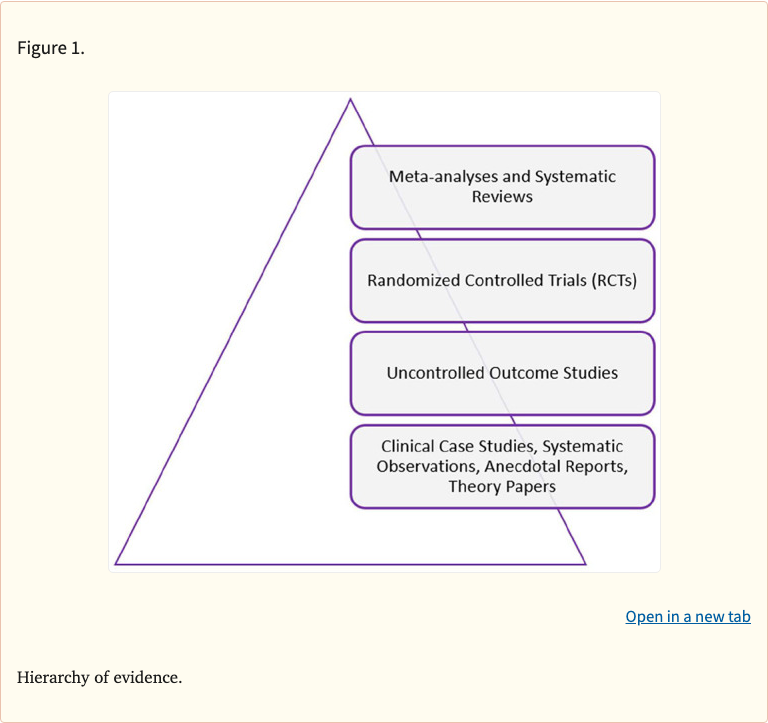 Figure 1
Limitations
- Several included studies authored by EFT proponents, raising potential allegiance bias
- Blinding is difficult in EFT studies since participants know the intervention
- Heterogeneity in control conditions across studies
- Many studies rely on self-report outcome measures
- Limited research on mechanisms of action
- Some conditions have fewer high-quality RCTs than others